

Experts are calling for urgent reforms to address the challenges surrounding Bangladesh’s renewable energy procurement process. A recent study conducted by the Centre for Policy Dialogue (CPD) has recommended a phased approach to re-tendering, a move aimed at improving efficiency and transparency within the sector. This proposal comes at a time when many solar power tenders have received little to no bids, raising concerns about the current procurement policies’ effectiveness.
As part of the recommendations, reducing the size of solar projects, relaxing stringent financial eligibility criteria, and introducing dedicated renewable energy procurement guidelines were highlighted as crucial steps to foster a more competitive environment.
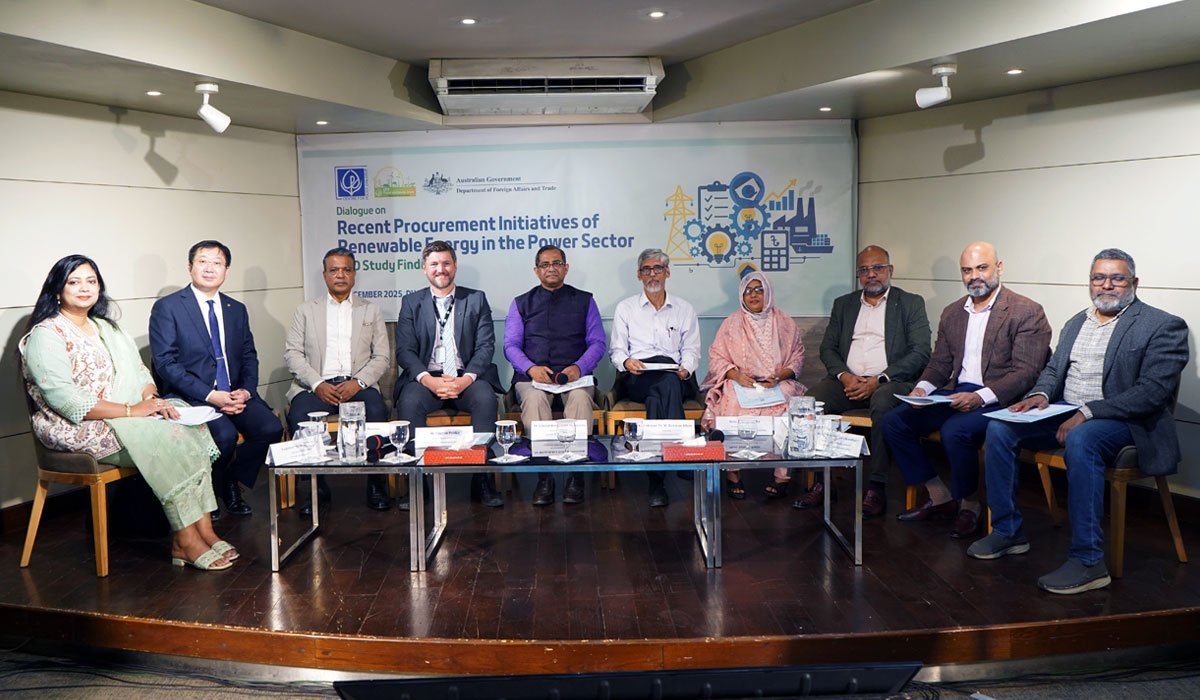
The recommendations were presented during a dialogue titled “Recent Procurement Initiatives of Renewable Energy in the Power Sector: CPD Study Findings” held on Monday, 1 December 2025.
Dr Muhammad Fouzul Kabir Khan, Hon’ble Adviser to the Ministry of Power, Energy and Mineral Resources, Interim Government of Bangladesh, reflected on the progress made so far but acknowledged that further reform is needed. He stated, “While we have taken important steps, we need to ensure that our procurement processes are aligned with global best practices to foster both local and foreign investment in the energy sector.” His remarks highlighted the urgency of modernising the procurement system to make it more adaptable and transparent.
From an operational perspective, Professor Dr M. Rezwan Khan, Chairman of Power Grid Bangladesh PLC, also stressed the importance of evolving the current framework. “The current procurement system has worked up to a point, but we now need a transparent and competitive market to ensure that we can meet Bangladesh’s energy needs,” he said. He emphasised that embracing these reforms will help the country stay ahead in the race for renewable energy.
In his remarks, Mr Clinton Pobke, Deputy Head of Mission at the Australian High Commission in Bangladesh, praised the government’s reform efforts but highlighted the need for continuous international collaboration. “Australia is committed to supporting Bangladesh in this critical transition. These proposed reforms, if implemented, will ensure a sustainable and competitive renewable energy market,” he commented, reinforcing the importance of global partnerships in driving progress.
Dr Khondaker Golam Moazzem, Research Director at CPD, who moderated the session, outlined the key challenges the country faces in energy procurement. During his opening remarks, he stated, “The reinstatement of the PPA (2006) and PPR (2008) offers a solid foundation, but we must make the system more agile to accommodate the changing needs of the energy market.” Dr Moazzem stressed that the future of Bangladesh’s energy infrastructure depends on creating a flexible, transparent framework.
One of the key points raised during the session was the financial barriers local firms face in the tender process. Mr Atikuzzaman Shazeed, Programme Associate at CPD, pointed out that local companies often struggle to meet the high financial thresholds required by the current tender criteria. “The disparity in financial capabilities between local and foreign firms is hindering the participation of domestic businesses,” he explained. He also advocated for introducing live reverse auctions to drive competition and lower costs.
As Mr Han Kun, President of the Chinese Enterprises Association in Bangladesh, observed, the procurement system’s lack of flexibility is a deterrent for international companies. “To attract more global players, we need to make the bidding process more transparent and inclusive. This will ensure a fairer competition and foster greater collaboration,” he noted, highlighting the potential for international firms to contribute to Bangladesh’s renewable energy landscape.
Meanwhile, Mr David Hasanat, President of the Bangladesh Independent Power Producers’ Association (BIPPA), emphasised the need for more proactive steps in implementing reforms. “We are making progress, but the pace is too slow. To ensure Bangladesh remains competitive, we need to speed up the process and address the inefficiencies that continue to hinder the sector,” he commented.
The introduction of specific guidelines for renewable energy procurement was another major topic. Mr Mostafa Al Mahmud, President of the Bangladesh Sustainable and Renewable Energy Association (BSREA), expressed his concern about the lack of clarity in the current system. “Without clear guidelines, there is confusion, and companies find it difficult to navigate the tendering process. Dedicated procurement guidelines will provide the necessary framework for transparency,” he stated.
A more practical approach to implementing these reforms was put forward by Mr Imran Karim, Former President and Director of BIPPA, who highlighted the importance of action. “Policies are only effective when they are put into practice. We need a system that supports local firms and provides real solutions, not just theoretical frameworks,” he stressed.
In a more academic take, Mr Shahriar Ahmed Chowdhury, Director of the Centre for Energy Research at United International University (UIU), reflected on the role that academia can play in addressing the challenges faced by the energy sector. “Collaboration between academia and the energy industry will lead to innovative solutions that can help streamline procurement and make the process more sustainable,” he suggested.
Engineer Naznin Akter, Managing Director of GSOLARIC Bangladesh Ltd, shared insights into the technical challenges faced by firms involved in renewable energy projects. “The current financial eligibility criteria are a significant barrier to local companies. For the sector to grow, the procurement system must be more inclusive,” she concluded.
Ms Most Sultana Razia, Deputy Director Technical at the Bangladesh Rural Electrification Board, emphasised the need for flexibility in project sizes and eligibility criteria. “To encourage local participation, the process must be simplified and made more inclusive for smaller businesses,” she stated, underscoring the importance of streamlining the system.
The event was attended by a diverse group of stakeholders, including high-level policymakers, government officials, academics, experts, development practitioners, and journalists, all of whom contributed to a lively and constructive discussion about the future of renewable energy procurement in Bangladesh.