

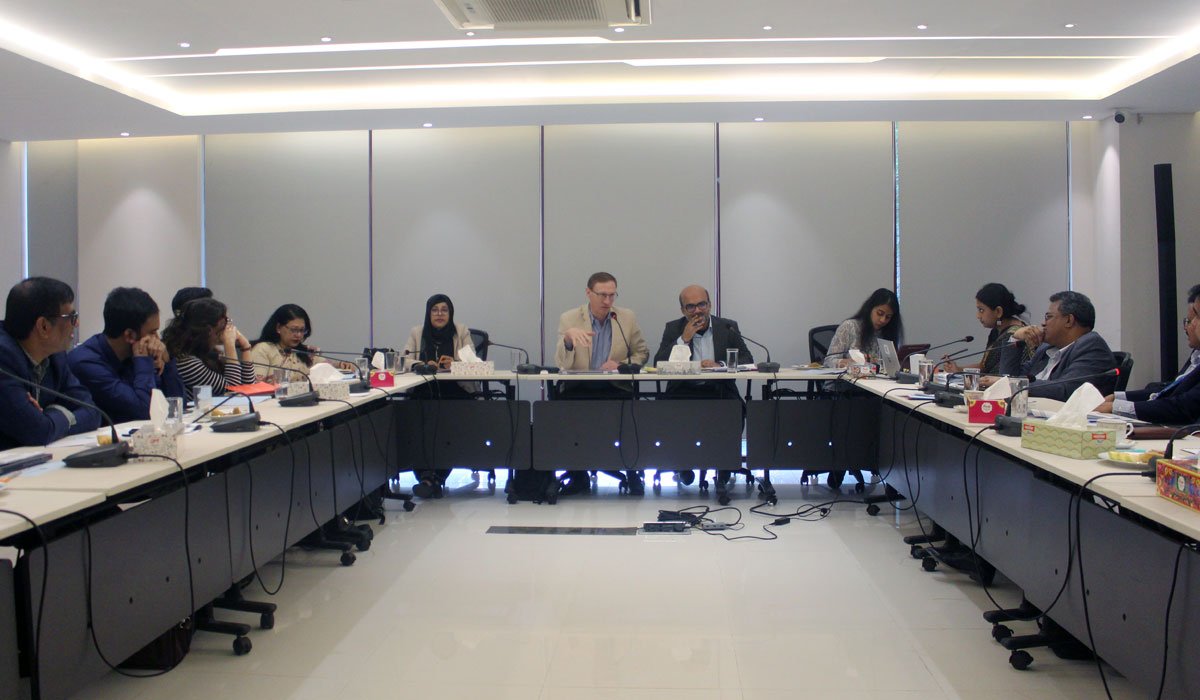
Bangladesh’s journey toward a fairer welfare system has taken a decisive turn as experts urged the government to prioritise a universal pension scheme as the most practical and urgent reform for the country’s social protection framework. Drawing on new CPD research, speakers emphasised that a universal pension, costing just about 1 per cent of GDP, could be implemented in the short term and would help reduce exclusion errors, leakages, and the persistent governance challenges that plague current targeted schemes. The dialogue highlighted that universal approaches would strengthen social cohesion, eliminate stigma, and bring transparency to social safety nets long undermined by arbitrary selection and informal payments.
The dialogue, titled “Universal Social Protection in Bangladesh: Financing Requirements and Future Outlook”, was held on Tuesday, 18 November 2025 at 10:30 am at the CPD Office. Organised by the Centre for Policy Dialogue (CPD) in collaboration with Friedrich-Ebert-Stiftung (FES) Bangladesh, the event brought together policymakers, development practitioners, academics, and representatives from civil society and international organisations. The keynote address was delivered by Anindita Islam, Programme Associate, CPD.
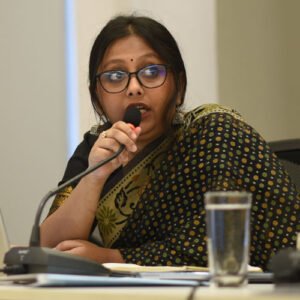
During her keynote presentation, Ms Anindita Islam, Programme Associate, CPD, walked the audience through the major findings of the CPD–FES study, painting a clear picture of why Bangladesh must rethink the way it delivers social protection. She noted that, although poverty has fallen over the years, a large share of the population remains vulnerable due to inequality, climate shocks, weak safety nets and long-standing targeting errors. She explained that the country still runs nearly a hundred social safety net programmes across numerous ministries, creating fragmentation, duplication and inefficiency. A worrying trend, she said, is that a significant portion of the social protection budget is absorbed by pensions for retired officials and agricultural subsidies, while allocations for the poor and vulnerable have steadily declined—leaving essential programmes underfunded and poorly prioritised.
She highlighted that governance problems such as exclusion errors, “speed money” payments, and beneficiary selection influenced by local intermediaries continue to weaken the system. The Old Age Allowance, disability benefits and maternity programmes show particularly high rates of informal payments, indicating the need for a more transparent and less discretionary approach. She described how OMS also fails to reach many urban poor due to long queues, limited access points and the stigma associated with queue-based support.
Ms Islam underscored that these challenges point to the limits of targeted schemes and make a strong case for universal approaches. Drawing on global experience from 36 countries, she argued that universal benefits reduce stigma, simplify administration and improve fairness.
She detailed a proposed phased framework in which Bangladesh would consolidate existing programmes, index benefits to inflation, expand contributory schemes for formal-sector workers, and strengthen digital systems for identification and monitoring. Improved poverty mapping, better grievance mechanisms and stronger governance, she said, are essential to ensuring transparency and reducing leakages. Ultimately, Anindita emphasised that consolidating programmes and moving toward universal protection, especially universal pensions and child benefits, would allow Bangladesh to build an inclusive, efficient and future-ready social protection system.
The participants said that moving from fragmented safety nets to universal social protection will require not only new programme designs but also deep governance and financing reforms. They stressed the importance of building an integrated digital social registry, using updated poverty and vulnerability maps (including urban slums and climate-affected areas), and introducing stronger grievance redress mechanisms to curb local-level capture. Several speakers pointed to international examples, such as the use of AI-based targeting tools and experiences with universal schemes in neighbouring countries, as practical lessons for Bangladesh.
Government representatives, while acknowledging fiscal and political constraints, underlined ongoing efforts to develop a new national social security strategy, expand digital systems and improve coordination across ministries. Overall, the dialogue converged on the view that a universal pension, complemented over time by broader universal child and disability benefits, offers a realistic and politically feasible pathway to a more inclusive and credible social protection system.