

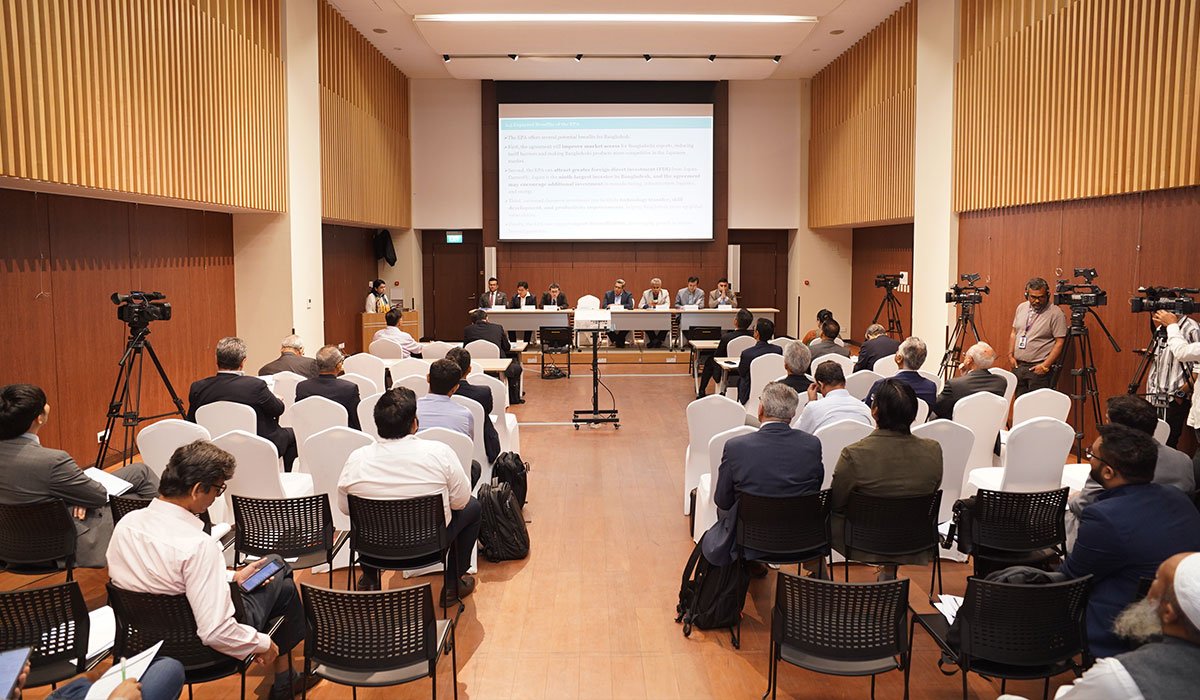
As Bangladesh and Japan move towards implementing the Economic Partnership Agreement (EPA), attention is increasingly turning to how the country can maximise the benefits of this new framework of economic cooperation. The agreement offers opportunities not only for greater trade but also for stronger investment linkages, industrial upgrading, and deeper integration into regional and global value chains. To translate these opportunities into tangible outcomes, Bangladesh will need coordinated policy efforts that strengthen trade facilitation, improve competitiveness, and encourage investment-driven growth.
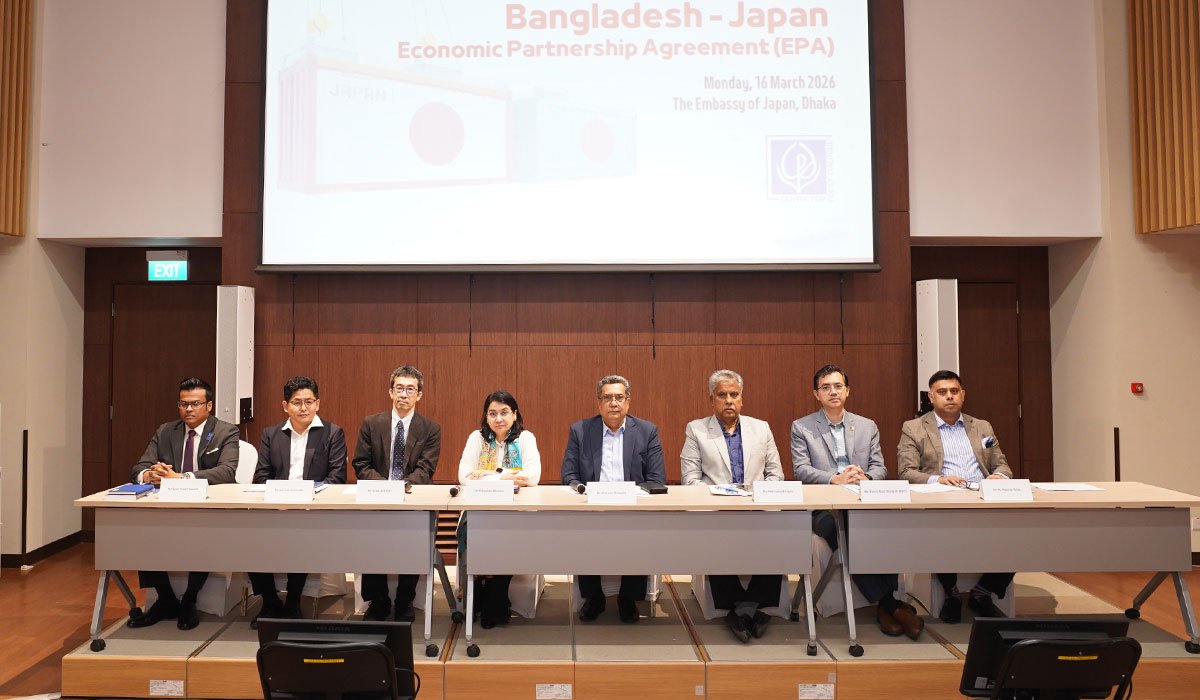
Against this backdrop, the Centre for Policy Dialogue (CPD), in partnership with the Embassy of Japan in Bangladesh, organised a seminar titled “Maximising the Opportunities of the Bangladesh–Japan Economic Partnership Agreement (EPA)” on Monday, 16 March 2026. The seminar brought together policymakers, diplomats, academics, development partners, and business leaders from Bangladesh and Japan to discuss how the EPA can support trade diversification, industrial upgrading, and investment-led growth beyond traditional development cooperation.
- Bangladesh-Japan EPA Opportunities, Challenges, and Future Outlook – Dr Fahmida Khatun
- Bangladesh’s Development and Industrial Policy Experience – Dr. Monzur Hossain
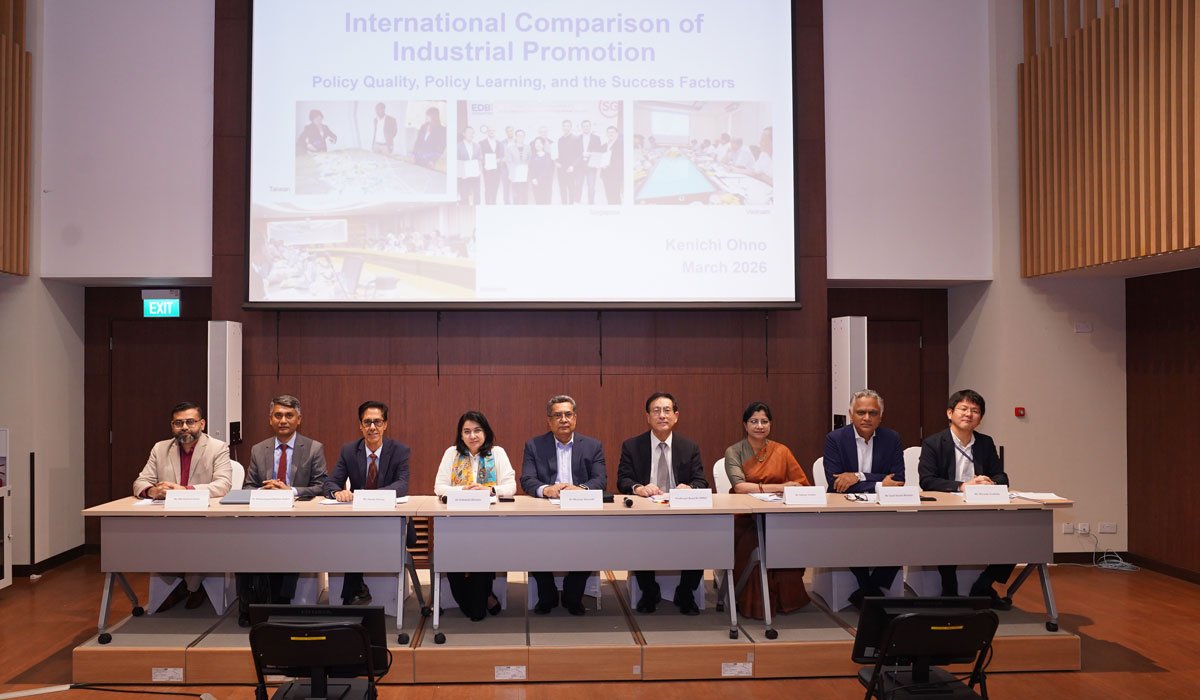
- International Comparison of Industrial Promotion – Kenichi Ohno
His Excellency Mr SAIDA Shinichi, Ambassador Extraordinary and Plenipotentiary of Japan to Bangladesh, attended the seminar as the Guest of Honour and referred to the Bangladesh–Japan EPA as a significant milestone achieved through sustained dialogue. He noted that it is Bangladesh’s first full-fledged EPA and Japan’s first Comprehensive Economic Partnership Agreement with a least developed country. He emphasised that the agreement goes beyond tariff reduction and includes rules and procedures to facilitate trade and investment, expressing hope that it will encourage greater foreign direct investment and support Bangladesh in strengthening its industrial capabilities.
Dr Fahmida Khatun, Executive Director of CPD, delivered the welcome remarks and chaired the seminar. In her introductory remarks, she noted that the Bangladesh–Japan EPA presents a significant opportunity to deepen bilateral economic relations and move beyond traditional ODA-driven cooperation towards a more diversified and investment-oriented partnership. She emphasised that Bangladesh needs a coordinated policy roadmap prioritising trade facilitation, industrial upgrading, and fiscal measures to ensure that the potential benefits of the EPA are realised.
The first keynote presentation of the seminar was delivered by Dr Monzur Hossain, Member (Secretary) of the General Economics Division (GED) of the Bangladesh Planning Commission. In his presentation, he discussed Bangladesh’s development and industrial policy trajectory, highlighting the country’s successes as well as the challenges it faces as it prepares for LDC graduation and seeks to strengthen its industrial capabilities.
Professor Kenichi OHNO, Emeritus Professor at the National Graduate Institute for Policy Studies (GRIPS), delivered the second keynote presentation. Drawing on international experiences, he presented a comparative analysis of industrial promotion policies and highlighted the importance of strong institutions, learning-based policy design, and effective coordination between government and industry for achieving successful industrial transformation.
The panel discussion that followed featured insights from several experts and practitioners.
Highlighting the importance of effective policy execution, Mr Owais Parray, Senior Economic Advisor at the United Nations Development Programme (UNDP) Bangladesh, noted that while industrial policies are important, their success ultimately depends on the quality of institutions responsible for implementation, the technical capacity of implementing teams, and leadership with a clear development vision.
Emphasising the importance of reforms and diversification for Bangladesh’s long-term growth, Dr Mohammad Mahfuz Kabir, Research Director at the Bangladesh Institute of International and Strategic Studies (BIISS), noted that the Bangladesh–Japan EPA could support the country’s ambition to sustain high economic growth and move towards becoming a trillion-dollar economy. He highlighted the need for broader economic diversification beyond exports, greater investment in sectors such as automobiles, electronics, pharmaceuticals, and ICT, and stronger policy reforms to effectively implement the agreement and attract investment.
Focusing on improving Bangladesh’s industrial competitiveness and quality standards, Mr Md Rabiul Islam, Economic Officer at the Asian Development Bank (ADB), emphasised the importance of using the Bangladesh–Japan EPA as a foundation to upgrade the country’s quality infrastructure. He highlighted the need for sector-specific roadmaps, greater Japanese investment to support technology and standards diffusion, stronger national quality institutions, and closer collaboration with industry associations to enhance productivity and meet higher global standards.
The importance of improving investment promotion and policy implementation was discussed by Mr Hiroshi Yoshida, Senior Representative of the JICA Bangladesh Office. He emphasised the need to simplify institutional arrangements for investment promotion and strengthen coordination in industrial policy. He noted that JICA is supporting initiatives such as developing a unified digital one-stop service for investors and providing infrastructure and policy support in economic zones, while also collaborating with the government to promote sectors such as light engineering, plastics, shipbuilding, ICT, and food processing.
Speaking from the perspective of the leather and footwear industry, Mr Syed Nasim Manzur, President of the Leathergoods and Footwear Manufacturers and Exporters Association of Bangladesh (LFMEAB), noted that sustainable growth in Bangladesh will require greater economic diversification beyond the RMG sector. He pointed out the need to address anti-export bias through tariff rationalisation and stressed the importance of better policy implementation, sector-specific benchmarking, and stronger engagement with industry stakeholders to enhance export competitiveness under the Bangladesh–Japan EPA.
Ms Sultana Yasmin, Joint Secretary at the Ministry of Industries, Government of Bangladesh, noted that while the National Industrial Policy 2022 provides a strong policy framework, its effective implementation will require stronger coordination among government agencies, the private sector, and relevant industries. She added that the Bangladesh–Japan EPA could help attract greater investment into key industrial sectors and support the country’s broader industrial development goals.
In the second session of the seminar, Dr Yasushi UEKI, President of the Bangkok Research Centre of IDE-JETRO, delivered a keynote presentation drawing lessons from industrial development in ASEAN and East Asia, particularly the Mekong subregion. He explained how infrastructure development, followed by inflows of foreign direct investment from lead firms and their supplier networks, helped expand international supply chains and support industrial clustering in the region.
Dr Fahmida Khatun then presented CPD’s analysis of the Bangladesh–Japan EPA, focusing on its implications for trade, investment, and industrial upgrading. She highlighted how improved market access and deeper economic cooperation could support Bangladesh in diversifying exports and attracting higher levels of foreign investment, while also noting the policy adjustments required to ensure that the benefits are fully realised.
The panel discussion in this session included contributions from Mr Syed Yusuf Saadat, Economist at the Transformation Economic Policy Programme (TEPP-II) of UNDP Bangladesh, who discussed policy reform priorities in the context of economic transformation.
Mr Syed Yusuf Saadat, Economist at the Transformation Economic Policy Programme (TEPP-II) of the United Nations Development Programme (UNDP) Bangladesh, noted that the Bangladesh–Japan EPA marks a shift from aid-based cooperation to a rules-based economic partnership centred on trade, investment, and technology. He highlighted the strong economic complementarity between the two countries and emphasised that Bangladesh should use the agreement to diversify exports, strengthen technology transfer, invest in human capital, and build the institutional capacity needed to negotiate future trade agreements.
Mr Tareq Rafi Bhuiyan (Jun), President of the Japan-Bangladesh Chamber of Commerce and Industries (JBCCI), noted that the Bangladesh–Japan EPA could help Bangladesh sustain higher economic growth and navigate the post-LDC transition by strengthening trade, investment, and technology cooperation. He stressed the importance of rule of origin compliance, product diversification beyond RMG, improved quality and sustainability standards, and greater readiness among SMEs, while emphasising that policy stability, reliable infrastructure, and ease of doing business will be crucial to attracting greater Japanese investment.
Mr Md Fazlul Hoque, Former President of the Bangladesh Knitwear Manufacturers and Exporters Association (BKMEA) and Managing Director of Plummy Fashions Ltd., highlighted the importance of sustained engagement and patience in building trade relations with Japan. Drawing on the experience of Bangladeshi exporters under the “China plus one” strategy, he noted that consistent efforts and strong collaboration between the government and private sector will be necessary to fully utilise the opportunities created by the Bangladesh–Japan EPA and expand Bangladesh’s presence in the Japanese market.
Mr Kazuiki Kataoka, Country Representative of the Japan External Trade Organization (JETRO) Bangladesh Office, noted that while the EPA itself may not automatically increase foreign direct investment, it provides an important framework for improving the business environment through clearer rules on areas such as customs procedures and intellectual property. He also emphasised the importance of addressing practical challenges faced by existing investors and maintaining a long-term vision to strengthen economic cooperation between Bangladesh and Japan.
Dr M. Masrur Reaz, Chairman of Policy Exchange of Bangladesh, noted that the Bangladesh–Japan EPA will be particularly important as the country prepares for LDC graduation and faces greater competition in global markets. He highlighted the need for market diversification, stronger integration into evolving global supply chains, and effective implementation of the agreement to ensure that Bangladesh can fully benefit from the new economic partnership with Japan.
Participants at the seminar emphasised that the Bangladesh–Japan EPA represents an important milestone in the bilateral economic relationship. They noted that while the agreement creates significant opportunities for trade expansion and investment cooperation, Bangladesh will need to adopt coordinated policies and strengthen institutional capacities to ensure that the partnership contributes to sustainable and inclusive economic growth.