

Women’s participation in Bangladesh’s parliamentary politics continues to depend largely on the reserved-seat mechanism, with only a small proportion of women being directly elected to general seats. Despite women’s active engagement as voters and their visibility in political leadership at the highest levels, structural and institutional barriers continue to restrict their broader representation in decision-making bodies.
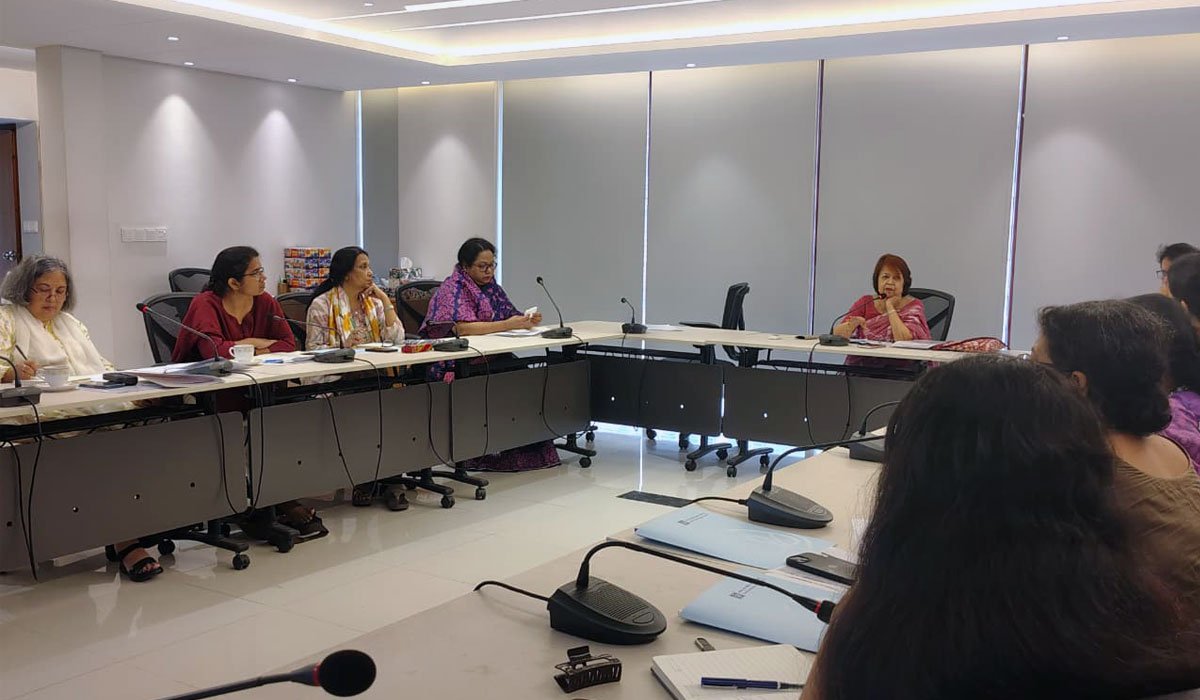
The Centre for Policy Dialogue (CPD) organised an expert consultation on Women’s Political Participation in Bangladesh on 11 March 2026. The session was chaired by Professor Rounaq Jahan, Distinguished Fellow at CPD. The discussion brought together academics, policy analysts, development practitioners and civil society representatives to reflect on trends in women’s political representation, challenges faced by female candidates and possible reforms to strengthen women’s participation in parliamentary politics.
Dr Fahmida Khatun, Executive Director of CPD, emphasised that increasing women’s political participation is critical for strengthening inclusive and representative governance in Bangladesh. She noted that while the country has made visible progress in women’s leadership at the highest political levels, greater efforts are required to ensure broader participation of women in electoral politics and decision-making processes.
Reflecting on the evolution of the reserved-seat system, the session chair, Professor Rounaq Jahan, Distinguished Fellow at CPD, observed that the original expectation was that women entering parliament through reserved seats would gain political experience and eventually contest general seats. However, she noted that only a limited number of women have successfully made this transition, raising questions about whether the system is effectively supporting women’s long-term political advancement.
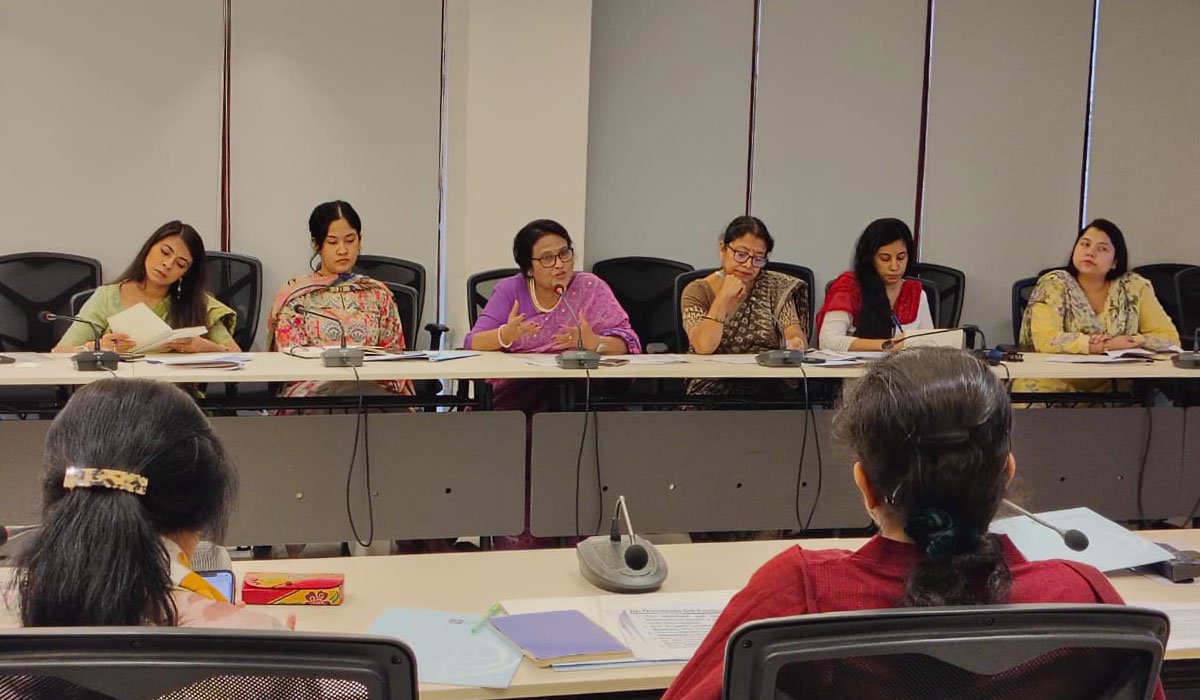
The discussion began with a trigger presentation that reviewed current patterns of women’s political participation in Bangladesh. Presenting the findings, Ms Sanjana Khondaker, Research Associate at CPD, highlighted trends in women’s ministerial representation and the gender composition of the Jatiya Sangsad. The presentation showed that although women’s representation in parliaments globally has increased steadily over time, Bangladesh continues to face challenges in ensuring gender balance in decision-making roles. Women’s presence in ministerial positions has remained inconsistent and often below global and South Asian averages.
The presentation also noted that women’s representation in Bangladesh’s parliament continues to rely heavily on reserved seats. Historically, women have struggled to win general seats through direct elections. Between 1973 and 2026, the share of women directly elected to parliament has typically remained between 2 and 8 per cent. In the most recent parliamentary election in 2026, only seven women were directly elected to the 300 general seats, reflecting the continued barriers to women’s electoral participation.
The discussion highlighted that while the reserved-seat system has helped ensure a minimum level of women’s representation in parliament, it has also created structural limitations. Participants pointed out that indirect elections to reserved seats often limit accountability and reduce the political autonomy of female MPs, while patriarchal party structures, financial constraints and socio-cultural norms continue to restrict women’s entry into competitive electoral politics.
The debate on the value of reserved seats also highlighted differing perspectives among participants. Ms Maheen Sultan, Senior Fellow of Practice at the BRAC Institute of Governance and Development (BIGD), emphasised that the legitimacy of reserved seats should not be viewed in simplistic terms. She pointed out that several MPs elected through reserved seats have made meaningful contributions to public policy and community development. At the same time, she stressed that women’s political participation should also be assessed through their roles within political parties and called for greater accountability of parties in increasing women’s representation.
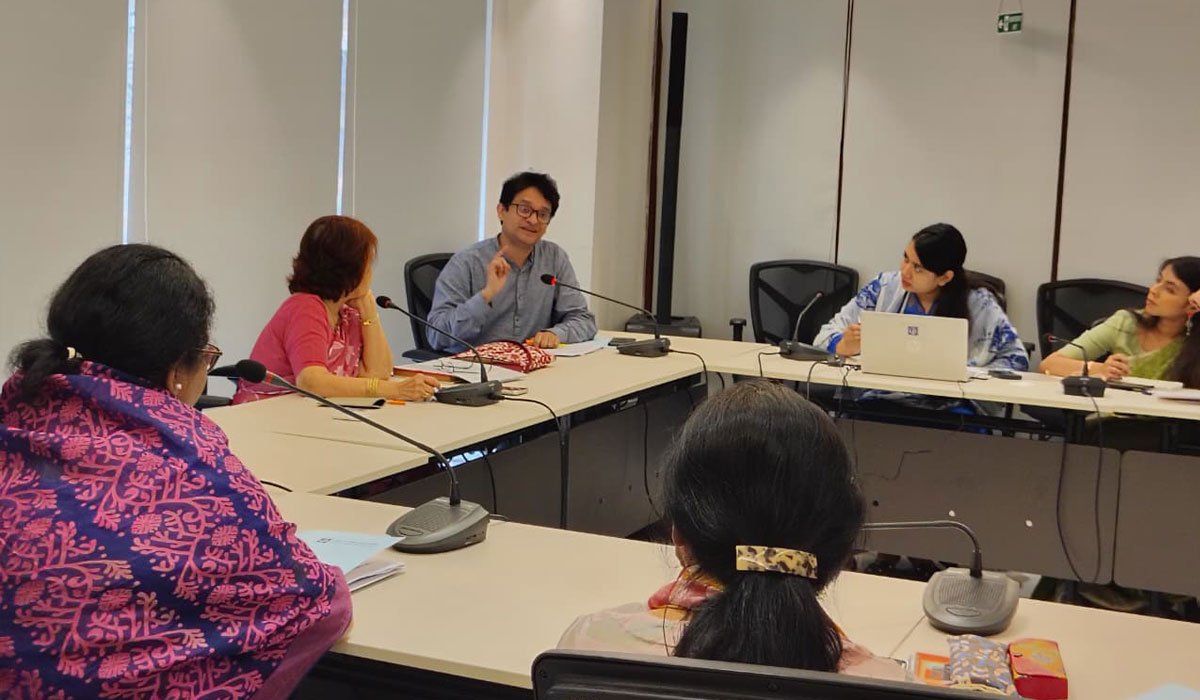
Attention was also drawn to the everyday social barriers that discourage many women from entering politics. Highlighting the experiences of women candidates from labour and grassroots movements, Ms Taslima Akter Lima, President of Bangladesh Garments Sramik Sanghati, noted that women who are not part of powerful political alliances often face significant disadvantages. She also pointed out that many potential women leaders hesitate to join politics because of the heavy burden of household responsibilities and the lack of supportive structures for working and middle-class women.
The discussion also focused on the role of legal and institutional reforms in expanding women’s participation. Professor Amena Mohsin, former Professor at the Department of International Relations at the University of Dhaka, argued that parliamentary politics in Bangladesh cannot be separated from broader political movements. She suggested that stronger legal mandates could be introduced to ensure higher levels of women’s participation in political processes.
Another theme that emerged from the discussion was the importance of political networks and party dynamics. Dr Marufa Akter, Associate Professor at the Independent University, Bangladesh (IUB), noted that women often have weaker political networks compared to their male counterparts, which affects their chances of receiving nominations. She recommended that political parties adopt more transparent criteria for selecting candidates so that women can better understand and prepare for the requirements needed to secure nominations.
The internal structure of political parties was also identified as a major constraint. Ms Nilufer Ahmed Karim, Gender Specialist at UN Women, observed that women are rarely placed in influential leadership positions within political parties. Without representation in key party structures, she argued, women are less likely to be nominated as candidates for parliamentary elections. She also cautioned that mandatory quotas for female candidates could be ineffective if parties nominate women only in constituencies where they have little chance of winning.
Several participants proposed institutional reforms to strengthen women’s representation. Referring to proposals under discussion within the Women’s Affairs Reform Commission, Ms Kamrun Nahar, Programme Manager at Naripokkho and a member of the Commission, suggested introducing a system where each constituency would elect two MPs—one general MP and another from a reserved seat specifically for women. Both would be directly elected, which could improve accountability while ensuring women’s representation across constituencies.
Participants also raised concerns that the current reserved-seat system may inadvertently discourage women from contesting general seats. Ms Shahida Khondaker, Researcher at the BRAC Institute of Governance and Development, noted that the existence of reserved seats sometimes leads political parties to rely on indirect representation rather than nominating women in competitive constituencies.
Structural challenges beyond the political arena were also highlighted as major obstacles to women’s participation. Professor Niaz Asadullah, Visiting Professor at the University of Reading, argued that issues such as disparities in education and broader socio-economic inequalities limit women’s ability to reach positions where they can realistically secure party nominations. Addressing these structural barriers, he suggested, is essential for achieving meaningful progress.
The discussion also framed women’s political participation as both a supply- and demand-side challenge. Ms Shashwatee Biplob, Associate Director of the Gender, Justice and Diversity and Social Empowerment and Legal Protection programmes at BRAC, observed that many women remain reluctant to enter politics while political parties also fail to create an enabling environment for them. She emphasised that addressing both dimensions is necessary to increase women’s representation in parliamentary politics.
The consultation concluded with a broad consensus that improving women’s political participation in Bangladesh will require coordinated reforms in political institutions, party structures and broader social norms, alongside targeted efforts to build women’s leadership capacity and create more inclusive pathways into electoral politics.