
Originally posted in Dhaka Tribune on 29 March 2026
Bangladesh heading towards 900,000C budget
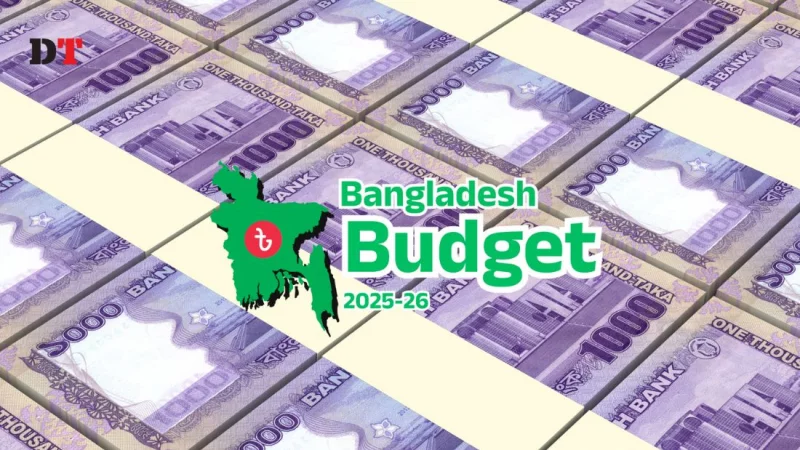
The government is preparing a budget of approximately Tk900,000 crore for the upcoming FY27.
According to preliminary estimates from the Ministry of Finance, the potential budget size may be Tk883,000 crore, which is nearly Tk9,300 crore higher than the current fiscal.
However, economists argue that regardless of size, the core questions remain: how implementable is this budget and what impact will it have on the lives of ordinary people?
The new budget must be highly balanced amid challenges such as inflation, employment crises, revenue deficits, and investment stagnation.
In recent years, inflation has placed significant pressure on the standard of living. Market volatility has emerged due to rising food prices, fuel and transport costs, and weaknesses in the supply chain.
Simultaneously, the country’s labor market is under great strain. Although a large number of educated youth enter the market annually, sufficient employment is not being created, leading to a rise in both unemployment and underemployment.
In this context, the upcoming budget plans to prioritize increased investment in job creation, skill development, and human resource formation. Discussions are underway to increase allocations for technical education, technological skills, and entrepreneurship development programs.
The Centre for Policy Dialogue (CPD) identifies controlling inflation, addressing revenue deficits, and job creation as the primary challenges for the FY2026-27 budget.
Fahmida Khatun, executive director of CPD, stated that this will be the newly elected government’s first budget, formulated at a time when the economy faces various internal and global challenges.
To tackle these, it is essential to strengthen the foundation of medium-term structural reforms alongside short-term targeted measures.
She noted that the economy currently faces high inflation, slow revenue collection, budget implementation weaknesses, pressure on foreign exchange, low investment, and limited employment. Additionally, financial sector volatility and slowing export growth are creating extra pressure. The upcoming graduation from the Least Developed Country (LDC) status also presents a significant policy challenge.
Pointing to the international context, Dr. Khatun mentioned that global uncertainties, including ongoing conflicts in the Middle East, may impact Bangladesh. Therefore, policymakers’ top priority should be ensuring macroeconomic stability.
She added that special importance must be given to ensuring social protection for poor, marginalized, and vulnerable populations while taking effective policy initiatives to accelerate economic recovery.
This budget serves as a crucial opportunity for the new government to initiate electoral pledges and demonstrate leadership in improving revenue management and public spending efficiency. However, a credible and well-organized revenue framework is essential.
Potential Revenue Structure:
- Total revenue: Tk636,000 crore
- Tax revenue: Tk571,000 crore
- Non-tax revenue: Tk65,000 crore
- NBR target: Approx. Tk550,000 crore
Economists observe that revenue collection remains a major challenge. Bangladesh’s tax-to-GDP ratio is lower than many South Asian countries.
To achieve ambitious targets, reforms in the tax system, expansion of the tax net, and increased efficiency in tax administration are vital.
The Annual Development Program (ADP) for the next fiscal year may be set at approximately Tk253,000 crore, about Tk23,000 crore more than the current year.
A large portion may be allocated to infrastructure, communication, energy, education, and health.
However, planning officials state that project selection will now prioritize effectiveness and implementation capacity.
Historically, many large projects suffered from delays, cost overruns, and administrative complexities.
The proposed budget deficit may be approximately Tk247,000 crore, roughly 3.6% of GDP. Two main sources will likely fund this deficit:
- Domestic Sources: Target of approx. Tk241,000 crore (including Tk120,000 crore from the banking sector).
- Foreign Sources: Potential collection of approx. Tk106,000 crore.
Economists warn that excessive borrowing from the banking sector may reduce credit flow to the private sector, negatively impacting investment and industrialization.
The GDP growth target for the next fiscal year may be set at approximately 6%.
This would bring the total GDP size to approximately Tk6,800,700 crore (approx. $544 billion).
Achieving this requires not just government spending, but also private investment, export expansion, and financial sector stability.
Education currently receives 2% to 2.5% of GDP, whereas the international standard is 4.6%.
In health, low public spending forces citizens to pay a large portion of medical costs out-of-pocket. The upcoming budget may emphasize increasing allocations and ensuring effective spending in these sectors.
The NBR will begin pre-budget discussions with stakeholders from March 31 to April 28 at the NBR building in Agargaon. Business organizations, economists, researchers, professionals, and journalists will participate to present proposals and expectations.
While many see this as a “recovery-oriented” budget, its success depends on implementation. Economists suggest reforming the revenue system, accelerating project implementation, ensuring good governance and accountability, and creating an investment-friendly environment are necessary to achieve the goals.
Without effective action in these areas, even a large-scale budget may fail to deliver desired results.