

A digital health system can transform healthcare only when it is built around people, not platforms. For Bangladesh, the promise is not merely to introduce more apps, cards or databases, but to create a system where a patient’s journey is connected from the community clinic to the hospital, from prescription to pharmacy, and from prevention to follow-up care. If designed well, digital public infrastructure could reduce gaps in access, support overstretched health workers, improve accountability and create a new generation of tech-health professionals.
These insights emerged at the expert consultation titled ‘Reimagining Bangladesh’s Digital Health Systems: Integrating Youth Leadership into Digital Infrastructure for Health’, organised by the Centre for Policy Dialogue (CPD). The keynote presentation was delivered by Ms Tazneen Tanha, Programme Associate, CPD.
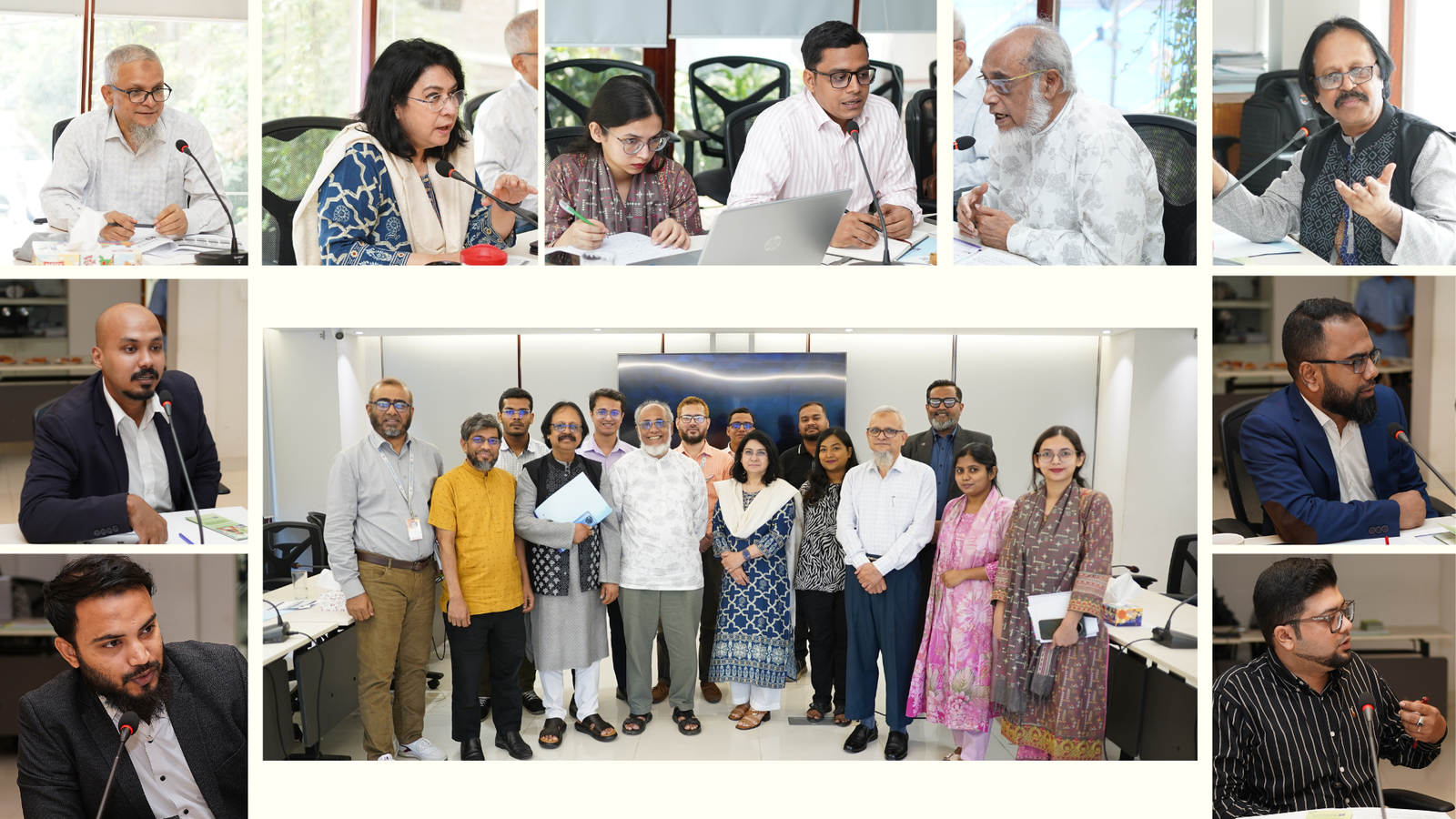
The consultation gathered policymakers, public health experts, private-sector representatives and technology professionals who discussed how Bangladesh can connect digital public infrastructure with healthcare delivery and youth employment. The discussion reflected on Bangladesh’s structural health challenges, including low public investment in health, high out-of-pocket expenditure, fragmented digital systems, gaps in service delivery and the need to turn youth engagement into a viable pathway for the digital health economy.
Opening the discussion, Dr Fahmida Khatun, Executive Director of CPD, said the central purpose was to understand both the health system and the digital health system at the ground level. She noted that digital health could make services easier, faster and more accessible, but only if practical challenges were properly understood. “We want to explore how digital public infrastructure can be connected with the health system in order to improve healthcare, strengthen health services and ensure good governance,” she said. She also emphasised the importance of involving young people through training so they could become familiar with the health system, digital tools and future employment opportunities.
The need to connect fragmented systems was also highlighted by Dr Md Enamul Haque, Director General of the Health Economics Unit. He said Bangladesh had several platforms and databases, including those developed during COVID-19, but they were often not connected. “The real challenge is connecting them properly and making them functional at the service delivery level,” he said. He also pointed to the need for better data capture, stronger communication, digital literacy, trained health workers and smoother government procedures. According to him, digital systems could help identify who is being reached, who is being left out and where additional support is needed.
Dr Lelin Choudhury, Chairman of Health and Hope Hospital, called for a broader understanding of care beyond doctors and nurses. “Care is not limited to one profession,” he said, arguing that properly trained workers and support personnel could contribute to health services. He also stressed the importance of evidence, regular assessment and national-level data use. ‘If this data can be connected with a national prescription or national health system, it could create major health benefits,’ he said, adding that short training alone would not be enough unless it was properly structured.
Field realities were brought into sharp focus by Mr Shaikh Masudul Alam, Programme Director at Bangladesh Health Watch, BRAC James P Grant School of Public Health. Recalling a recent field visit, he said many children were suffering from measles, fever and cough, yet families did not know how to identify the disease. ‘People needed proper guidance. They wanted to know how to understand the symptoms, what to do and where to go for help,’ he said. He warned that digital systems would not work if citizens lacked devices, digital knowledge or proper guidance. ‘Digital health cannot work only by introducing cards or platforms,’ he added.
From the private sector, Mr Sharif MD Abid of Life Plus Bangladesh Ltd–LabAid argued that technology could support healthcare without replacing doctors. He said artificial intelligence could act as a second opinion and help increase doctors’ capacity. ‘The purpose is not to replace doctors, but to support their work,’ he said. He added that LabAid was ready to provide technology and infrastructure-based support, while encouraging young people to see health not merely as a subject in the curriculum, but as an area of social and professional importance.
Professor Md Tanvir Hasan, Co-Director of the Centre of Excellence for Urban Equity and Health, BRAC James P Grant School of Public Health, said digital public infrastructure should be understood as a system rather than a single platform. ‘Digital public infrastructure is not just one platform or one tool. It is a broader system made up of different components,’ he said. He called for better integration between telemedicine, public systems and patient-support intermediaries, noting that many patients still struggle to communicate smoothly with providers through digital platforms.
Patient safety and continuity of care were raised by Mr Alif Rahman Khan Arnob, Assistant Manager – Sales at Renssoft Solutions Ltd, Doctorkoi. He said digital prescriptions were increasing, but the current process still carried risks without effective monitoring. ‘There are many prescription software systems in the market, but effective monitoring is still missing,’ he said. He argued that healthcare should be viewed as a chain involving doctors, assistants, pharmacies, appointment managers and digital platforms. ‘If we had an integrated system, the entire patient journey could be managed much better,’ he added.
Dr AM Zakir Hussain, Chairman, Community Clinic, Health Support Trust, said youth engagement must be based on a clear understanding of skills, roles and institutional needs. ‘Digitalisation is not only about using technology. It is also about creating the capacity to innovate,’ he said. He called for stronger public–private collaboration, data sharing and health system literacy. He also warned that a five-day or seven-day training model would not be enough for broader digital transformation, as practical skills are needed to manage platforms, documents, monitoring systems and digital services.
Mr Mosabbir Hossain, Analyst at Globesight FZ LLE, drew attention to the policy gap. He said the technical platform and partnerships already existed, but policy support remained weak. “We have the system, and we have the platform. However, what we do not yet have is the policy,” he said. He added that technology alone would not be enough without a structured and sustainable policy framework.
Participants raised issues on the need for stronger policy support, better integration of public and private health data, improved digital literacy, patient safety, community-level health communication, youth training, public–private collaboration, and the creation of interoperable systems. They also stressed that digital health should not be limited to technology deployment, but should be linked with governance, financing, workforce readiness, facility capacity, data protection, service quality and inclusive access for rural and marginalised communities.
The consultation concluded with a broad message: Bangladesh’s digital health agenda should be treated as a health system reform agenda, not simply as a technology project. An integrated and inclusive digital health system must connect governance, data, financing, public–private collaboration, facility readiness, community communication and youth employment. For digital health to become meaningful, it must improve real services, support patients throughout their care journey, strengthen public accountability and create practical roles for young people who can help operate, maintain and advance the system.