

Originally posted in The Daily Star on 3 May 2026
- Bank borrowing to fund deficit deemed harmful
- Transparency urged in social safety net management
- VAT waiver suggested to ease consumer pressure
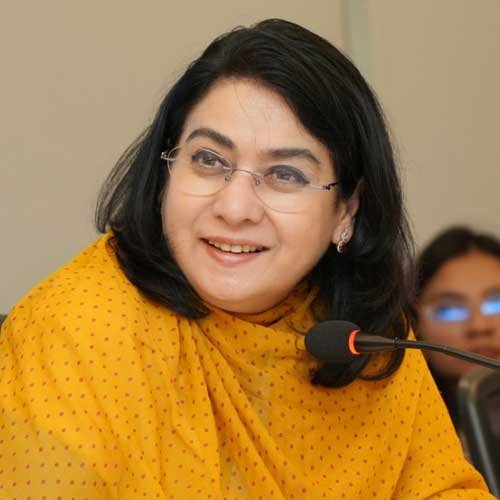 Although the introduction of family and farmers’ cards may bring some relief, excessive reliance on bank borrowing to finance the budget deficit is harmful to the economy, said Fahmida Khatun, executive director of the Centre for Policy Dialogue (CPD).
Fahmida said government social safety net initiatives, such as the family and farmers’ card, are promising, but their success depends on transparency and accountability in selecting and managing beneficiaries.
She added that past social protection schemes have often suffered from irregularities and corruption.
Fahmida also said subsidies must be properly targeted, with priority given to agriculture, irrigation, and public transport.
She stressed that the next budget should set clear policy directions– given limited resource mobilisation, and ensure cost-efficiency.
Fahmida further said that the government depends heavily on borrowing from the banking sector, including the central bank, to cover budget deficits, which she described as harmful.
She argued that greater emphasis should instead be placed on external financing sources.
She also suggested temporarily waiving VAT on imported goods amid global volatility to reduce pressure on consumers. Such a step during Ramadan in the past helped lower prices in local markets, she said, although weak market management could limit its full impact.
Hassan Ahamed Chowdhury Kiron, chairman of Debate for Democracy, said the country’s economy is going through a difficult period due to multiple global and domestic challenges.
He said the current government has taken office at a time when the country is suffering from years of crisis– the Covid-19 pandemic, the Russia-Ukraine war, economic damage from previous administrations, conflicts in the Middle East, energy shortages, rising inflation, low investment, limited job opportunities, high levels of loan defaults, and pressure from foreign debt.
He added that the US-Israel war on Iran has further worsened the global economic situation.
Rising global commodity prices and higher fuel costs due to Middle East tensions have increased the cost of living in the country, Kiron said in a statement after the programme.
He stressed that in a global recessionary situation, political unity is needed to maintain a tolerable standard of living without putting extra pressure on the government.
He also said both the government and the opposition must act responsibly, learn from past experiences, and avoid undermining each other, while a strong mandate holder should ensure public support by maintaining people’s comfort.
Kiron suggested temporarily reducing VAT and taxes on essential goods and expanding the affordable food supply through open market sales and the Trading Corporation of Bangladesh.
He also called for stronger social safety nets and more programmes like the family and farmers’ card to protect low- and middle-income groups.
Finally, he said the budget should be people-friendly, business-friendly, cautious, sustainable, balanced, and implementable, without putting pressure on lower-middle-income groups, while also helping stabilise prices and support investment and job creation.
In the shadow parliament debate titled “Rising cost of living is driven not by fuel price hikes but by global conditions,” debaters from Kabi Nazrul Government College defeated Dhaka College to win the competition.