

The national budget is not only an annual statement of income and expenditure; it is a reflection of public priorities, institutional choices and the government’s capacity to deliver services. Budget decisions affect citizens through prices, taxation, employment, subsidies, education, health, social protection, public investment and local development. For this reason, budget reporting needs to go beyond headline allocations and examine how fiscal decisions are formulated, financed, implemented and monitored.
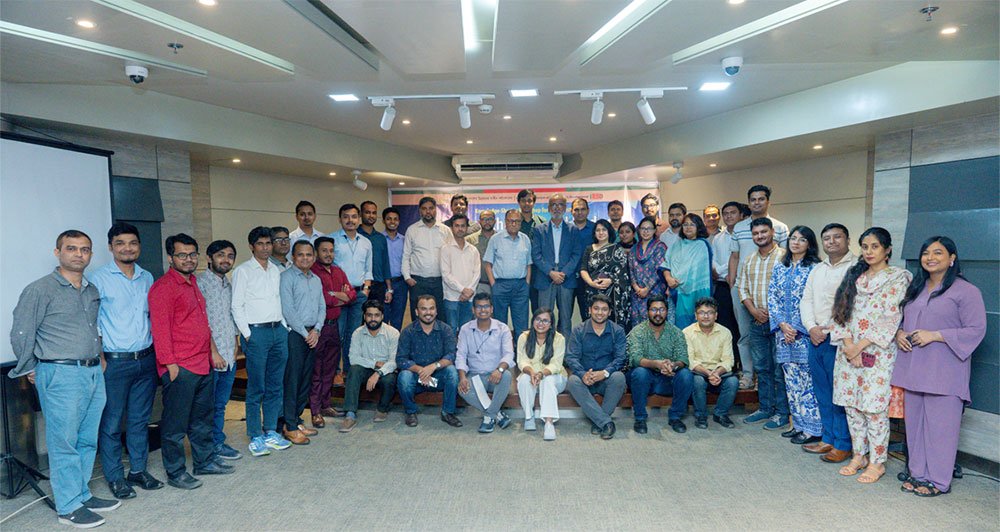
These observations emerged at the knowledge-sharing workshop for journalists titled ‘All About the National Budget: Formulation, Implementation and Accountability’, organised by the Centre for Policy Dialogue (CPD) on Monday, 8 June 2026, at the BRAC Centre Inn Auditorium, Dhaka. The workshop brought together journalists from print, television and digital media, with the aim of strengthening their capacity to report on the national budget in a more analytical, evidence-based and accessible manner.
The workshop began with a case-solving group activity, where participating journalists were divided into teams and assigned practical cases related to budget reporting. The exercise encouraged participants to identify the core fiscal issue in a story, determine relevant data sources, assess the public implications of budgetary decisions and develop possible reporting angles.
Following the group work, each team presented its analysis. The presentations reflected the participants’ interest in moving beyond descriptive budget coverage. Journalists discussed how to compare proposed allocations with revised budgets and actual expenditure, how to assess whether revenue targets are realistic, and how to identify who may benefit or be affected by changes in taxation, subsidies or public spending. The discussion also highlighted the importance of connecting budget figures with people’s lived realities, including inflation, employment, education, health, social protection and public services.
The first expert presentation was delivered by Mr Shawkat Hossain Masum, Head of Online, The Prothom Alo. Speaking on the formulation and basic concepts of the national budget, he explained the budget as the government’s annual financial plan and connected it with citizens’ everyday lives. His presentation covered income, expenditure, taxation, deficit, borrowing, fiscal policy and public expenditure in simple and accessible language. He also discussed the role of key institutions and stressed the importance of critically reading budget numbers rather than reporting only the total size of the budget.
The second expert presentation was delivered by Ms Doulot Akter Mala, President, Economic Reporters’ Forum (ERF). She discussed the implementation of the national budget, with a focus on income and expenditure. Her presentation highlighted why journalists should follow the budget throughout the fiscal year and examine whether revenue targets are achieved, allocated funds are spent on time and public expenditure produces intended outcomes. She emphasised that implementation-focused reporting is essential for accountability, as the effectiveness of the budget depends not only on allocations but also on delivery.
A Mentimeter session was conducted after the presentations to capture participants’ reflections and make the workshop more interactive. Journalists shared their views on budget reporting, the challenges they face and the areas where they require further clarity. The responses indicated strong interest in making budget reporting more understandable, evidence-based and relevant to citizens. Participants also expressed the need for deeper understanding of budget documents, revenue and expenditure data, implementation gaps, inflationary implications and accountability questions.
An open Q&A session followed, moderated by Dr Fahmida Khatun, Executive Director, Centre for Policy Dialogue (CPD). In her introductory remarks, Dr Khatun emphasised that the role of media workers is to present accurate information in simple and understandable language, while showing how public policies and budgetary decisions affect people’s lives in practical terms. She noted that journalists are already carrying out this important work, and that the workshop was organised to help them do it more effectively, more simply and more authentically.
Dr Khatun also reflected on the earlier sessions, noting that two experienced senior journalists had shared valuable insights with the participants. She then introduced the distinguished discussants for the Q&A session: Mr Mohammad Muslim Chowdhury, Former Comptroller and Auditor General of Bangladesh, and Mr Siddiqur Rahman Choudhury, Former Secretary, Finance Division and Former Chairman, Agrani Bank. Opening the discussion, she raised a central question on people-centred budgeting: although the budget is often described as being for the people, where do people’s reflections actually appear in the budget process?
Responding to the discussion, Mr Mohammad Muslim Chowdhury reflected on the importance of local government, public expenditure management and institutional accountability in the budget process. He observed that if the budget is to be genuinely people-centred, local government institutions need clearer recognition and a stronger constitutional and policy mandate. Planning, resource mobilisation and budgeting should not remain concentrated only at the central level; rather, grassroots budgeting should reflect community needs, local priorities and participatory development planning.
The discussion also addressed the persistent underutilisation of budget allocations. Journalists raised questions on why significant portions of allocations often remain unspent despite public demand for better services. Speakers noted that implementation failures are linked to governance weaknesses, corruption, inefficiency and limited institutional capacity. They stressed that the effectiveness of the budget depends not only on the amount allocated, but also on whether resources are used properly and projects are implemented on time.
Mr Siddiqur Rahman Choudhury discussed the budget preparation process and the institutional realities behind fiscal decision-making. He noted that Bangladesh’s budget process was once highly secretive, although access to information has improved through digital platforms, websites and online systems. However, transparency remains partial, and fiscal figures are often shaped by political and administrative considerations before technical teams finalise revenue targets, borrowing requirements, expenditure priorities and macroeconomic projections.
The link between fiscal policy and monetary policy was also discussed during the Q&A session. Speakers observed that government borrowing, budget financing and money supply management must be carefully coordinated. If public-sector borrowing rises excessively, it may affect private-sector credit, inflation and broader macroeconomic stability. They also noted that budget announcements often receive significant media attention, while implementation receives less scrutiny. The real test of the budget lies in whether allocations are implemented, whether policies are followed and whether spending produces the intended outcomes.
Accountability emerged as a central theme of the discussion. Speakers highlighted the role of Parliament, parliamentary committees, standing committees, select committees, opposition members and constitutional bodies in holding the executive accountable. They encouraged young journalists to ask sharper questions about why existing institutions are not exercising their oversight functions effectively.
The discussion also touched on corruption, bank looting, public-sector accountability and the capacity of existing laws and institutions to investigate and punish wrongdoing. Speakers observed that these are precisely the kinds of accountability questions that journalists should continue to raise, while also recognising the pressure media workers may face when questioning powerful individuals or institutions.
Employment and export diversification were also discussed. Speakers observed that labour-intensive export sectors, particularly the readymade garments sector, should continue to receive policy support because they generate large-scale employment, especially for women. At the same time, Bangladesh needs to diversify into new sectors such as IT, services and other emerging industries. However, technological changes, including artificial intelligence, must be considered when assessing which sectors can generate sustainable and decent jobs in the future.
The workshop concluded with an award-giving ceremony, recognising participants’ active engagement in the case-solving exercise, team presentations and discussion sessions. The closing segment reflected CPD’s continued commitment to strengthening journalists’ capacity to report on economic and development issues in a more informed, accessible and accountability-oriented manner.