

A safe workplace is not created through inspection alone. It requires trained inspectors, responsible employers, informed workers, functioning institutions and a culture where prevention is treated as a shared responsibility. For Bangladesh, where industrial growth remains central to employment, exports and economic transformation, occupational safety and health is also a question of productivity, competitiveness and dignity at work.
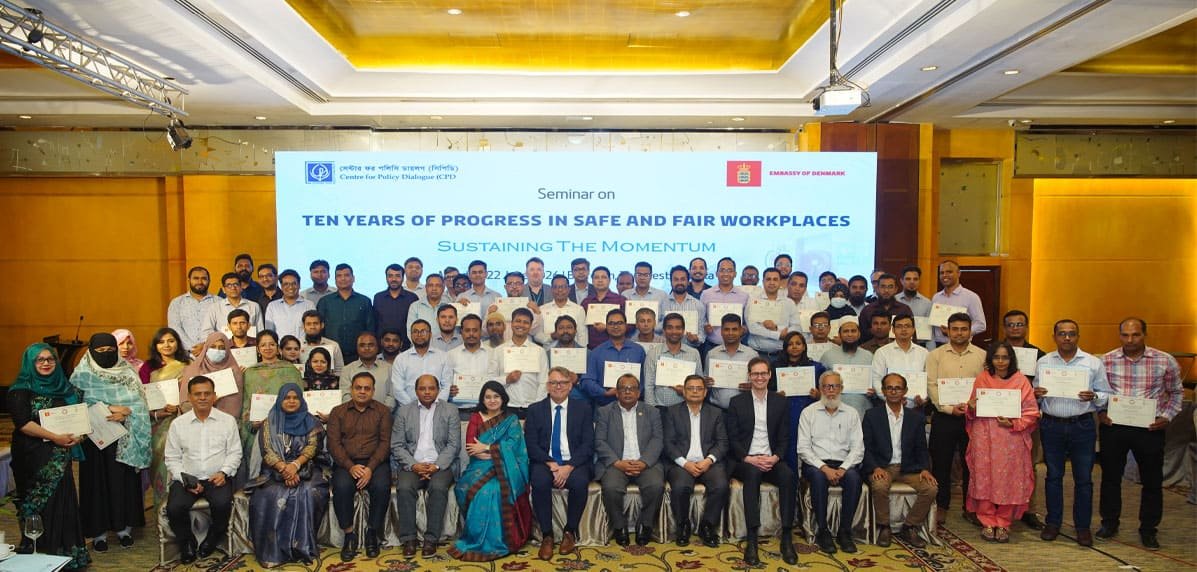
These observations emerged at the seminar titled ‘Ten Years of Progress in Safe and Fair Workplaces: Sustaining the Momentum’, organised in collaboration with the Centre for Policy Dialogue (CPD) and the Embassy of Denmark in Bangladesh, on Monday, 22 June 2026. The seminar marked ten years of Bangladesh-Denmark Strategic Sector Cooperation (SSC) on occupational safety and health, with a focus on strengthening labour inspection, recognising capacity-building efforts and identifying the way forward for sustaining reforms.
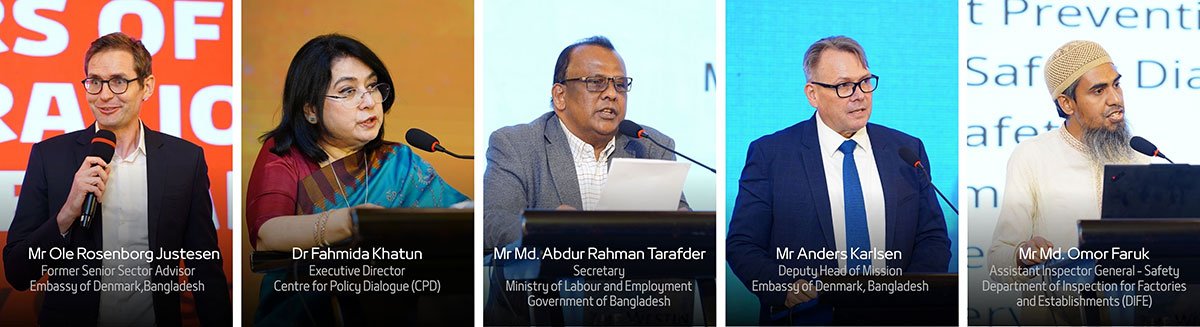
In her opening remarks, Dr Fahmida Khatun, Executive Director, CPD, said that the seminar marked an important milestone in the partnership between Bangladesh and Denmark in strengthening occupational safety and health, labour inspection and institutional capacity. She noted that the Rana Plaza tragedy reminded everyone that workplace safety is not only a technical issue, but also a question of human dignity, accountability and sustainable development.
Delivering the welcome remarks, Mr Anders Karlsen, Deputy Head of Mission, Embassy of Denmark in Bangladesh, said the cooperation was built on a simple but fundamental principle: ‘Every worker has the right to come home safely after a day’s work.’ He noted that Bangladesh had made important progress over the past decade, including stronger training for inspectors, exposure to international best practices, specialised OSH teams and improved institutional capacity.
Delivering the high-level reflections as the Chief Guest, Mr Md. Abdur Rahman Tarafder, Secretary, Ministry of Labour and Employment, Government of Bangladesh, said that Bangladesh recognised a decade ago that economic progress must go hand in hand with safe working environments, workers’ well-being and strong labour governance. He identified NOSHTRI as a major institutional achievement with the potential to become a leading centre for OSH training, research and knowledge generation.
‘The most significant achievement of this partnership is the transformation of DIFE into a more professional, knowledge-based and technically capable institution,’ Mr Tarafder said. He stressed that future efforts should expand OSH initiatives beyond the ready-made garment sector to high-risk sectors such as construction, shipbreaking, chemicals and light engineering, while strengthening digital inspection systems, institutional capacity and cooperation among government, employers and workers.
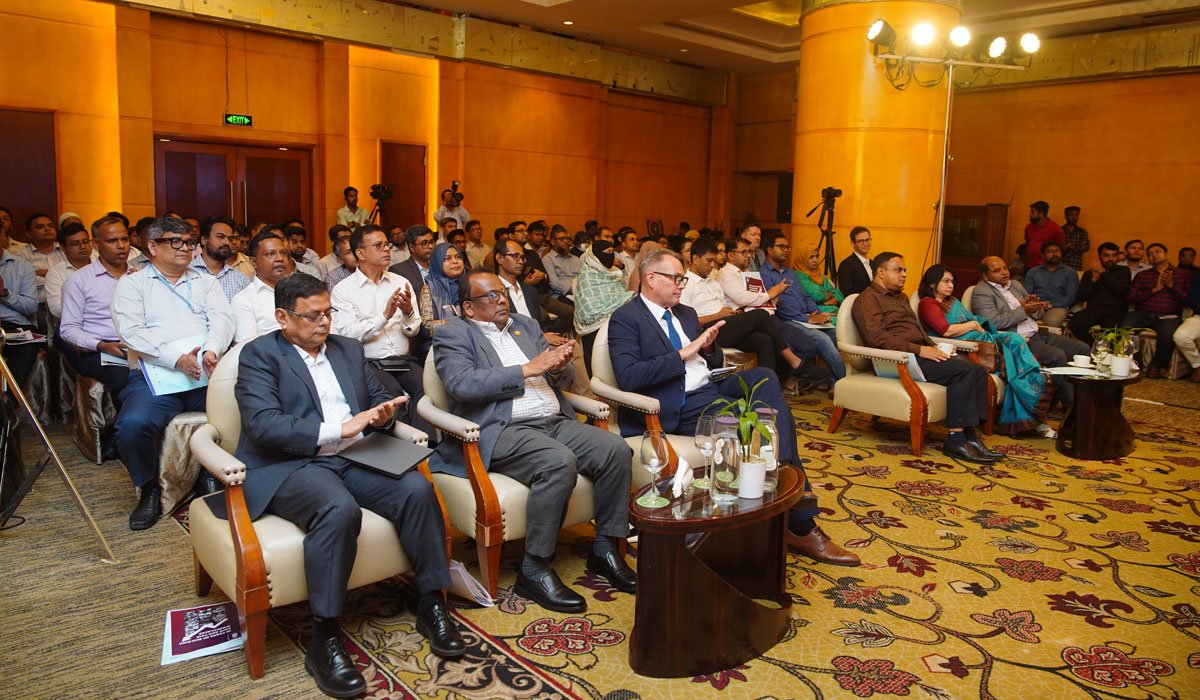
In his remarks as Special Guest, Mr Md. Forhad Siddique, Inspector General (Additional Secretary), DIFE, described the occasion as the culmination of ten years of meaningful partnership, professional exchange and institution-building. Congratulating more than 60 inspectors receiving certificates, he said the certificates symbolised enhanced responsibility, stronger competence and a renewed role in advancing safer workplaces.
Presenting the project results, lessons learned and way forward, Mr Ole Justesen said the initiative had moved beyond one-off training and built long-term institutional capacity through continuous engagement with DIFE labour inspectors. ‘This was not a one-off training. It was ten years of sustained cooperation, working day in and day out with labour inspectors to strengthen their capacity in occupational safety and health,’ he stated.
Looking ahead, he recommended linking training modules to a competency framework for DIFE inspectors, using more data-guided inspection approaches, and strengthening the role of the National Occupational Safety and Health Training and Research Institute (NOSHTRI) as a standard-setting and training institution.
Sharing the beneficiary perspective, Mr Md. Omor Faruk, Assistant Inspector General – Safety, DIFE, described the SSC Project as a transformational journey for labour inspectors. He said inspection practice had shifted from a compliance-based approach to a risk-based and preventive approach. ‘We are no longer just enforcers. We are partners in building safer workplaces in Bangladesh,’ he said.
The seminar concluded with a certificate-giving ceremony recognising the contribution of OSH team members and trained inspectors. The discussions underscored that the next phase of workplace safety reform will depend on institutional ownership, adequate resources, data-driven inspection, continuous training and stronger collaboration among all labour market actors.
Read our e-publication on Bangladesh–Denmark cooperation for sustainable industrial development.