
Lecture series strengthens policy analysis through research and interactive simulations.
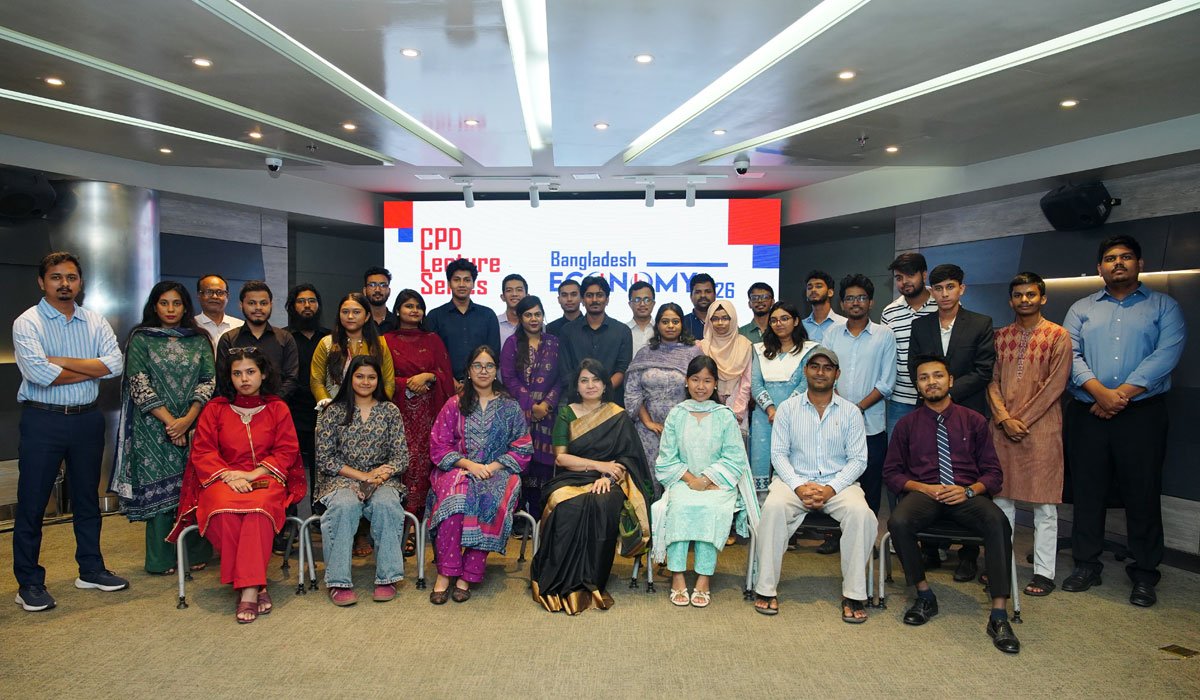
The Centre for Policy Dialogue (CPD) successfully organised the CPD Lecture Series on the Bangladesh Economy 2026 at the BRAC Centre INN, bringing together undergraduate and postgraduate economics students from universities across Bangladesh for a day of lectures, policy discussions and interactive policy simulations aimed at strengthening their understanding of the country’s evolving economic landscape.
As Bangladesh continues to navigate a rapidly changing economic environment, the lecture series sought to bridge the gap between academic learning and applied policy research. The programme provided participants with an opportunity to examine contemporary economic challenges through evidence-based analysis while demonstrating how economic research can support informed policymaking and public discourse.
The programme featured two thematic sessions covering The Economy of Bangladesh and The National Budget of Bangladesh. The first session examined Bangladesh’s past and present macroeconomic performance, including growth, inflation, employment, investment and the external sector, drawing on the latest economic evidence and policy developments, and projections for the future. The second session focused on fiscal policy and the national budget, exploring public finance, resource mobilisation, budget priorities and the role of fiscal policy in supporting sustainable and inclusive economic growth.
“Young economists have an important role to play in shaping Bangladesh’s future. Developing their ability to analyse evidence, understand policy trade-offs and communicate research effectively is essential for strengthening informed public debate and policymaking,” said Dr Fahmida Khatun, Executive Director of CPD.
A defining feature of this year’s lecture series was its emphasis on experiential learning. Participants worked in teams during the Policy Challenge 2026, where they analysed Bangladesh’s current economic conditions and developed evidence-based policy recommendations addressing issues such as inflation, employment, investment, export competitiveness and governance. They later participated in the Budget Challenge 2026, assuming the role of policymakers responsible for preparing a national budget while balancing competing development priorities, limited public resources and macroeconomic objectives.
The interactive exercises encouraged participants to appreciate the complexity of economic policymaking and the trade-offs involved in pursuing multiple policy objectives simultaneously. Throughout the programme, students engaged actively in discussions, collaborated with peers and presented their policy recommendations, creating an environment that promoted critical thinking, teamwork and evidence-based decision-making.
The lecture series concluded with a certificate distribution ceremony recognising participants’ successful completion of the programme. Through this initiative, CPD reaffirmed its commitment to nurturing the next generation of Bangladeshi economists by creating opportunities for young scholars to engage directly with contemporary economic challenges and applied policy research.
CPD will continue to expand initiatives that connect students with researchers and policymakers, helping build a new generation of economists equipped to contribute to Bangladesh’s economic development through rigorous analysis, critical thinking and evidence-based policymaking.