

Facebook Instagram Linkedin X Youtube
  • About Us
    • Who we are
    • What we do
    • Governance
      • Board of Trustees
      • Management and Implementation Committee
    • We Host
    • We are Member
    • Best Practices
      • Dialogue Promoting Inclusive Society
      • Promoting Citizens’ Participation in Democracy through Civic Activism
    • Thirty Years of CPD
    • CPD Annual Reports
    • Our Policies
      • Safeguarding Policy
      • Sexual Harassment Complaint & Redress Policy
  • Ongoing Research
    • Independent Review of Bangladesh’s Development (IRBD)
    • CPD Power and Energy Study
    • Mobilise for Reform: Advancing Youth Leadership, Public Health, and Inclusive
    • Economic Reform and Green Transition in Bangladesh
    • Achieving a Peaceful, Just and Inclusive Society through Enhanced Engagement of Civil Society and Citizens in Bangladesh
    • Rethinking the Selection of the UN Secretary-General: Insights from the Global South
    • Life after Life: Future of Work in Bangladesh
    • Task Force on Climate, Development and the IMF
  • Dialogue & Outreach
    • Dialogues
    • Media Brefings
    • Meetings
    • Conference
    • Special Events
    • Workshop
    • Young Scholars Seminar Series (YSSS)
    • Professional Engagement
  • Publications
    • Publications
    • Dialogue Reports
    • Presentations
    • Publication List
    • Purchase Book
  • Opinion
    • Op-eds and Interviews
    • CPD in the Media
  • CPD Team
    • Executive Director
    • Distinguished Fellows
    • Research
    • Dialogue & Communication
    • Administration & Finance
  • Career Opportunity
    • Position to be filled up immediately
    • Internship at CPD
    • CPD Visiting Fellow’s Programme
    • Career Opportunities for NRBs at CPD
  • Call for proposal
  • Whistleblowing
  • Contact
Search
Centre for Policy Dialogue (CPD)
Thursday, August 13, 2026
  • Call for Proposal
  • Career Opportunity
    • Position to be filled up immediately
    • CPD Visiting Fellow’s Programme
    • Career Opportunities for NRBs at CPD
    • Internship at CPD
  • Whistleblowing
FacebookFacebook
LinkedInLinkedIn
InstagramInstagram
YoutubeYoutube
Centre for policy dialogue (CPD)
spot_img
  • About Us
    • Who we are
    • What we do
    • Governance
      • Board of Trustees
      • Management and Implementation Committee
    • We Host
    • We are Member
    • Best Practices
      • Dialogue Promoting Inclusive Society
      • Promoting citizens’ participation in democracy through civic activism
    • Thirty Years of CPD
    • CPD Annual Reports
      • Annual Report 2024
      • Annual Report 2023
      • Annual Report 2022
      • Annual Report 2021
      • Annual Report 2020
      • Annual Report 2019
      • Annual Report 2018
      • Annual Report 2017
      • Annual Report 2016
      • Annual Report 2015
      • Annual Report 2014
      • Annual Report 2013
      • Annual Report 2012
      • Annual Report 2011
      • Annula Report 2010
      • Annual Report 2008
    • Our Policies
      • Safeguarding Policy
      • Sexual Harassment Complaint & Redress Policy
  • Our Research
    • Research Areas
    • Ongoing Research
    • Independent Review of Bangladesh’s Development (IRBD)
    • CPD-RMG Study
    • Project Budget
      • Bangladesh Reform Watch-A Citizen’s Initiative for a Country in Transition
      • Exploring Colonial Continuties in the German Development Cooperation in Bangladesh and Srilanka
      • Revisiting Target Set for renewable energy based power Generation by 2040-Projecting ‘SMART’ Target and required Investment
      • SDG Facility Dhaka Reform Support Project
      • To Strength Connections between micro and meso level actors for developing the distributed renewable energy in Bangladesh
      • Youth Capacity Building in Digital Health and Governance
      • Upgrading the Institutional Capacity of CPD Power and Energy Studies
      • Doing Good Index-2026
      • Nagorikata-Achieving Peaceful just and Inclusive Society
      • Economic Reform and Green Transition of Bangladesh
      • Reaching the Furthest Behind the First
      • Bangladesh in Transition-Outlook, Options and Obstacles
      • Public Procurement in Bangladesh Power Sector
      • Transformative Economic Policy Programme Bangladesh (TEPP)
      • Upgrading the institutional base of CPD power and Energy Unit
      • Task Force on Climate, Development and The IMF
      • To See the Impact of Power and Energy Transition from Fossil Fuel to the Renewables on Employment
      • Key development issues for setting a national agenda from LNOB
      • G7 Summit in 2023-Call for Global Initiative for Ending support for Fossil fuels
      • Facilitating Business Through Better Access to Regulatory, Institutional and Operational Information
      • Bangladesh’s Emerging External Debts Servicing Scenario-Are There Reasons to be concerned
      • Aligning Policies with Bangladesh’s Aspiration
      • Civil Society Monitoring on Occupational Safety and Health (OSH)
      • Emergence and Evolution of Citizen’s Platform for SDGs Bangladesh
      • Social Protection for Workers in the Textile and Leather Sector
      • Strengthening Institutional Capacities
      • Technical Assistance to Support the Implementation of the PFM Reform Plan
      • Towards People Centric Public Finance Management in Bangladesh
      • 14th South Asia Economic Summit
      • Energy Transition for Addressing Energy Crisis in Bangladesh
      • How relevant is the MDB reform discourse for Southern MDBs
      • Strengthening The Stakes of Disengaged youth during the dual transition of Bangladesh
      • To support development collaboration for climate change and gender equality
    • Previous Projects
      • Securing Green Transition of the Textile and RMG Sector in Bangladesh
      • Green Cities Initiative
      • Life after Life in Post-COVID-19 World
      • Exploring “Development Effectiveness” at the Sectoral Level in Southern Countries
      • Towards a People-Centric Public Financial Management in Bangladesh
      • Fourteenth South Asia Economic Summit (SAES XIV)
      • 50 Years of Bangladesh
      • Localizing SDG
      • CPD RMG Study
  • Dialogue & Outreach
    • Dialogues
    • Media Briefings
    • Meetings
    • Conference
    • Special Events
    • Workshop
    • Young Scholars Seminar Series (YSSS)
    • Professional Engagement
  • Publications
    • Publications
    • Dialogue Reports
    • Presentations
    • Publication List
    • Purchase Book
  • Opinion
    • Op-eds and Interviews
    • CPD in the Media
  • CPD Team
    • Executive Director
    • Distinguished Fellows
    • Research
    • Dialogue & Communication
    • Administration & Finance
  • Contact
Home Professional Engagement Fahmida Khatun
  • Professional Engagement
  • Fahmida Khatun

Seminar on the National Budget FY2026–27 Organised by Green University of Bangladesh

July 7, 2026

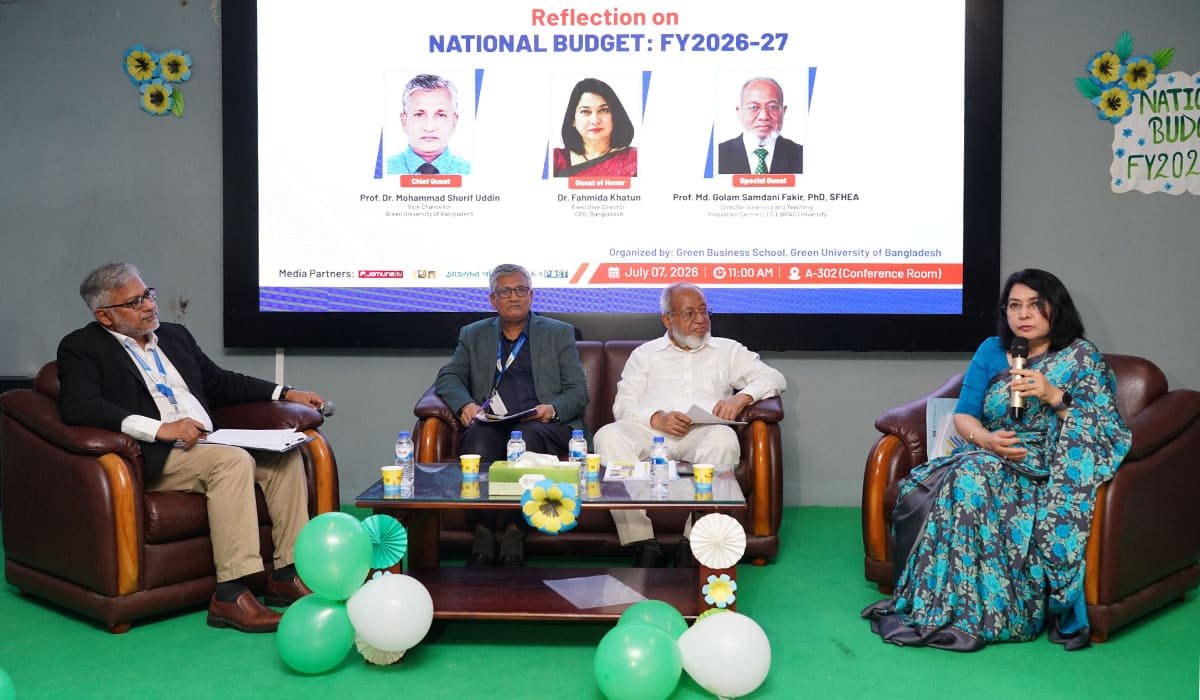
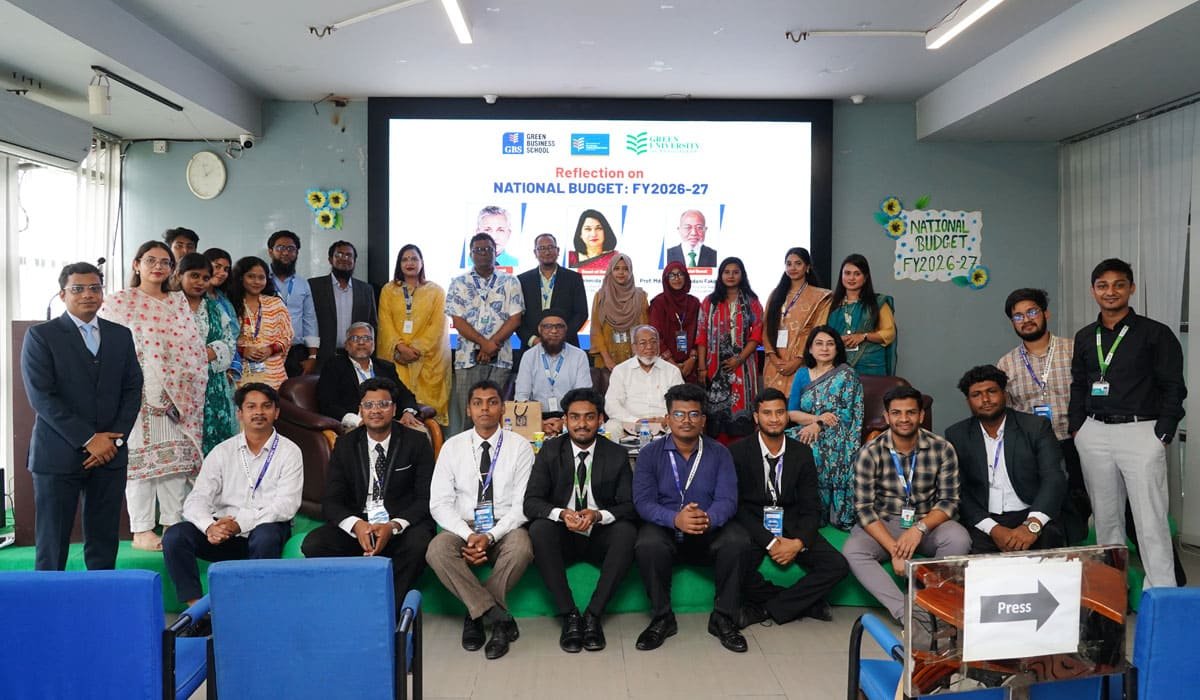
The Green Business School (GBS), Green University of Bangladesh (GUB), organised a seminar on 7 July 2026 titled “Reflection on National Budget FY2026–27: A Review” at the university’s permanent campus in Purbachal. The seminar brought together academics, researchers, students, and media representatives to discuss the key priorities and challenges of the proposed national budget and its implications for Bangladesh’s economic development. The seminar was chaired by Professor Dr Mohammad Tareq Aziz, Dean and Director of MBA Program, Green Business School, GUB. Professor Dr Mohammad Sharif Uddin, Vice Chancellor, GUB, attended the programme as the Chief Guest. Dr Fahmida Khatun, Executive Director of the Centre for Policy Dialogue (CPD) was the guest of Honor, and Professor Dr Md Golam Samdani Fakir, Director, Learning and Teaching Innovation Centre, BRAC University, joined the seminar as Special Guest.

The seminar commenced with a research-based keynote presentation by BBA students Faisal Bin Abir and Tahmid Ferdous. The presentation reviewed the proposed National Budget FY2026-27, covering its overall size, economic growth targets, revenue mobilisation strategy, sectoral allocations, investment outlook, inflation management, foreign exchange reserves, remittance trends, public safety, and priorities for the agriculture sector. The presentation also highlighted the major macroeconomic challenges facing Bangladesh and assessed the effectiveness of the proposed fiscal measures.
In his inaugural remarks, Professor Dr Mohammad Sharif Uddin emphasised that sustainable and inclusive economic development requires greater investment in education, healthcare, and agriculture. He stressed that improving the quality of higher education, strengthening research culture, promoting ethical values, and developing globally competitive human resources are essential for building a resilient knowledge-based economy. Delivering her remarks, Dr Fahmida Khatun said that Bangladesh continues to face multiple macroeconomic challenges arising from post-pandemic global conditions and ongoing geopolitical uncertainty. She underscored the need for comprehensive banking sector reforms, reduction of non-performing loans, stronger financial governance, and employment-oriented policy measures to restore macroeconomic stability and support sustainable growth. Professor Dr Md Golam Samdani Fakir highlighted that strengthening Bangladesh’s competitiveness in the era of the Fourth Industrial Revolution requires increased investment in technology, innovation, research, and higher education. He also emphasised the importance of stronger collaboration among universities, industry, and government to accelerate knowledge generation, innovation, and long-term economic transformation. Speaking at the seminar, Professor Dr Mohammad Tareq Aziz noted that the national budget is more than a fiscal document; it reflects a country’s development vision and policy priorities. He remarked that research driven academic dialogue on the national budget helps students strengthen their policy analysis, critical thinking, and research capabilities. He reaffirmed Green Business School’s commitment to promoting evidence-based discussions on contemporary national issues through academic engagement. Throughout the seminar, speakers highlighted that effective implementation of the national budget should prioritise education, research, innovation, human capital development, and economic governance. They argued that strategic investments in these areas are essential for addressing persistent challenges, including inflation, employment generation, and global economic uncertainty, while supporting Bangladesh’s transition towards a knowledge driven economy.
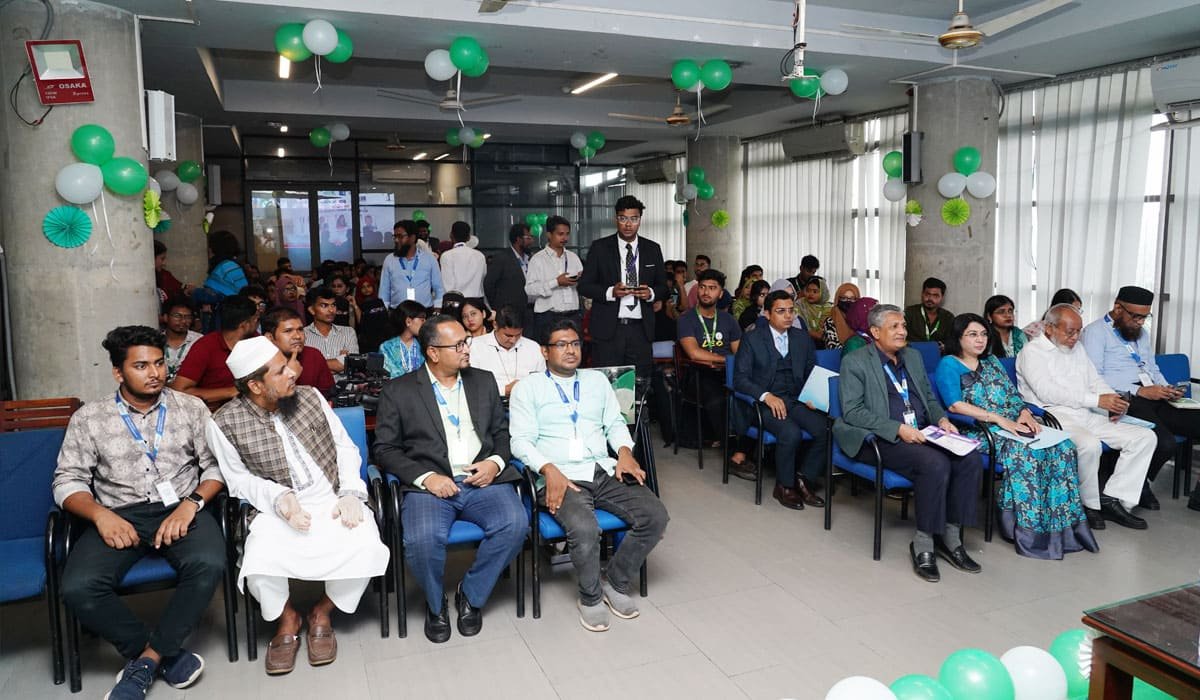
The seminar concluded with an interactive question-and-answer session, where students exchanged views with the distinguished speakers on the opportunities and challenges associated with the National Budget FY2026 27. Participants engaged in discussions on fiscal policy, economic governance, employment, higher education, and research, reflecting strong interest in evidence-based policy dialogue. The programme ended with the presentation of commemorative crests to the distinguished guests in recognition of their participation and contributions.
Get CPD's latest research, policy insights, publications, and event updates.

Thank you for subscribing. Check your inbox or spam folder to confirm your subscription.

Facebook
X
WhatsApp
Email
    Sarwar
    Centre for Policy Dialogue (CPD)

    House 40/C, Road No 11 (new)
    Dhanmondi, Dhaka – 1209
    Phone: (+88 02) 41021780-2
    E-mail: info@cpd.org.bd

    Quick Access

    • Blog
    • Call for proposal
    • Career Opportunity
    • IRBD Programme
    • Presentations
    • Publications
    • Whistleblowing

    CPD Team

    • Executive Director
    • Management and Implementation Committee (MIC)
    • Distinguished Fellows
    • Research
    • Dialogue & Communication
    • Administration & Finance

    Social

    Facebook
    LinkedIn
    Youtube
    Instagram