

Bangladesh must prepare for future CBAM risks by accelerating decarbonisation in the Ready-Made Garment (RMG) sector, strengthening carbon-accounting and Monitoring, Reporting and Verification (MRV) capacity, improving access to renewable energy, and preparing industries and workers for evolving European climate regulations. Although Bangladesh’s present direct exposure to the European Union’s Carbon Border Adjustment Mechanism (CBAM) is limited, the risks could increase substantially if the mechanism is expanded to include textiles and apparel.
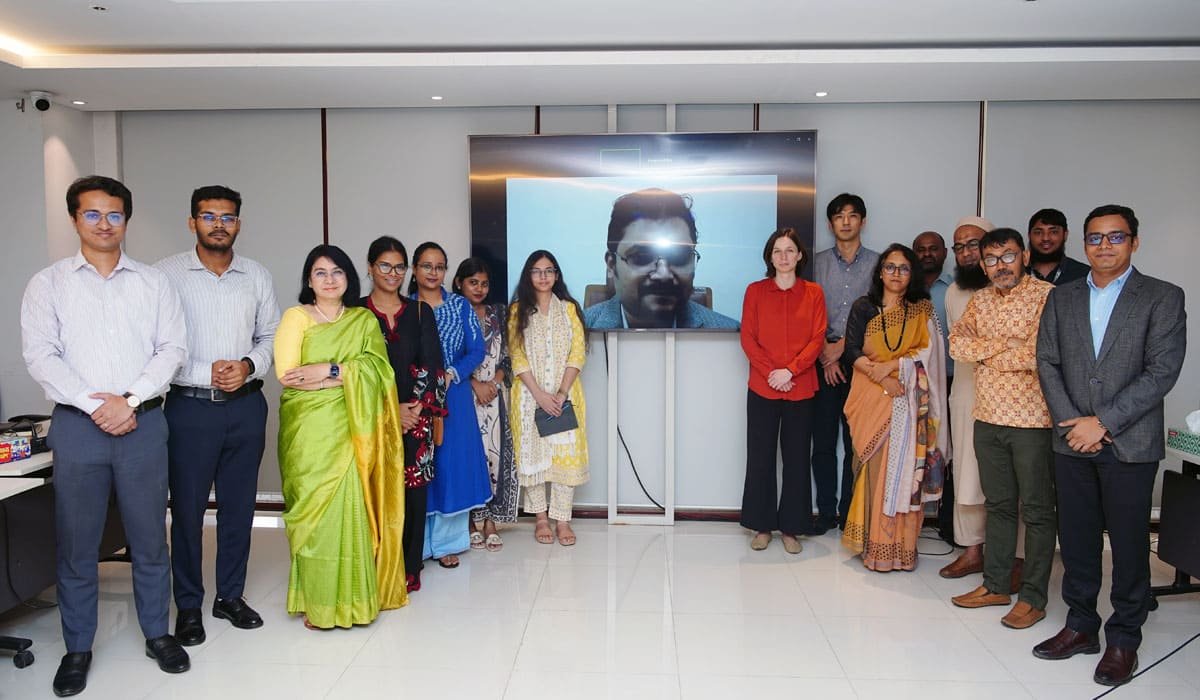
These issues were highlighted at an Expert Group Meeting organised by the Centre for Policy Dialogue (CPD) on Sunday, 30 August 2026, at the CPD office. The meeting discussed the findings of CPD’s draft study titled Assessing the Impact of the EU Carbon Border Adjustment Mechanism (CBAM) on Bangladesh’s Export Competitiveness: A Scenario-Based Analysis of the RMG Sector.
Delivering the welcome remarks, Dr Fahmida Khatun, Executive Director, CPD, noted that the products currently covered by CBAM are not major exports from Bangladesh to the EU. However, the mechanism could become increasingly relevant if its scope is expanded in the future. She stressed that the issue should not remain merely an academic exercise; both the government and industries need to understand their emission levels, establish appropriate carbon-accounting systems and assess the preparations Bangladesh needs to undertake.
Following the welcome remarks, the keynote presentation was delivered by Dr Sakib Bin Amin, Professor in Economics, North South University. He presented the findings of the study, which assesses the potential impact of CBAM on Bangladesh’s RMG export competitiveness, examines its combined implications with post-LDC graduation tariff preference erosion, evaluates broader economic impacts, and identifies strategic measures for safeguarding the competitiveness of the sector.
The study showed that Bangladesh’s current direct exposure to CBAM remains low. At present, CBAM-covered sectors account for only 0.60 per cent of Bangladesh’s total exports. However, sectors potentially at risk from a future expansion of CBAM, including apparel, account for 81.61 per cent of total exports and 39.75 per cent of EU-bound exports, indicating considerable future vulnerability.
The scenario-based analysis also highlighted the compounded risks arising from CBAM and Bangladesh’s LDC graduation. Under the CBAM-only scenario, exports are estimated to decline by 0.49 per cent from the baseline. When CBAM is combined with the loss of tariff preferences following LDC graduation, the decline in exports increases to 1.30 per cent. Investment and GDP also decline more sharply under the combined scenario.
The impacts are not evenly distributed. The study found that the RMG sector would absorb a disproportionate share of the losses, while lower-educated workers and poorer households would be more vulnerable. The analysis therefore underscored the importance of integrating just transition considerations into Bangladesh’s response to emerging carbon-related trade measures.
The study proposed four key priorities: decarbonising RMG production, diversifying export markets and sectors, protecting low-income and low-skilled workers, and strengthening engagement with the EU in the context of LDC graduation. It also emphasised developing an effective MRV and carbon-accounting system and seeking technical and financial assistance for green compliance.
During the discussion, Mr Munir Uddin Shamim, Director – Programme, Evidence & Learning, ETI, emphasised that the impact of future regulations would depend substantially on the preparedness of factories, industry associations and the government. He suggested assessing industry awareness, technical capacity and data-management readiness. He also noted that workers should not be considered only as recipients of support; they could become agents of change by contributing to greater energy and resource efficiency.
Dr Benuka Ferdousi, Senior Research Fellow, Bangladesh Institute of International and Strategic Studies (BIISS), suggested incorporating indicators of industrial preparedness—including energy efficiency, documentation, digital reporting and carbon-pricing capacity—into the analysis. She also called for greater emphasis on decarbonising the overall economy and addressing broader challenges within the energy sector.
Ms Rubiya Binte Mustafiz, Energy Sector Expert, highlighted the importance of skilled energy auditors, energy managers and machine operators in improving energy management. She also stressed the need to assess the actual scope for energy efficiency in Bangladesh’s RMG value chain, improve access to appropriate technology and financing, expand renewable energy deployment and train workers to manage technological changes.
Mr Keisuke Iyadomi, Senior Climate Change Specialist, The World Bank, suggested examining Bangladesh’s existing technological capacity and possible innovation pathways alongside the economic impacts identified by the study. This could help identify both potential benefits and gaps associated with different technological responses.
Dr Rohini Kamal, Assistant Professor, Research Fellow and Head, Environment and Climate Change Cluster, BRAC Institute of Governance and Development (BIGD), highlighted the practical limitations of relying solely on rooftop solar for industrial decarbonisation. She also called for greater clarity regarding carbon-accounting methodologies, particularly the treatment of upstream production inputs. She argued that the costs of decarbonisation should be negotiated more strategically across global value chains, including through longer-term procurement commitments from buyers.
Dr Fazle Rabbi Sadeque Ahmed, Adviser, Climate Change and Disaster Management Division, Centre for Environmental and Geographic Information Services (CGIS) emphasised that Bangladesh’s transition towards decarbonisation should take into account its national circumstances and development priorities. He highlighted issues relating to just transition, financing, land scarcity, food security, ecosystems and energy security, and called for stronger national and international engagement on these concerns.
From an industry perspective, Mr Mahbubur Rahman, DGM – Sustainability, Bitopi Group, noted that international buyers are already setting increasingly stringent emission-reduction requirements. While factories are investing in rooftop solar, energy efficiency and other alternatives, their ability to decarbonise remains constrained by limited renewable-energy options. He cautioned that factories unable to meet buyers’ requirements could lose business to competing sourcing destinations.
Mr Md Abdullah Hell Baki, Vice President, ICS Programme, IDCOL, highlighted ongoing renewable-energy financing initiatives and stressed the need for greater availability of concessional finance, quicker grid connections and approval processes, and incentives for wider adoption of rooftop solar.
The discussion underscored that Bangladesh’s currently limited direct exposure to CBAM provides an important window for preparation. Strengthening industrial readiness, renewable-energy access, carbon-accounting capacity, workforce skills, financing mechanisms and international engagement will be critical for maintaining the long-term competitiveness of Bangladesh’s RMG sector.