

Originally posted in bu.edu on 5 November 2026

Climate change is already raising the cost and uncertainty of Bangladesh’s trade, just as Least Developed Country (LDC) graduation threatens to erode the preferential market access on which the country’s exporters have long relied. In July 2026, heavy rain stranded over 50 vessels at Chittagong (Chattogram) Port and caused shipping delays. In October 2026, the Asian Development Bank reported that flood-exposed settlement in Chittagong grew by 16.2 percent from 2016-2025. With coastal flooding linked to climate change becoming more common, climate-related trade disruptions in Bangladesh could become more frequent and costly.
As climate risks grow, Bangladesh’s trade competitiveness will increasingly depend on how well its seaports can withstand them. With the country’s seaports still at an early stage of physical and digital transformation, closing the resilience gap will demand sustained investment from a diverse mix of public, private, foreign and green finance sources.
Climate shocks and Bangladesh’s ports
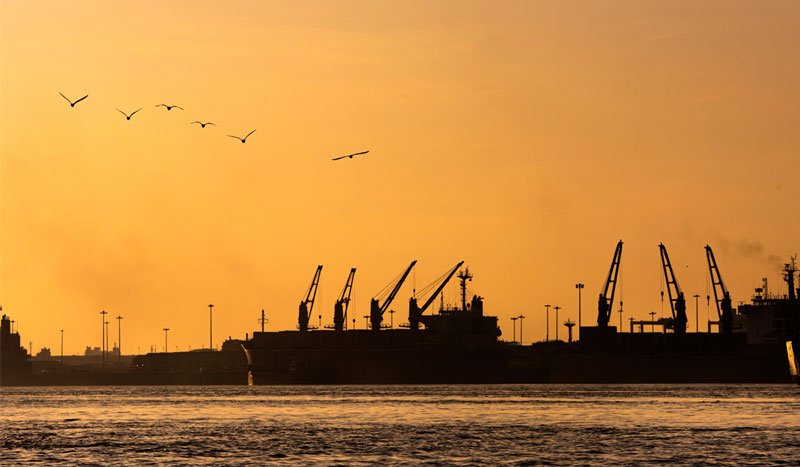
Three of Bangladesh’s seaports, Chittagong, Mongla and Payra, handle 90 percent of international trade, contributing significantly to the country’s gross domestic product (GDP). Their importance has only grown as cargo volumes and vessel traffic have expanded substantially. However, the current seaports lack deep-water berths to accommodate larger cargo vessels, resulting in congestion and longer turnaround times, thereby making the infrastructure less robust to disruptions, including climate shocks.
For Bangladesh, severe cyclones regularly batter the country’s low-lying coastal belt where its major seaports are located, putting critical infrastructure and operations in the path of strong winds, storm surges and coastal flooding. Sea levels are projected to rise by more than 27 centimeters by 2050, likely making devastating storm surges more frequent.
When a country’s maritime trade is concentrated in a small number of ports, as is the case for Bangladesh, disruptions in operations can have disproportionately large consequences for national trade flows. Given the critical role of Bangladesh’s ports in the global trading system and their potential exposure to climate-related damage, enhancing their climate resilience is strategically important to the national economy and society as a whole.
The economic case for climate-resilient infrastructure
Countries recover better from climate shocks when they have strong infrastructure, better institutions and the capacity to adapt. The recently published technical paper “Implications of Climate-Resilient Infrastructure on Bangladesh’s Trade Costs” from the Task Force on Climate, Development and the International Financial Architecture illustrates this in the context of Bangladesh. Using a flipped gravity model to compute trade costs and a fixed-effects panel regression, it finds that, for Bangladesh, higher climate readiness limits the rise in trade costs when disasters strike. Readiness does not eliminate climate hazards, but it acts as a shock absorber, sustaining trade flows during periods of disruption.
Building this resilience, however, comes at a cost, as upgrading port infrastructure, strengthening regulatory frameworks and complying with international environmental and safety standards all require substantial upfront investment. But this cost can be worth bearing, as the benefits of climate-resilient infrastructure can significantly outweigh it. The World Bank has extended $650 million in financing to develop the Bay Terminal Marine Infrastructure Development Project in the port city of Chittagong. Using a benefit-cost ratio (BCR) analysis, the technical paper finds that this project, which aims to boost operational efficiency and climate resilience, yields higher returns than its upfront cost. The paper builds six separate scenarios, and in all six, the benefits come out ahead over the long term.
The path forward: Financing and institutional coordination
If investing in port resilience is good economics, how can Bangladesh unlock the required finance? An investment framework would need to consolidate Bangladesh’s key national climate change planning instruments, including the Bangladesh Delta Plan (BDP) 2100’s Delta Fund, green finance instruments from the Climate Prosperity Plan (CPP) and potentially the National Adaptation Plan’s (NAP) financing strategies. Coordinating across the three is arguably a precondition for the consolidated, blended financing model needed to achieve a more unified financial architecture.
A range of financing mechanisms could help diversify Bangladesh’s climate finance landscape and build climate-resilient ports. Climate resilience bonds are one option, in which a public entity raises financing for investments designed to mitigate climate-related risks, while investors provide upfront capital through insurance-linked securities. Bangladesh could also consider a public–private investment mix in which government investment focuses on foundational port infrastructure, while private investment is directed towards components that enhance port efficiency. Additionally, the country could explore carbon market mechanisms as a complementary source of financing for low-carbon and climate-resilient trade infrastructure. The technical paper discusses each mechanism in more detail.
The availability of finance is not the only factor influencing Bangladesh’s ability to develop climate-resilient trade infrastructure. Building resilience will also depend on how effectively the Ministry of Finance, institutions and sectoral associations, private investors, multilateral development banks (MDBs) and development finance institutions (DFIs) coordinate to mobilize and deploy the required resources. MDBs and DFIs should help ports unlock carbon market revenues by supporting credible carbon credit generation and project preparation. However, these revenues alone will not close the financing gap. This is because carbon revenues accumulate gradually over a project’s lifetime, while investment costs are incurred upfront. Therefore, for projects that lead to reductions in emissions and the generation of carbon revenues, long-term and affordable finance from MDBs and DFIs is needed.
As the technical paper concludes, closing the resilience gap will not just hedge against climate risks. It also represents an opportunity for Bangladesh to invest in bolstering its trade competitiveness and economic stability, at a time when climate shocks and the impending LDC graduation pose challenges to protecting them.