

Originally posted in The Daily Star on 12 February 2026
CPD Executive Director Fahmida Khatun says pre-deal consultations with economists were largely formalities
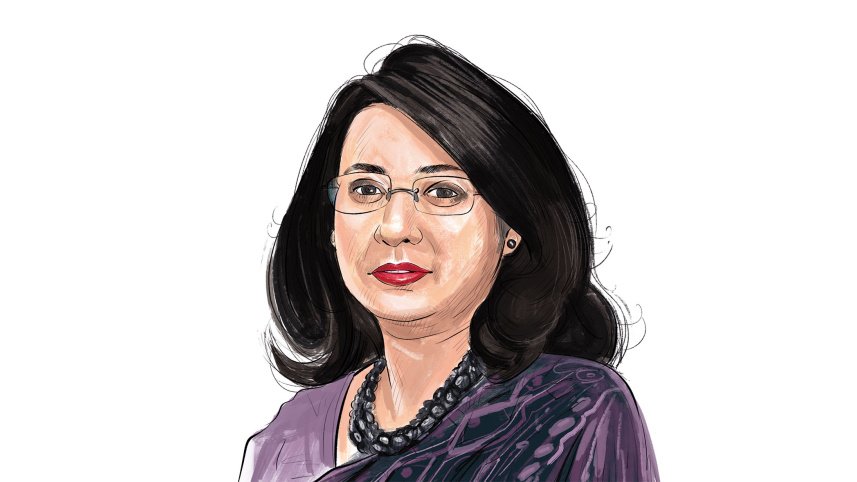
Bangladesh’s recently signed trade deal with the United States promises slight tariff relief but carries deeper implications for fiscal stability, foreign policy and democratic transparency, according to Fahmida Khatun, executive director of the Centre for Policy Dialogue (CPD).
The economist says the agreement, signed on February 9 just days before a national election, was negotiated with limited public engagement.
The interim government did hold meetings with economists, civil-society representatives and business leaders on ways to reduce bilateral trade deficit, but Fahmida, who attended one of the sessions, describes them as “just mere formalities.”
The deal may help exporters in the short-term, but its financial costs, geopolitical conditions and policy limits could affect Bangladesh’s economy for years
In an interview with The Daily Star, she said that those discussions were limited in scope and substance. When economists began raising questions, there was little clarity about the topics under consideration.
Meanwhile, negotiations with US authorities continued under a non-disclosure agreement, with no public information available, she said.
“Overall, the process resembled a box-ticking exercise rather than a genuine national consultation,” added the CPD executive director.
“The deal may help exporters in the short-term, but its financial costs, geopolitical conditions and policy limits could affect Bangladesh’s economy for years.”
She emphasised that the agreement is “not only an economic agreement but also geopolitical and security-related,” which makes transparency essential.
For a pact that will shape trade, diplomacy and fiscal priorities for years, the lack of broader engagement has raised concerns about legitimacy and preparedness.
According to Fahmida, a far-reaching agreement covering tariffs, defence and energy purchases, technology use and geopolitical alignment has been signed without a strong public debate. Implementation will not fall on those who negotiated it but on the next elected government.
“The interim government will leave without responsibility, while the next government will bear both the positives and negatives,” she observes.
SOME RELIEF
Under the deal, the reciprocal tariff on Bangladeshi exports to the United States, previously set at 20 percent, has been reduced to 19 percent. In the fiercely competitive ready-made garment sector, the difference matters as much psychologically as financially.
“Even though it is only a 1 percentage-point reduction, it still provides some relief,” said the CPD executive director.
Competing exporters face broadly similar tariff levels. Vietnam continues to face around 20 percent, while India, which previously had the same rate, has recently secured a reduction to 18 percent, putting Bangladesh closer to its competitors.
The agreement also provides duty benefits in the US market for garments made with American cotton, though the advantage is limited.
“Bangladesh also exports to other countries, so this is only partially beneficial,” she commented.
“It may help Bangladesh remain competitive in its largest export sector, but it does not fundamentally alter the structure of trade.”
THE HIDDEN COST: FISCAL STRAIN
For the next government, the larger economic effects lie in financial obligations. The deal includes commitments to purchase US goods, notably Boeing aircraft, and to expand cooperation in agriculture and energy.
The agreement enforces a form of managed trade with specific targets. Bangladesh has committed to purchasing $15 billion worth of US energy commodities, including liquefied natural gas (LNG), over 15 years.
LNG may conflict with Bangladesh’s long-term energy goals. “Bangladesh aims to increase renewable energy, but LNG is expensive and not clean,” Fahmida said.
“Ideally, the country should gradually reduce LNG dependence and invest in domestic energy exploration. Instead, the agreement may lock Bangladesh into costly energy imports.”
In agriculture, Dhaka will import at least $3.5 billion of US farm products, including wheat and soybeans.
Bangladesh is already coping with rising domestic and external debt. “The fiscal space of the government is very narrow. We have relatively high debt, and repayment has already started,” said the economist.
The CPD executive director said that funding the purchases of 14 aircraft will require “proactive efforts” and could further strain debt sustainability. The country’s debt-to-GDP ratio rose to 38.61 percent in the first quarter of this fiscal year from 36.30 percent a year earlier, reflecting sustained borrowing amid tightening fiscal space.
Though framed as a trade deal, Fahmida said the agreement carries clear geopolitical overtones. Certain clauses limit Bangladesh’s engagement with “non-market countries,” widely interpreted to include China and Russia.
“There are clauses binding Bangladesh not to engage in certain dealings with so-called ‘non-market countries’,” Fahmida said. “This clearly introduces a geopolitical and security dimension.”
For a country that has traditionally balanced relations among major powers, this could complicate foreign policy.
“Bangladesh’s foreign policy is to maintain a balanced relationship with its partners. How the government will implement this while maintaining balance is going to be another challenge,” she said.
POLITICS AND TIMING
The timing of the agreement has amplified controversy. Signed three days before a national election, it was concluded by an interim administration that will not oversee its implementation.
Fahmida believes the timing of the agreement is crucial. “This is a major national decision. Ideally, the elected government should have taken this decision.”
“The urgency is difficult to explain. Negotiations had been ongoing for months, and while exporters, particularly garment manufacturers, probably benefited from clarity on tariffs, broader national interests suffered.”
She said, “Closing the deal may have been necessary for exporters, but not necessarily for all sectors. The deal could have waited.”
The next government will inherit the consequences of a deal it did not negotiate. Renegotiation may be difficult. “Once an agreement is signed, flexibility is limited,” Fahmida said.
The agreement intersects with wider structural changes. Bangladesh is preparing to graduate from least developed country status in November, a shift that will reduce preferential market access and concessional financing.
According to her, to sustain growth, Bangladesh must diversify trade partnerships, improve governance and strengthen institutions. The competitive landscape is also shifting.
India has secured more favourable trade terms with major partners, including the European Union. “Bangladesh must remain mindful of competition,” she warned.
In the longer term, she suggested exploring a full free-trade agreement with the United States, though such negotiations would be complex and constrained. “Trade agreements must be a win-win situation,” she said. Given Bangladesh’s limitations in technology and finance, the benefits must be carefully assessed.
“How this trade deal will benefit Bangladesh, something we have to see,” she said. “The next government will have to examine it very closely and, if possible, renegotiate aspects of it.”