

Originally posted in The Daily Star on 24 November 2026
 Bangladesh’s economy has been in a prolonged downturn since 2022, driven by external and domestic challenges, with pressures intensifying over the years because of inadequate policy measures. Most importantly, the lack of institutional, regulatory, and policy reforms has left the economy grappling with long-standing structural problems that have manifested in outcomes such as slowing growth, limited industrial diversification, high inequality, and low job creation. Persistent high inflation, low tax collection, inefficient public expenditure, low private investment, and weaknesses in the banking sector have also contributed to these outcomes. Indeed, even during periods of strong economic growth before 2022, employment generation failed to keep pace with economic expansion.
Youth unemployment is not unique to Bangladesh. A recent report by the International Labour Organisation (ILO) highlights that young people worldwide are facing difficulties finding jobs. This is due to slow economic growth and limited job opportunities. As a result, many of them are neither in education, employment, nor training (NEET). In Bangladesh, the employment challenge cannot be explained solely by a mismatch between education and labour market needs. It reflects structural weaknesses accumulated over many years. The challenge is therefore both immediate and long-term.
The Labour Force Survey 2024 estimated an overall unemployment rate of 3.66 percent. However, unemployment among young people aged 15-29 years was much higher at 8.07 percent. Unemployment among tertiary-level educated people was 13.5 percent, reflecting the difficulties graduates face in finding jobs. Additionally, the share of young people aged 15-24 years not in NEET was 19.7 percent. These numbers indicate challenges of youth and graduate unemployment and their exclusion from productive economic opportunities.
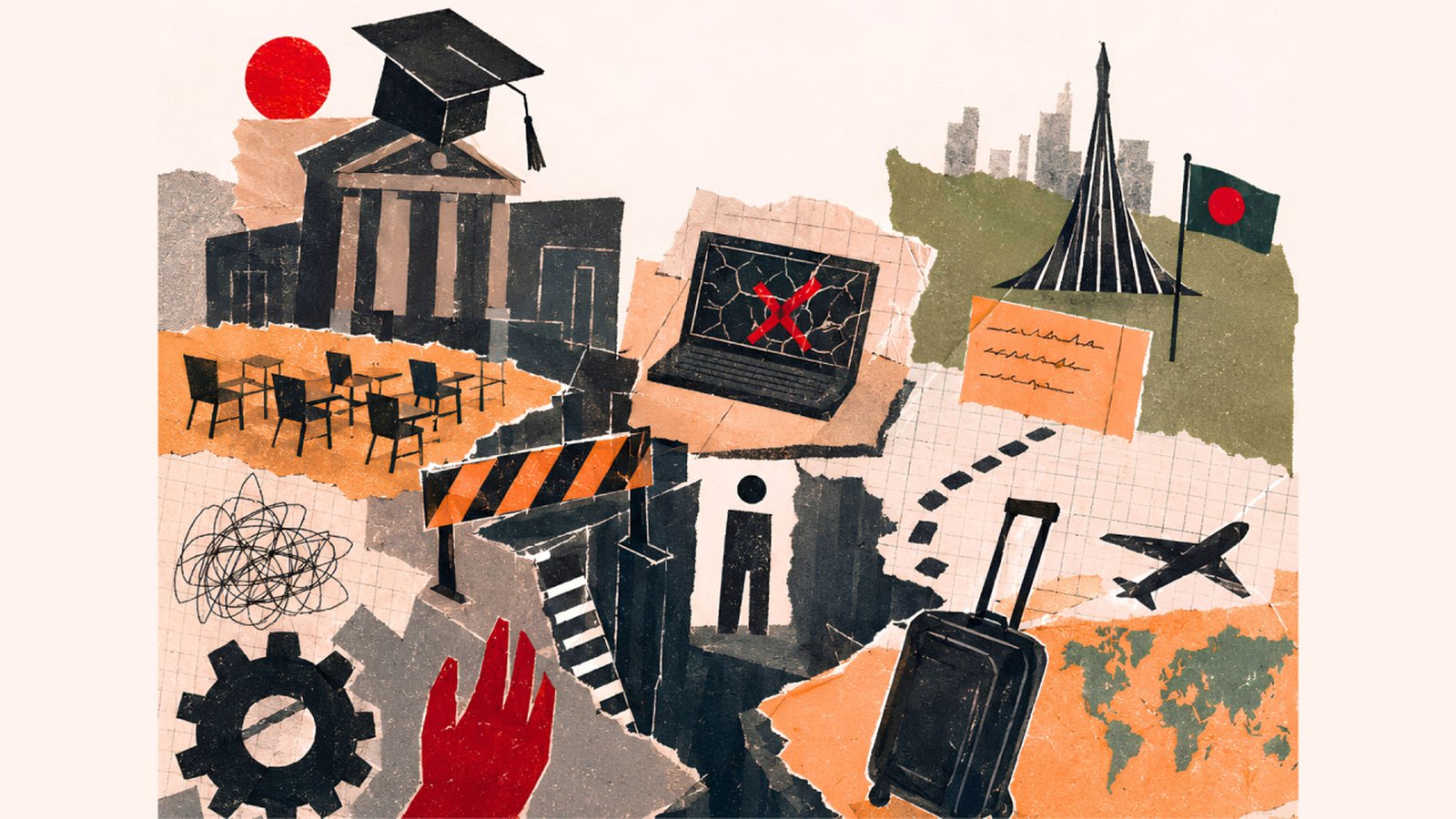
However, these figures tell only part of the story. Because of poverty, many people cannot afford to remain unemployed, opting for sporadic work and low-paid self-employment. Although classified as employed, they earn too little to live a decent life. Besides, the labour market is highly informal, with low wages and no job security. Therefore, the employment problem in Bangladesh encompasses several dimensions, such as underemployment, informal employment, low productivity, low income and job insecurity. One important feature of our economy is that, despite agriculture’s declining share of GDP, it still accounts for the largest share of employment. This pattern suggests widespread underemployment and seasonal work in the agricultural sector.
The manufacturing sector also shows declining employment generation over the years despite its output outpacing other sectors. Between 2016 and 2022, manufacturing output grew by approximately 9 percent annually, while manufacturing employment declined by nearly 10 percent. This is due to productivity improvements, technological change, and concentration in particular industries. Moreover, growth in the manufacturing sector has been low in recent years, which is worrying for both growth and employment.
The RMG sector has been a major source of employment, especially for women in Bangladesh. However, that participation has been declining partly due to technological upgradation, automation, and new skill requirements. Many female workers lack access to opportunities to acquire the technical skills required for high-value positions. With the prospect of further technological transformation, women need targeted upskilling and reskilling, without which they could become further marginalised, leading to wider gender inequality in employment.
As for diversification, Bangladesh has not developed enough employment-intensive industries in electronics, light engineering, agro-processing, pharmaceuticals, medical equipment, and manufacturing. There has been little advancement in modern services—information technology, healthcare, logistics, and professional services—to accommodate educated workers. Job opportunities are also limited because investment is concentrated in only a few sectors rather than across various industries and businesses.
Employment generation depends mainly on robust investment, which expands businesses and creates new enterprises. However, the private sector faces an increasingly difficult situation. Investment remains sluggish due to the energy crisis, high borrowing costs, persistent inflation, weak domestic demand, financial sector vulnerabilities and regulatory complications.
Ironically, education is not translating into employment. The education system’s capacity to provide market-relevant knowledge and skills is limited. At the end of university, graduates receive certificates, but not everyone gains the skill sets the job market requires. Employers often look for experienced graduates even for entry-level positions. However, fresh graduates have limited experience in analytical work, digital applications, communication, problem-solving, and workplace management. Technical and vocational education is often highlighted as a better route to employment. However, such education suffers from weak coordination with employers. Therefore, training programmes should be evaluated not by the number of participants, but by their employment outcomes and income levels. To make these programmes more effective, employers should be involved in curriculum development, internships, and skills assessment.
Entrepreneurship offers an alternative to wage employment. However, it has several barriers. The first challenge is access to finance, as banks require collateral and business records. High registration and operating costs, limited market access, weak business networks, lack of marketing opportunities, and uncertain returns also discourage self-employment. Women face additional barriers, including limited assets, mobility constraints and family responsibilities. Government support should therefore combine affordable financing, simpler regulations, technical training, mentoring, improved market access and measures to reduce business risks.
To accelerate employment generation, Bangladesh needs a strategy that addresses weaknesses in investment, enterprise development, and the labour market. The government should work in a coordinated way to achieve concrete, measurable outcomes. The employment issue can be addressed at three levels. First, at the macroeconomic level, boosting private investment is essential for creating sustainable employment. Progress on employment indicators, alongside GDP growth, inflation, and credit expansion, should be tracked. Employment generation should be an explicit consideration in economic policymaking. GDP growth does not automatically generate employment.
Second, at the enterprise level, government support should focus on helping businesses expand production and create jobs. The government should strengthen links between small enterprises and larger industries, particularly in agro-processing, light engineering and manufacturing. Updates on operational factories, actual investment and employment generated in economic zones should be published regularly. The government must ensure that entrepreneurship funds reach potential businesses rather than merely increasing the size of announced funds.
Third, at the labour market level, better information and stronger connections between employers and jobseekers are needed. The government should strengthen existing employment services and develop an integrated labour market information system that connects employers, training institutions, and jobseekers. The government should expand skills recognition and employment placement services for returning migrants.
Finally, regular monitoring and accountability are essential. Timely data on youth unemployment, underemployment, labour force participation, informal employment, and the transition from education to work should be published. Publicly funded employment programmes should also be assessed for cost-effectiveness and for their contribution to sustainable employment.
Dr Fahmida Khatun is an economist and distinguished fellow at the Centre for Policy Dialogue (CPD). Views expressed in this article are the author’s own.