

Bangladesh’s shrimp industry is facing a growing need to reconcile economic competitiveness with stronger labour and human rights protections across its value chain. The sector’s future competitiveness will increasingly depend not only on production, productivity, and access to international markets, but also on how effectively rights and protections are ensured across its value chain. Informal employment arrangements, limited awareness of workers’ entitlements, occupational safety risks, gender-based vulnerabilities, and gaps in institutional oversight continue to affect workers across different segments of the industry.
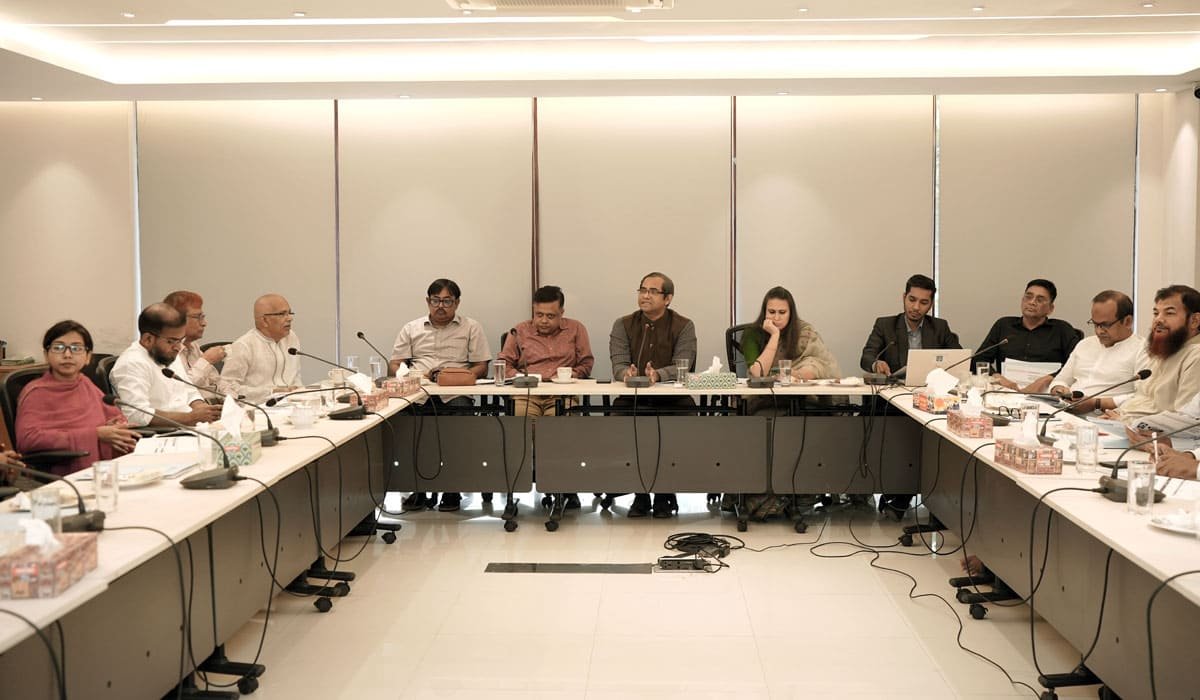
A Centre for Policy Dialogue (CPD) study on Human Rights Due Diligence (HRDD) examined the labour and human rights challenges within Bangladesh’s shrimp industry and their implications for the sector’s competitiveness. Drawing on the study’s findings, CPD convened a discussion on 11 August 2026 in Dhaka.
The discussion provided an opportunity to present the study findings and engage stakeholders from government, industry, academia, workers’ representatives, and shrimp-farming communities from Khulna on the challenges and possible pathways towards a more responsible and competitive shrimp industry.
Dr Khondaker Golam Moazzem, Research Director, CPD, delivered the introductory remarks, followed by a presentation of the study findings by Mr Tamim Ahmed, Research Fellow, CPD, and an extended interactive discussion with participants.
Mr Tamim Ahmed, Research Fellow, CPD, highlighted that the shrimp industry is facing a range of competitiveness challenges, including the declining availability of raw materials, constraints at the production and hatchery levels, and weakening demand for Bangladeshi shrimp in international markets.
These challenges are compounded by weaknesses across the domestic value chain, where limited coordination among producers, intermediaries, depots, and processing enterprises can affect the availability, quality, traceability, and cost of raw shrimp.
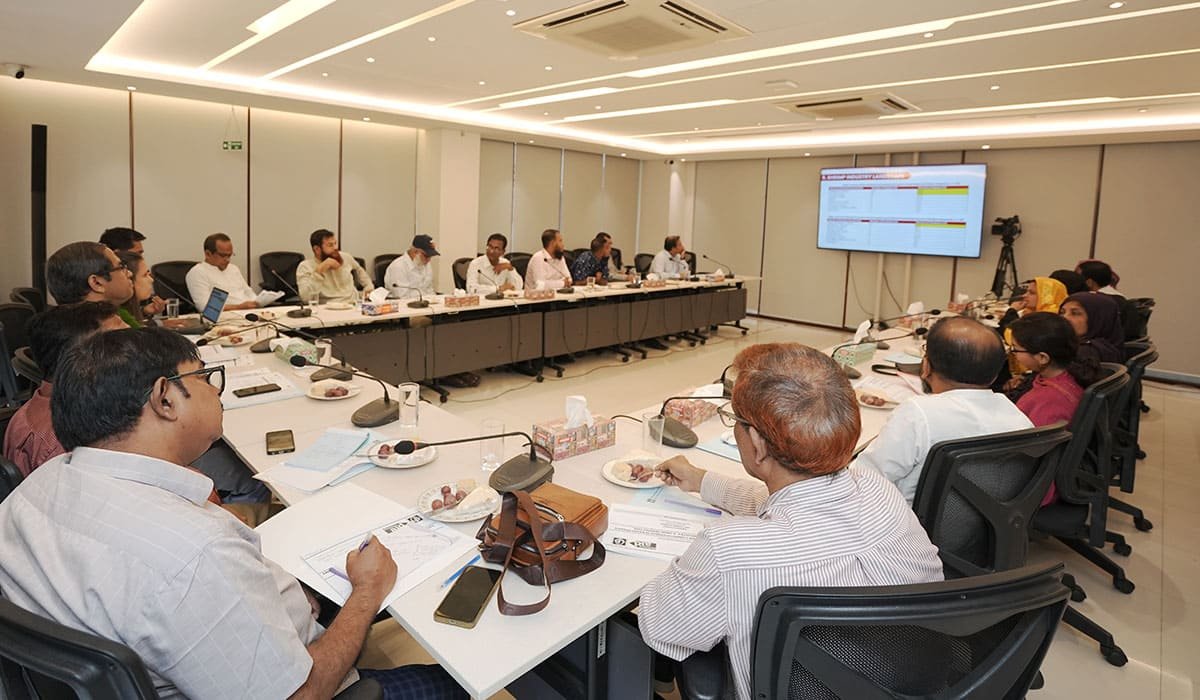
The shrimp value chain also remains highly fragmented, with depots and intermediaries playing a significant role in the procurement process. Among the surveyed depots, 84.8 percent sourced shrimp through middlemen, while 72.7 percent of processing factories procured shrimp through depots or collection centres.
Such fragmentation creates challenges for traceability, accountability, labour monitoring, and enforcement of standards across the value chain. These structural weaknesses can further constrain the industry’s ability to respond to changing market requirements and strengthen its position in global shrimp markets.
The nature of employment also varies considerably across different segments. Third-party labour arrangements remain present, while women are disproportionately concentrated in contractual employment in depots. These less formal employment relationships can make it difficult to ensure that workers receive written employment terms, understand their rights, or have access to effective grievance mechanisms.
For an export-oriented industry, these vulnerabilities carry implications beyond the workplace. As international buyers increasingly emphasise responsible sourcing and supply-chain due diligence, labour and human rights practices are becoming increasingly relevant to Bangladesh’s ability to retain and expand market access.
Mr Tamim emphasised that the significant gaps remain in workers’ awareness of wages, employment conditions, and legal entitlements. While minimum-wage compliance among permanent workers has improved, the proportion of earning below the minimum wage has declined from 29.1 percent in 2024 to 5.6 percent in 2026; wage disparities remain substantial. Awareness of wage provisions is also limited, as 96.9 percent of permanent workers did not know their job grade.
These findings were strongly echoed during the discussion by trade union leaders and shrimp farmers from Khulna. Participants highlighted the absence of a fixed base salary, limited awareness of the government-approved wage, and the lack of appointment letters as persistent concerns. They also raised concerns regarding gender-based violence in depots and workplace hazards, particularly slippery floors that can result in injuries and other health problems.
The discussion thus underscored that improving labour conditions cannot be separated from improving the industry’s overall performance. Workers who lack secure employment arrangements, adequate information about their rights, or safe working environments remain vulnerable, while businesses face greater risks associated with weak labour governance and limited accountability.
Occupational health and safety emerged as another significant area of concern. Workers reported exposure to wet and slippery floors, repetitive-work injuries, knife-related injuries, and health problems associated with prolonged contact with water.
The discussion also highlighted the institutional challenges involved in addressing these risks. Md Nazmul Islam, Law Officer, Department of Inspection for Factories and Establishments (DIFE), noted that limited human resources within the department are a main reason it cannot adequately reach shrimp farmers and address their concerns.
This observation points to a broader challenge: ensuring labour rights across a geographically dispersed and partly informal value chain requires institutional capacity that extends beyond formal processing facilities. Strengthening inspection and monitoring mechanisms, particularly at the farming and depot levels, will be essential for translating labour standards into practice.
During the open discussion session, Mr Sk. Kamrul Alam, Vice President of the Bangladesh Frozen Foods Exporters Association (BFFEA), committed to ensuring that workers receive appointment letters, noting that formal documentation can help prevent owners from exploiting workers at their discretion. Such commitments may help establish greater accountability between employers and workers. Appointment letters can give workers greater clarity about their employment conditions while creating a formal basis for addressing disputes and ensuring compliance.
The session also identified gender inequality as an important dimension of labour vulnerability within the shrimp industry. Women are disproportionately represented in less secure contractual employment, particularly in depots, and face challenges relating to wages, workplace treatment, and access to employment protections.
The concerns raised by participants regarding gender-based violence in depots further highlight the need for stronger workplace safeguards. Addressing such vulnerabilities requires effective grievance mechanisms, stronger monitoring, and measures to prevent discrimination and harassment across recruitment, remuneration, job allocation, and working conditions.
While labour and human rights formed the central focus of the discussion, participants also highlighted production-side challenges that have direct implications for workers’ livelihoods and the sector’s future competitiveness.
Dr Md Monirul Islam, Professor, Department of Fisheries, suggested exploring the Vannamei (Penaeus vannamei) variety further under controlled conditions. He noted its potential profitability, relatively lower production effort, and stronger immunity against bacterial strains. Greater diversification, he argued, could improve the profitability and resilience of shrimp farming and contribute to securing farmers’ livelihoods over the longer term.
Dr Mohammad Abdul Baki, Professor, Department of Zoology, Jagannath University, similarly noted that while Vannamei may offer profitability advantages, its potential has not yet been fully explored in Bangladesh.
These perspectives point to the need for evidence-based diversification of shrimp production. Expanding new varieties should, however, be accompanied by appropriate assessment of production conditions, environmental implications, biosecurity, hatchery capacity, market demand, and the interests of shrimp farmers.
Reflecting the importance of production-side reform, S. M. Moniruzzaman, Deputy Director, Shrimp Section, Department of Fisheries, highlighted the need for greater diversification within the industry and noted that the Department of Fisheries would increase its efforts to address issues at the hatchery level.
Strengthening hatchery systems and improving the availability and quality of shrimp seed could boost productivity while reducing some of the pressures affecting farmers. A more productive and resilient production base would, in turn, strengthen the broader value chain and support employment.
The discussion demonstrated that Human Rights Due Diligence should not be viewed simply as an additional compliance requirement for Bangladesh’s shrimp industry. Rather, it can provide a framework for identifying and addressing risks across a fragmented value chain while strengthening transparency and accountability.
The session brought together perspectives from government regulators and researchers, industry representatives, trade union leaders, and shrimp farmers, highlighting the interconnected nature of the challenges facing Bangladesh’s shrimp industry.
The future competitiveness of Bangladesh’s shrimp industry will ultimately depend on its ability to address these challenges in an integrated manner. Labour rights, production efficiency, responsible sourcing, institutional capacity, and market competitiveness should not be treated as separate policy agendas. They are increasingly interconnected components of a sustainable shrimp industry.