

Bangladesh has secured three additional years to prepare for its graduation from the Least Developed Country (LDC) category. However, this exceptional extension must translate into meaningful reforms, stronger institutions and improved economic competitiveness. With the new graduation date set for 24 November 2029, the coming three years offer a critical opportunity to address longstanding challenges in revenue mobilisation, banking, trade, investment and productive capacity.
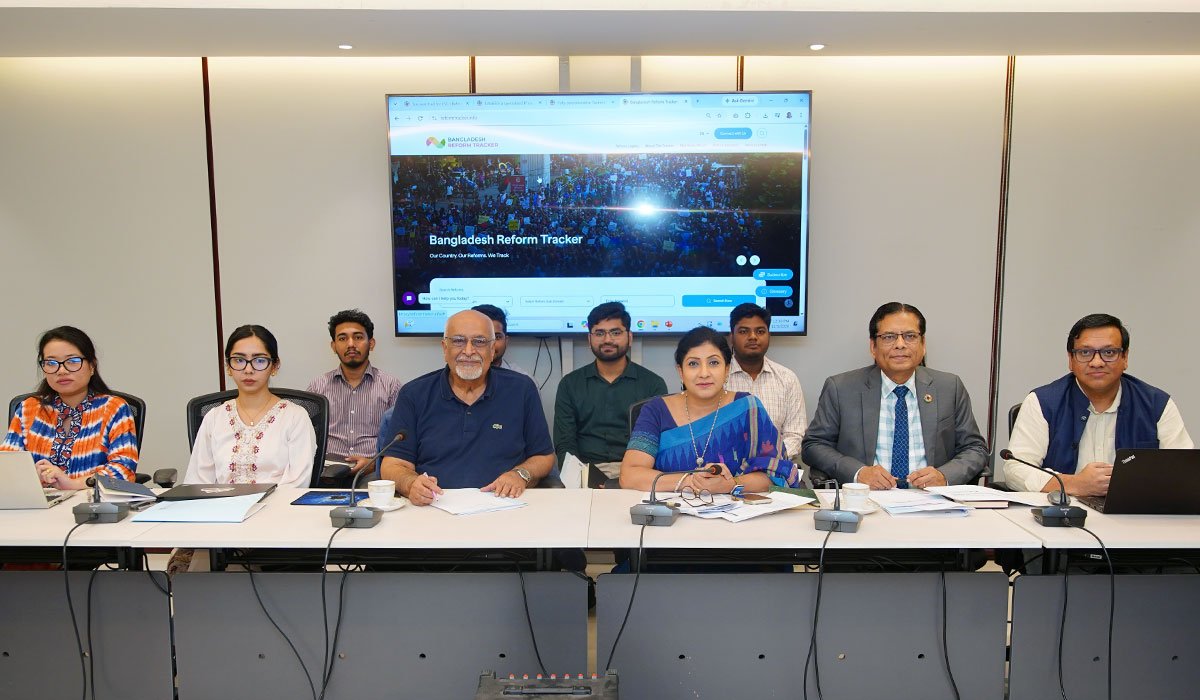
These issues were highlighted at a media briefing titled “Bangladesh’s LDC Graduation: The UNGA Decision and Our Observations”, organised by the Centre for Policy Dialogue (CPD) on Sunday, 1 November 2026, at its premises in Dhaka. The briefing examined the significance of the United Nations General Assembly’s decision of 29 October 2026 and the actions necessary to ensure a smooth, sustainable and irreversible graduation.
Dr Nazneen Ahmed, Executive Director, CPD, chaired the media briefing and delivered the introductory remarks. She described LDC graduation as an important milestone in Bangladesh’s development journey, noting that the country had long aspired to move beyond the LDC category. However, she highlighted that graduation also carried significant implications for preferential market access, financing arrangements and economic competitiveness, making adequate preparation essential.
Dr Ahmed welcomed the UN’s decision to extend Bangladesh’s preparatory period for graduation but emphasised that it was a special consideration rather than an opportunity for repeated postponement. She noted that the additional three years must be used effectively to undertake the necessary preparations and implement reforms. She also highlighted CPD’s commitment to monitoring the government’s reform pledges, particularly those critical to LDC graduation, through the Bangladesh Reform Tracker.
Following the introductory remarks, Dr Debapriya Bhattacharya, Distinguished Fellow, CPD; Convenor, Citizen’s Platform for SDGs, Bangladesh; and Member, United Nations Committee for Development Policy (CDP), delivered the keynote presentation.
He explained that Bangladesh had already fulfilled all three LDC graduation criteria by considerable margins. The question, therefore, was no longer whether Bangladesh qualified for graduation, but whether it was adequately prepared for the transition.
The UN’s decision to extend the preparatory period was particularly significant because it recognised the complexity of Bangladesh’s recent political transition alongside the economic challenges facing the country. However, Dr Bhattacharya cautioned that the extension was granted on an exceptional basis and should not be interpreted as a precedent for further postponement.
He also noted that the government’s press note welcomed the UN decision but did not adequately reflect its exceptional nature or the expectation of significant progress on domestic reforms. He called for the three-year action plan presented to the UN to be made public, with clear responsibilities and measurable milestones.
The additional time must be used to deliver reforms, not simply to delay graduation. Dr Bhattacharya identified public financial management, banking sector reforms, energy, social protection, logistics, export diversification and productivity as priority areas. He emphasised that these reforms would not only support graduation preparedness but also contribute to macroeconomic stability and investment-led growth.
He further called for identifying measures available exclusively to LDCs, including export cash incentives, and developing a clear timeline for phasing them out ahead of graduation. To strengthen implementation, he recommended placing the coordination of the Smooth Transition Strategy (STS) under the Prime Minister’s Office, involving Parliament in the process and introducing a publicly accessible dashboard to monitor progress. Clear institutional responsibilities, measurable targets and regular reporting would be essential to ensuring accountability.
The briefing also examined how far Bangladesh has progressed in implementing its graduation-related commitments.
Presenting “Tracking LDC Graduation Readiness through Bangladesh Reform Tracker”, Mr Towfiqul Islam Khan, Additional Director (Research), CPD, shared findings from CPD’s ongoing monitoring of reforms.
Of the 23 LDC graduation-related reform proposals currently being tracked, six are at the Reform Proposed stage, nine at the Reform Initiated stage, two at the Legal and Policy Measures stage, and six at the Operationalisation stage. Notably, none has yet reached the Action Implementation stage.
The findings revealed progress in areas such as trade negotiations, export competitiveness and institutional reforms, but also highlighted considerable gaps between policy commitments and actual implementation. Mr Khan stressed the importance of accelerating negotiations with key trading partners, strengthening productive capacity and ensuring that proposed reforms produce tangible results.
Professor Mustafizur Rahman, Distinguished Fellow, CPD, also shared his observations during the briefing. He emphasised that the extension should be viewed as an opportunity for structural transformation rather than merely three more years of preferential trade benefits.
He highlighted the importance of making the graduation process inclusive, particularly by ensuring that small and medium-sized enterprises and other stakeholders are not left behind. Bangladesh must also strengthen its capacity to comply with evolving international standards relating to labour, the environment and trade.
Professor Rahman drew attention to opportunities for diversifying exports, particularly through man-made fibre-based garments, while highlighting the importance of investment, productive capacity and emerging opportunities in global supply chains.
An interactive question-and-answer session followed the presentations, during which journalists raised questions about the possibility of further extensions, the pace of reforms, export diversification, the reliability of economic data, the participation of smaller enterprises and Bangladesh’s competitiveness after graduation.
Responding to these questions, Dr Debapriya Bhattacharya emphasised that international commitments must be backed by concrete domestic action. Failure to fulfil reform commitments could undermine Bangladesh’s credibility, making effective monitoring, reliable data and strong political ownership essential.
Professor Mustafizur Rahman reiterated the importance of an inclusive transition and highlighted opportunities arising from changing global supply chains, including the China Plus One strategy. He noted that improving the investment environment and strengthening productive capacity would help Bangladesh take advantage of these opportunities.
Dr Nazneen Ahmed stressed that graduation preparedness requires the involvement of both public and private sector stakeholders. She particularly highlighted the importance of ensuring that the concerns and perspectives of smaller enterprises are reflected in the process.
The briefing underscored a clear message: the next three years must be measured by progress in implementing reforms, not merely by the passage of time. CPD will continue monitoring graduation-related commitments through the Bangladesh Reform Tracker and engaging with policymakers, Parliament, development partners and other stakeholders to support Bangladesh’s preparation for a smooth and sustainable LDC graduation by November 2029.