

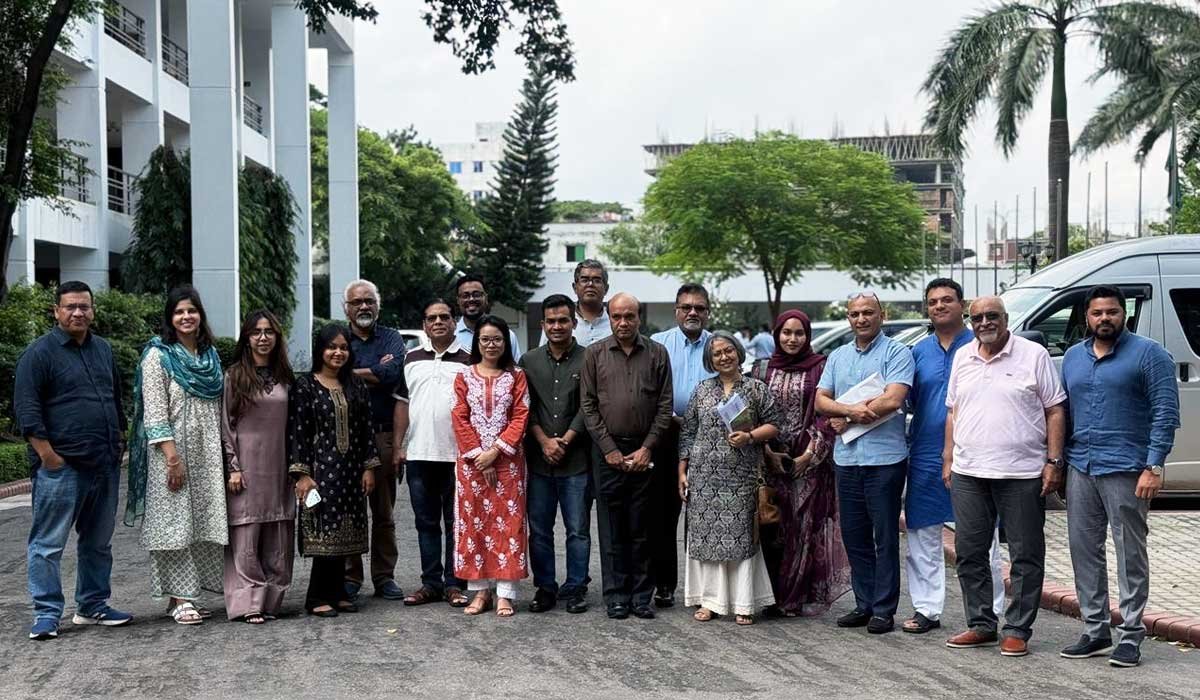
On August 8–9, 2025, the Centre for Policy Dialogue (CPD), Bangladesh, organised a one-and-a-half-day Scenario-Building Workshop at BRAC CDM, Savar, joined by a select group of 15 experts and practitioners from across sectors. The workshop was part of a foresight study titled Life After Life: Future of Work in Bangladesh, conducted in collaboration with International Development Research Centre (IDRC) and LIRNEasia under the FutureWORKS Asia initiative.
The study examines how jobs in Bangladesh may evolve by 2035 by analysing key forces such as automation, LDC graduation, demographic shifts, and digital and platform economies—to identify emerging drivers, map risks and opportunities for youth, women, and persons with disabilities, and inform policies for a decent, inclusive, and resilient labour market. To achieve these objectives, the workshop convened a diverse group of stakeholders, including economists, academicians, labour and women’s rights activists, early-career youth, persons with disabilities, and business leaders from both the service and industrial sectors. Dr Debapriya Bhattacharya, Distinguished Fellow at CPD, moderated the sessions and facilitated in-depth discussions on inclusive and forward-looking employment strategies.
The workshop comprised four sessions in which participants identified and ranked the most significant global and national drivers likely to shape the future of work in Bangladesh. Based on these selected drivers, they were divided into four groups and, through a structured process, co-created a set of plausible employment scenarios that captured both potential structural extremes and intermediate outcomes. Within these scenarios, they explored the future work prospects, risks, and opportunities for youth, women, and persons with disabilities. Participants also assessed the roles of key stakeholders in each scenario and considered the potential impacts of “black swan” events that could disrupt anticipated developments.
The scenarios derived through this exercise are not predictions of what will happen but rather plausible pathways that may arise—individually or in combination. The insights generated during the workshop will feed into ongoing research and inform policy recommendations, contributing to a comprehensive understanding of the future of work in Bangladesh. Ultimately, these findings will help design policies that remain effective under multiple possible futures, fostering an equitable, inclusive, and resilient labour market by 2035.