

Originally posted in The Business Standard on 4 March 2026
She made the remarks today (4 March) while presenting a keynote speech at a roundtable titled “Looking into Bangladesh’s Economic Development: Priorities for the Newly Elected Government,” co-organised by CPD and The Daily Star in the capital
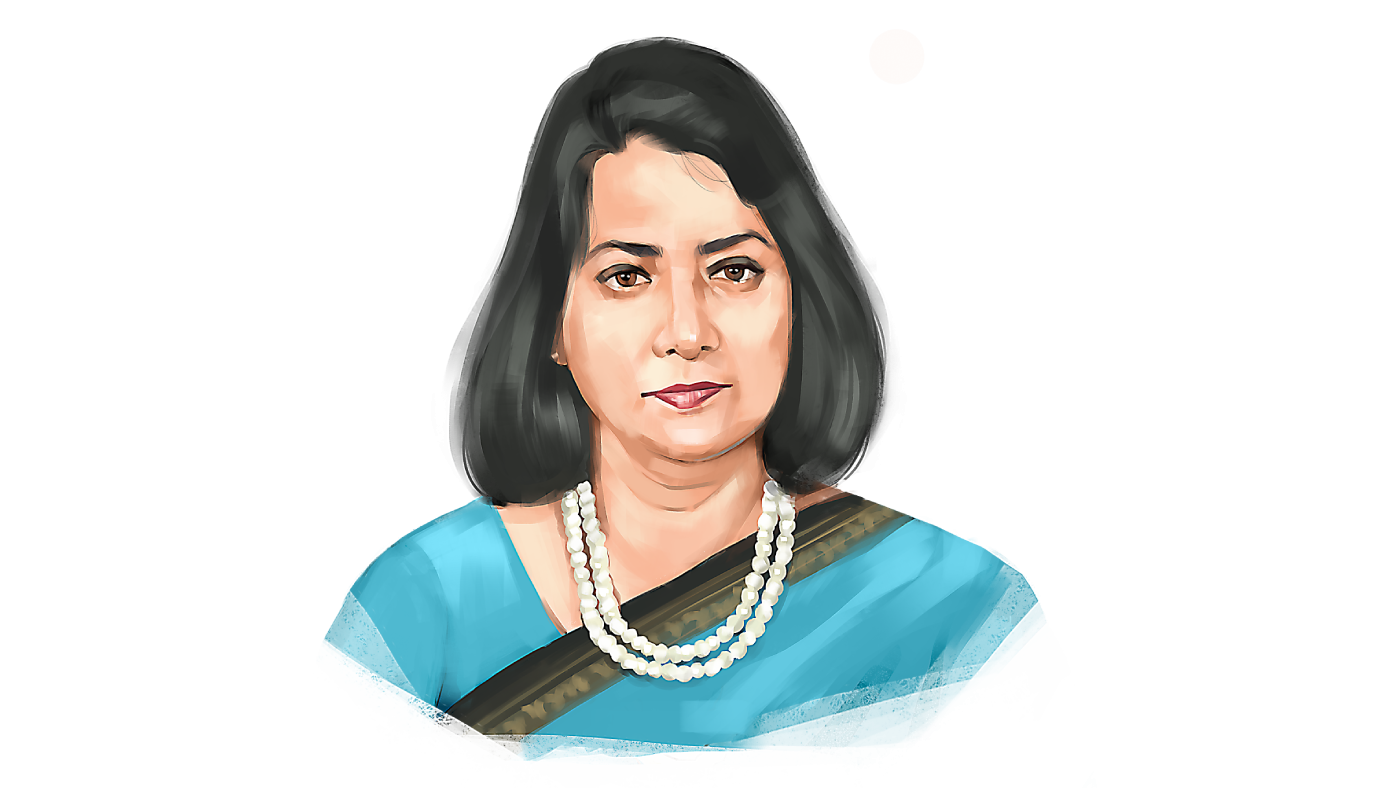
The newly elected government must urgently prioritise restoring macroeconomic stability through comprehensive reforms in the banking sector, revenue management, and inflation control to overcome ongoing economic pressures, said Dr Fahmida Khatun.
The economist, who serves as executive director of the Centre for Policy Dialogue, made the remarks while presenting a keynote speech at a roundtable titled “Looking into Bangladesh’s Economic Development: Priorities for the Newly Elected Government”.
The event was jointly organised by the CPD and The Daily Star in the capital today (4 March).
Highlighting pressures on the economy, Fahmida identified persistently high inflation, shrinking fiscal space, sluggish private investment, vulnerabilities in the financial sector, and rising debt burdens as the main challenges facing the current administration.
She expressed particular concern over stubborn inflation, noting that it remains higher than wage growth and continues to erode the purchasing power of ordinary people.
“In January, the wage growth index was 8.12%, while inflation stood at 8.66%. Food inflation, in particular, remains high, posing a serious threat to the food security and living standards of marginalised people,” she said.
According to Fahmida, inflation in Bangladesh is largely supply-driven rather than demand-driven. She urged policymakers to ensure smoother supply chains, curb market syndicates and hoarding, and better coordinate monetary and fiscal policies to stabilise prices.
She also lauded the government’s Family Card and Farmer’s Card initiatives, describing them as positive steps for strengthening social protection.
Concerns over fiscal health
The CPD executive director painted a concerning picture of the country’s fiscal situation, noting a steady decline in the tax-to-GDP ratio. According to her, the ratio stood at 6.78% in FY25, while the debt-to-GDP ratio rose to 38.6%, raising concerns about medium-term debt sustainability.
She also highlighted a concerning reverse trend in government spending.
“Operating expenditure has grown by more than 11%, while development expenditure has recorded a negative growth of 2%. If development spending continues to shrink, investment will stall, hindering job creation and income generation,” she warned.
Fahmida urged the government to reduce unnecessary spending and stop leakages in public finance management.
Banking sector vulnerabilities
Turning to the financial sector, she described the banking system as weak and vulnerable, criticising the culture of loan rescheduling that has repeatedly masked the true scale of non-performing loans.
She noted that a large volume of loans was rescheduled ahead of the national elections, temporarily concealing the sector’s underlying weaknesses.
“Previously, the true face of the banking sector was hidden. As asset quality reviews began, the actual weaknesses were exposed,” she said.
To restore discipline in the sector, Fahmida stressed the need to recover defaulted loans, retrieve laundered assets from abroad, and ensure the full autonomy of the central bank.
She also urged the government to quickly approve amendments to the Bangladesh Bank Order 1972 to safeguard the independence of the Bangladesh Bank.
On the external front, Fahmida warned against over-reliance on the ready-made garment sector, which recently contributed to a negative year-on-year export growth.
She recommended targeted, time-bound support for promising new sectors, including sunset clauses (provisions that set a fixed end date for government support), so they can eventually stand on their own feet.
Addressing the impending Least Developed Country (LDC) graduation, she noted that proactive preparations must begin immediately, regardless of whether Bangladesh receives an extension.
She urged the government to implement its Smooth Transition Strategy (STS) effectively to maintain global competitiveness.
Meanwhile, at the same event, Mahfuz Anam, editor and publisher of The Daily Star, said the ultimate success of any government policy depends on its implementation, which is often hindered by a bureaucracy that continues to operate with a “colonial mindset”.
Drawing on decades of journalistic experience, Mahfuz said while successive governments have formulated commendable policies, the key challenge has consistently been implementation.
“Implementation is carried out through government agencies. While our bureaucracy is strong in many aspects, there are also obstructionists. Their working methods remain rooted in the colonial era, creating barriers instead of facilitating progress,” he said.
Addressing the challenges facing the newly elected government, he described managing the bureaucracy as a massive task.
“You cannot move forward by simply offending the bureaucracy; if they become rigid, they can stall everything. Dealing with them requires innovation, persuasion, and modernisation,” he said.