

Bangladesh should cut duties on renewable energy equipment, accelerate rooftop and decentralised solar, strengthen domestic exploration, expand fuel storage and improve energy governance to reduce import dependence and protect industries from recurring energy shocks.
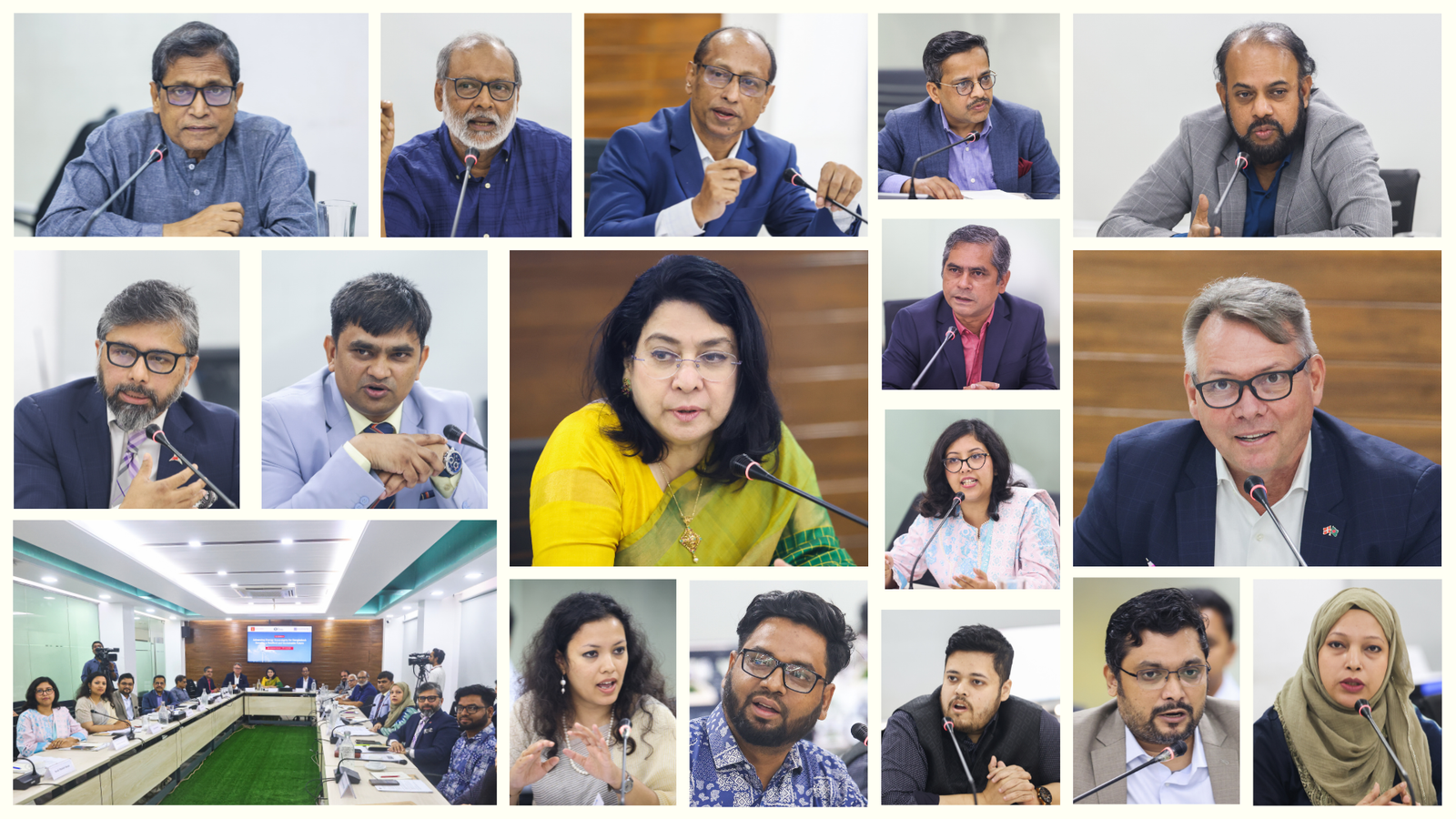
This insight emerged at the roundtable titled ‘Advancing Energy Sovereignty for Bangladesh: Securing a Resilient and Sustainable Future’ on Thursday, 30 April, 2026, organised by the Centre for Policy Dialogue (CPD), Embassy of Denmark and The Business Standard (TBS). The discussion brought together policymakers, diplomats, researchers, financiers, industry representatives and energy experts.
From the government side, energy sovereignty was linked with control over resources, production capacity and infrastructure readiness. Mr Md Rafiqul Alam, Additional Secretary (Company Affairs), Energy and Mineral Resources Division, Government of Bangladesh (GoB), stated that Bangladesh needs a balanced energy mix, stronger domestic resource assessment, geological survey and mapping, offshore exploration and higher fuel storage capacity. ‘Solar can be prioritised in the daytime, but at night we have to consider other sources,’ he said, adding that the government is working to raise fuel storage capacity towards 90 days.
Renewable energy was framed as a strategic route to greater national control. Mr Anders B Karlsen, Deputy Head of Mission, Embassy of Denmark, Bangladesh, said, ‘Renewable energy is not only a way to save the planet; it is also a way to achieve control over our future.’ He added that Denmark sees strong potential in Bangladesh’s transition and is ready to share its experience.
The broader economic context was set by Dr Fahmida Khatun, Executive Director, CPD, who underscored that energy is directly linked with the economy, budget and national security. She stated that an energy system fully dependent on imports cannot remain sustainable in the long run. ‘Energy sovereignty means being able to produce our own energy and protect our demand even when external shocks arise,’ she said.
Implementation gaps were also raised in relation to policy targets. Mr Md. Ziaul Haque, Additional Director General (CC), Department of Environment, GoB, stated that energy security had become part of national security. He said Bangladesh has set targets to raise renewable energy’s share to 20 per cent by 2030 and 25 per cent by 2035.
Governance, accountability and cost discipline were identified as core requirements for energy sovereignty. Professor Dr M Shamsul Alam, Energy Advisor, Consumers Association of Bangladesh (CAB), questioned whether renewable progress should be measured by installed capacity rather than actual generation. ‘Energy means kilowatt-hour, not kilowatt or megawatt,’ he said. He called for public hearings on pricing, review of unjustified costs and stronger accountability in the energy sector.
Financing constraints were highlighted as a major barrier to energy transition. Mr Mesbaul Asif Siddiqui, DMD & Head of Wholesale Banking, City Bank PLC, said commercial banks are being asked to finance long-term energy projects with short-term deposits, while payment delays to power producers are affecting lender confidence. ‘If power sector companies default, banks cannot lend them money to import fuel,’ he said. He called for predictable payment systems, implementation agreements, power purchase arrangements and stronger access to development finance.
A wider definition of energy sovereignty was proposed by Dr M Asaduzzaman, Former Research Director, Bangladesh Institute of Development Studies (BIDS), who said the concept should include access, empowerment, sustainability, resilience, transparency, self-determination and community-level decision-making.
For the export sector, the energy transition is increasingly tied to competitiveness. Ms Rumana Rashid, Director, Bangladesh Garment Manufacturers and Exporters Association (BGMEA), said the garment sector is facing gas and electricity supply problems while buyers, particularly from Europe, are placing greater emphasis on decarbonisation. She said around 500 factories are going through energy audits with support from partners.
Past experience with decentralised renewable energy should guide future action, speakers said. Mr Alamgir Morshed, CEO, Infrastructure Development Company Limited (IDCOL), said Bangladesh’s solar home system programme had once generated almost 200 megawatts of solar electricity and could have been used as a foundation for further growth.
Development finance is available, but stronger preparation is needed to access it effectively. Ms Tanzina DILSHAD, Program Manager, Environment & Energy, European Union Delegation to Bangladesh, highlighted the need for bankable projects, regional energy connectivity, storage and affordability considerations. ‘There are many other components in storage, so we can play around with cost and affordability issues,’ she said.
The need for nature-smart energy was emphasised by Ms Kazi Kareen Arif, Research Analyst, Change Initiative Limited. ‘Energy security is about ensuring access, but energy sovereignty is about who controls the energy system,’ she said. She highlighted ecosystem rights, community consent, community ownership, rooftop solar, irrigation solar, floating solar and innovative financing such as sustainability-linked bonds.
Energy governance must be addressed before energy sovereignty can be achieved, said Mr Md. Newazul Moula, Coordinator (Energy Governance), Transparency International Bangladesh (TIB). He stated that accountability for past irregularities, cleaner transport choices, transparent renewable energy development, easier net-metering and better space management are essential.
Research and implementation must move together, according to Mr Muntasir Murshed, Research Fellow, Bangladesh Institute of Development Studies (BIDS). He recommended grid compatibility tests for large-scale renewable integration, policies to attract renewable energy-related foreign direct investment, mapping for agrovoltaic and floating solar, and installation of high-efficiency PV modules.
Institutional capacity and market reform were identified as key transition requirements. Dr Sakib Bin Amin, Professor, Department of Economics, North South University, called for clearer policy guidelines on investment frameworks, import duties and tariff schemes, a competitive market environment for investors, stronger monitoring mechanisms, regular policy revision and greater independence of the energy regulator.
Measurement and budget priorities were identified as immediate reform areas. Mr Shafiqul Alam, Lead Energy Analyst, Institute for Energy Economics and Financial Analysis (IEEFA), said the current crisis should be used as an opportunity to accelerate energy efficiency and clean energy.
Realistic planning must accompany ambition, said Professor Dr Ijaz Hossain, Formerly with Department of Chemical Engineering, Bangladesh University of Engineering and Technology (BUET). He stated that Bangladesh’s energy import dependence is rising and that renewables should be expanded with attention to land, storage, financing and grid realities.
Moderating the discussion, Mr Sajjadur Rahman, Deputy Editor, TBS, highlighted that energy import pressure had become a major macroeconomic concern. He said oil and gas imports could cost around 12 billion US dollars if the current trend continues. ‘This is no longer only an energy issue; it has become a question of sovereignty,’ he said.
Speakers collectively recommended removing duties on renewable energy equipment, expanding rooftop and decentralised solar, improving financing arrangements, strengthening domestic exploration, increasing fuel storage capacity, improving policy implementation and ensuring transparent governance in the energy sector.