

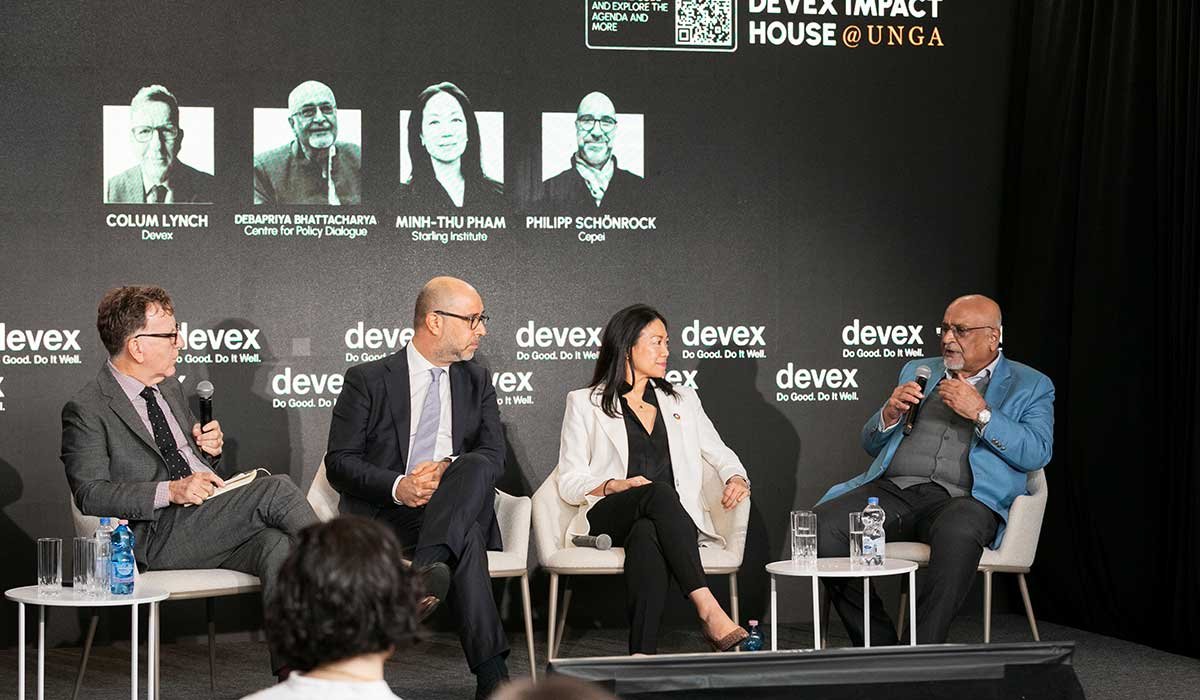
“The first and foremost thing which a global institution has to do is to restore trust in it, and to make it more operational in its duties, commitments, or vision.” — 𝘋𝘳 𝘋𝘦𝘣𝘢𝘱𝘳𝘪𝘺𝘢 𝘉𝘩𝘢𝘵𝘵𝘢𝘤𝘩𝘢𝘳𝘺𝘢
Dr Deb spoke at 𝐋𝐞𝐚𝐝𝐢𝐧𝐠 𝐭𝐡𝐞 𝐔𝐍 𝐈𝐧𝐭𝐨 𝐈𝐭𝐬 𝐍𝐞𝐱𝐭 𝐄𝐫𝐚 at Devex Impact House @ UNGA in New York on 21 September 2026. Moderated by Colum Lynch, Senior Global Reporter at Devex, the session also featured Minh-Thu Pham, CEO of the Starling Institute, and Philipp Schönrock, Director of Cepei Think Tank.
Restoring trust in the United Nations requires more than appointing the right person as Secretary-General. The institution faces deep structural constraints that demand a more holistic approach to reform. As Dr Deb argued, two key levers deserve attention: money and votes — the financial incentives shaping the UN system and the domestic political incentives that can bring global issues onto national agendas.
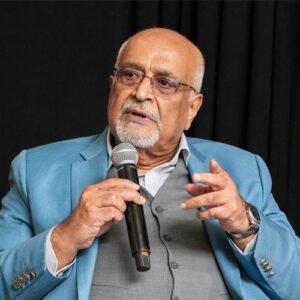 𝐅𝐢𝐫𝐬𝐭, 𝐦𝐨𝐧𝐞𝐲. Dr Deb called for reducing excessive dependence on one or two countries and diversifying the UN’s funding base (US: approximately 22%; China: approximately 20%). He also called for greater private-sector contributions to the UN system’s core funding (currently around 7%), subject to proper due diligence. Who finances the UN, he argued, matters for its priorities, operational capacity, and effectiveness.
𝐒𝐞𝐜𝐨𝐧𝐝, 𝐯𝐨𝐭𝐞𝐬. The voices of about 5.6 billion voters worldwide must be better connected to the voices and political priorities of the UN’s 193 Member States. Global challenges must become domestic political priorities. Politicians need to connect issues such as climate change, migration, and geopolitical tensions with domestic political interests and voters’ aspirations. Connecting global challenges with domestic political priorities is essential to creating incentives for political action.
#UNGA81 #Devex #UNReform #Multilateralism #GlobalGovernance #GlobalSouth
Photos: Joel S Photo LLC for Devex
Watch the discussion here: https://www.youtube.com/watch?v=ybWq92DKsiU&list=PLP9YSHSPZldE&index=24