

Bangladesh has expanded access to education, but the transition from learning to decent employment remains weak. Despite steady economic growth, many young people continue to face unemployment, underemployment and skills mismatch. The challenge is no longer only to increase enrolment or produce graduates, but to ensure that education prepares young people for meaningful work, productivity and social inclusion.
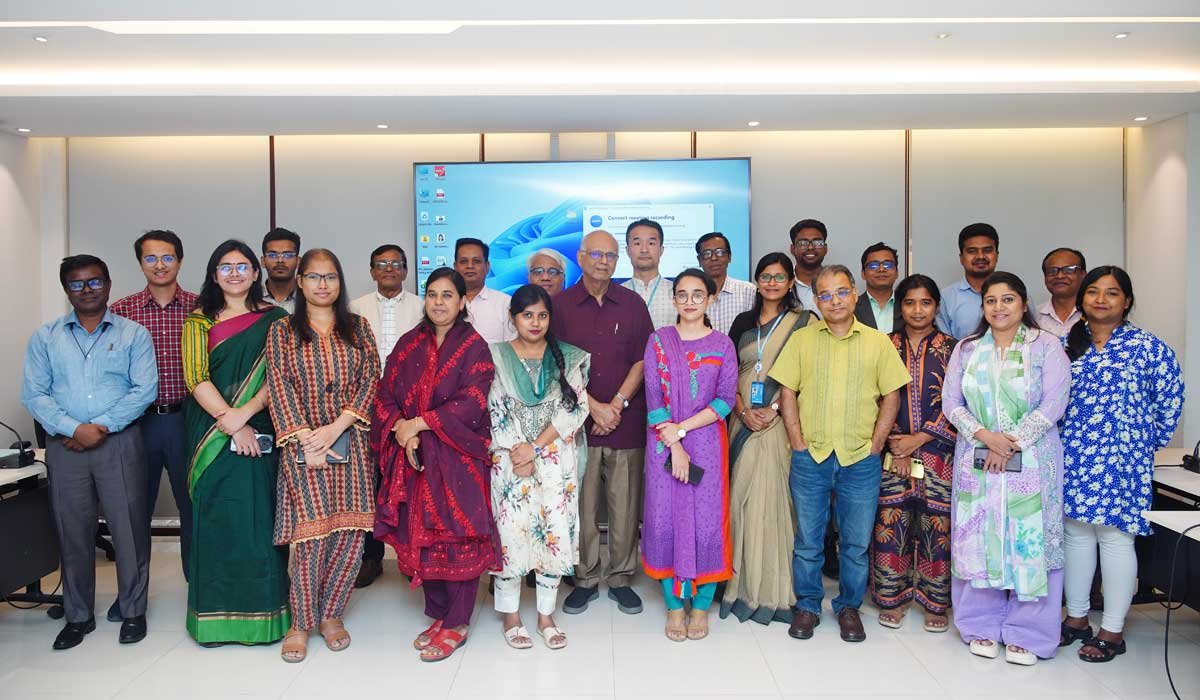
In this context, the Centre for Policy Dialogue (CPD), in partnership with the Embassy of Denmark, organised an expert group meeting titled ‘Strengthening Education–Employment Linkages in Bangladesh: The Role of Civil Society in Reform Pathways’ on Tuesday, 19 May 2026 at the CPD premises. The keynote presentation was delivered by Ms Sumiya Rahman, Research Associate, CPD.
Opening the discussion, Dr Fahmida Khatun, Executive Director of CPD, emphasised that education should not only provide certificates, but should prepare young people for ‘meaningful and dignified employment’. She stressed that stronger coordination among education, skills development and labour market demand is essential to prevent the continued rise of educated unemployment.
Setting the broader conceptual frame, Dr Manzoor Ahmed, Emeritus Professor at BRAC University, observed that the discussion should move beyond broad statements and identify specific areas where civil society can contribute. He noted that education, skills development and employment cannot remain separate sectors if young people are to move into suitable and productive work.
From an education-sector perspective, Mr Norihide Furukawa, Head of Education at UNESCO Dhaka, cautioned that education should not be reduced only to skills acquisition. He noted that education has a broader role in human development, while also stressing the importance of domestic financing for public education and continued civic dialogue on education and skills.
The keynote presentation highlighted a growing disconnect between GDP growth and employment creation. Between 2015 and 2024, Bangladesh’s average GDP growth stood at 6.29 per cent, while average employment growth was only 3.86 per cent. The economy produces around seven lakh graduates annually, but generates only around three lakh jobs. Tertiary-educated unemployment is the highest among all education groups, with female graduates facing particularly high unemployment.
On labour market systems, Ms Tanjilut Tasnuba, Senior Programme Officer at the ILO Country Office, Dhaka, highlighted the need for a stronger labour market information system, employment support services and better links between local employer demand and the education system. She noted that civil society organisations can help ‘connect the dots’ between education, skills training, career pathways and industry.
Quality education, according to Mr Profulla Chandra Barman, Senior Advisor at BRAC Education Programme, BRAC, must begin at the primary and secondary levels. He argued that NGO-led innovations in skills development and apprenticeship should be recognised, tested and scaled with government support.
A stronger partnership model was recommended by Mr Musharraf Tansen, Doctoral Researcher at the Institute of Education and Research, University of Dhaka, who argued that NGOs should be treated as partners, not contractors. He also noted that employers cannot simply expect job-ready graduates without investing in internships, apprenticeships and workplace-based learning.
The need for stronger evidence also came up in the discussion. Mr Amirus Salehin Ha-meem, MSS Student at the Department of Economics, University of Dhaka, highlighted the importance of data availability and data sufficiency, while also pointing to the lack of workplace flexibility for women as an important barrier to labour market participation.
Student perspectives pointed to the uncertainty many graduates face. Ms Suprora Surha Zaman, Student at the University of Dhaka, noted that National University students and social science graduates often remain underrepresented in career discussions. She stressed that students need clearer guidance on career pathways before and during university education.
Practical exposure was identified as a critical gap. Ms Shamsun Nahar Koli, Deputy Programme Manager at CAMPE, emphasised the need for stronger employer engagement in training, noting that trainees should receive exposure to actual workplaces, including the tools, machinery and work environments used by employers.
For long-term sustainability, Mr Dipok Ekka, In-charge, CTSP, Caritas Bangladesh, highlighted the importance of proper student tracking, stronger government ownership and recognition of CSO-led work. He cautioned that good initiatives may gradually stop if they remain dependent only on short-term project support.
Reflecting on graduates’ practical experience, Ms Mihusun Binte Wahab Rashti, Sub-editor at Dhaka Stream, noted that universities should support students with CV preparation, career planning, communication skills and practical exposure. She argued that graduates should not be left to navigate the labour market alone after completing their degrees.
Employment-oriented curricula should not be limited to technical and vocational education, said Mr Moniruzzaman, Joint Director, Education Sector, Ahsania Mission. He recommended introducing job-related curricula in general education as well, including at the high school and college levels.
Foundational skills were also emphasised. Ms Nusrat Akter, Co-Founder and CEO of Hashimukh Somaj Kallayan Songstha, noted that communication, confidence and other so-called soft skills are actually foundational skills. She stressed that these must be developed from an early stage, particularly for marginalised communities.
Looking ahead, Dr Safiqul Islam, Former Director of BRAC Education Programme, called for a five-year roadmap involving government, international organisations, NGOs and civil society. He noted that skills development should not only prepare young people for jobs, but also support them to become entrepreneurs.
A systems-level concern was raised by Mr Samir Ranjan Nath, Programme Head of BRAC IED, who observed that the problem lies not in education itself, but in the education system. He stressed that subject selection, quality education, skills development and labour market planning must be better aligned.
Future employment trends also require attention. Mr Md Mamunur Reza, Student at Jahangirnagar University, highlighted the need to prepare young people for AI-related and green jobs, and recommended making internships, apprenticeships and practical exposure more systematic and institutionalised.
Local innovation should be better supported, noted Ms Mumtahina Qumqum, Coordinator of the Education and Scholarship Program at Sajida Foundation. She stressed that young people and local actors are already trying to innovate using available resources, but they require stronger institutional and financial support.
The meeting concluded that Bangladesh needs a coordinated reform agenda to transform education into a stronger pathway to decent work. Key priorities include aligning curricula with labour market needs, expanding internships and apprenticeships, strengthening TVET, improving career guidance, building labour market information systems, promoting gender-inclusive employment, and recognising civil society as a key partner in reform.