

Publications
CPD’s current publication list contains more than 500 titles including Books, Monographs, Working Papers, Dialogue Briefs and Policy Briefs. If you want to collect the hard copies of the publications, please contact with CPD. You can find the soft copies of the book in the CPD website.
November 16, 2017
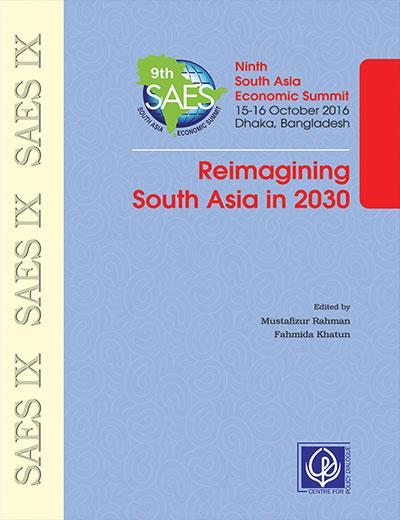
The present volume is a compendium of rich ideas on all of these which emerged from the Ninth South Asia Economic Summit (SAES IX) Read more
October 31, 2017
The multi-country project titled Post-2015 Data Test, which was Co-led by CPD, Southern Voice and the Norman Patterson School of International Affairs (NPSIA) at Carleton University, has been featured in Case Studies on Data for Development, of OECD’s Development Co-operation Report 2017: Data for Development. Read more
August 18, 2017
The West African Think Tank Network (WATTNet) held its first conference on 1-2 March 2016 on the overarching theme Transforming West Africa for Inclusive Development. The conference brought together policy makers, think tank leaders, academia and business leaders to deliberate on the key policy issues confronting West African countries, so as to build consensus on the way forward. Read more
August 16, 2017
This paper seeks to contextualise the current food security scenario in South Asia with a view to operationalising the idea of a collective regional initiative to improve food security in South Asia Read more
June 18, 2017
This volume, prepared under the Independent Review of Bangladesh’s Development (IRBD) programme, contains two chapters. Read more
May 19, 2017
In a recent analysis, Distinguished Fellow Dr Debapriya Bhattacharya and Research Associate Ms Sarah Sabin Khan of CPD, have present the importance of least developed countries (LDCs) as a key ‘battleground’ for the implementation of the 2030 Agenda. Read more
January 23, 2017
A distinctive feature of the study is that the experience gained in this connection has been analysed from the point of view of ‘organisational learning’, with the objective of developing a working model in the value chain management. Read more
January 9, 2017
The present study discusses the SDG implementation challenges in Bangladesh. It aspires to engage Government of Bangladesh (GoB) officials and other key stakeholders in the country through raising awareness, highlighting key challenges for national-level implementation and prompting action to ensure that they are adequately prepared to implement the SDGs. Read more
December 19, 2016
The Sustainable Development Policy Institute (SDPI) and Sang-e-Meel has jointly published SDC-SAES anthology titled Securing Peace and Prosperity. This book aims to unpack the key elements of the peace-sustainable development nexus, and examine it in totality at the micro, meso and macro levels. Read more

November 30, 2016
The author observed that during 2010-2015, Foreign Direct Investment (FDI) grew by 31 per cent in Asia, 24 per cent in Africa, 0.27 per cent in Latin America and 16.7 per cent in Europe. Read more