
Year in Review 2025

Accelerating Reforms in Power and Energy

Bangladesh’s power and energy sector continued to face fiscal strain, policy delays, and a slow renewable rollout. In response, CPD focused on practical reform options that link financing, governance, and implementation. CPD’s analysis of the sector’s budget underscored persistent subsidy pressures and the gap between energy transition commitments and resource allocation. CPD also urged a pilot-first approach for the National Rooftop Solar Programme to avoid repeating earlier implementation failures, stressing clear institutional roles, technical standards, viable financing, and long-term maintenance. In parallel, CPD highlighted the need to strengthen investment facilitation and modernise renewable procurement rules to make the sector more competitive and attractive for private and foreign investors.
ACTIVITIES

More

    Government Should Revise the Renewable Energy Procurement Process to Make it...
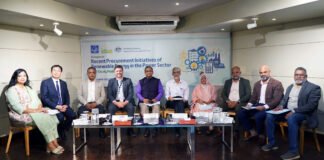
    Experts are calling for urgent reforms to address the challenges surrounding Bangladesh’s renewable energy procurement process. A recent study conducted by the Centre for Policy Dialogue (CPD) has recommended a phased approach to re-tendering, a move aimed at improving efficiency and transparency within the sector.

    Shaping Young Professionals into Tomorrow’s Power and Energy Leaders
    Since its launch in 2023, the Power and Energy Lecture Series: Moving Forward has developed into a notable capacity-building initiative of the Centre for Policy Dialogue (CPD) Power and Energy Study

    CPD Calls for Ambitious, Realistic and Implementable Emission Reduction Targets in...
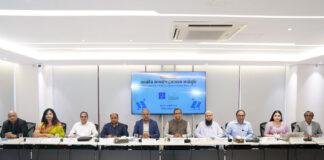
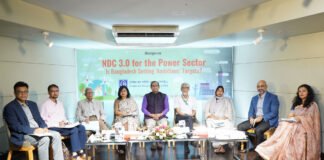
    Bangladesh must adopt more ambitious commitments and clear implementation mechanism for its power sector under the upcoming Nationally Determined Contributions (NDC) 3.0.

    CPD Calls for Pilots Before National Rollout of Rooftop Solar Programme
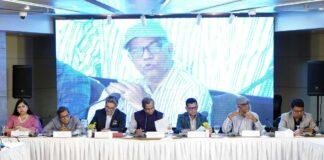
    National Rooftop Solar Energy Programme - Proposals for its Design, Implementation, Monitoring, and Evaluation

    CPD Calls for Focusing on Investment Facilitation to Boost Investment in...
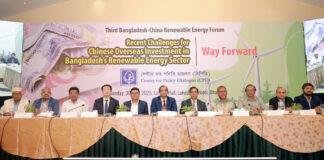
    The Third Bangladesh-China Renewable Energy Forum, held on 30 June 2025, underscored the urgent need to focus more on investment facilitation along with investment promotion

    From ‘3 Zeros towards 2.5 Zeros’- The Power and Energy Sector...
    The Power and Energy Sector in the National Budget FY2025-26 Can the Interim Government Meet Expectations?

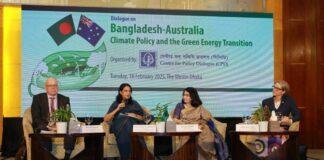
    Bangladesh and Australia Strengthen Collaboration on Climate Policy and Green Energy...

    The Indo-Pacific region is increasingly aligning economic growth with sustainability, with nations prioritising collaborative efforts to drive climate action.

    PUBLICATIONS

    Mapping Coherence in Bangladesh’s Power Sector – A Network Analysis of Policies, Laws, Plans,...
    Bangladesh’s power sector aims to achieve energy transition. As a reflection of the aim, it has set some ambitious goals, such as increasing the proportion of renewable energy to 30 per cent by 2030 and 40 per cent by 2041

    Addressing Institutional Challenges in the Investment Cycle of the Renewable Energy – Case of...
    Bangladesh requires large-scale foreign investment to transition towards a renewable energy-based system and achieve its national renewable energy targets.

    Nationally Determined Contributions (NDC) for the Power Sector – Tracking Progress of NDC 2.0...
    Bangladesh is preparing its NDC 3.0 with the power sector as the main focus for emission cuts. Whilst the 2021 NDC set a 12.5% renewable energy target for 2030, progress remains slow—renewables account for just 3.57% in 2024

    Renewable Energy Policy (Draft) 2025 – Major Observations and Recommendations
    The interim government has taken a major initiative to revise key policies and plans related to the power and energy sector of the country.

    Addressing Institutional Challenges in the Investment Cycle of the Renewable Energy
    Bangladesh needs substantial foreign investment to shift towards a renewable energy–based ecosystem and meet its national renewable energy goals.

    Lights Out, Stress In – Assessing Stress Amidst Power and Energy Challenges in Bangladesh
    This study examines the psychological impact of energy crises on households, utilising the Perceived Stress Scale-10 (PSS-10) to measure the stress induced by disruptions in electricity, gas, and fuel supply and pricing.

    Market-based Fuel Pricing Using Artificial Neural Network

    Discover insights into Market-based Fuel Pricing and ANN-driven predictive pricing for Bangladesh, reducing costs while ensuring stability. Read more!

    CURRENTS OF CHANGE