
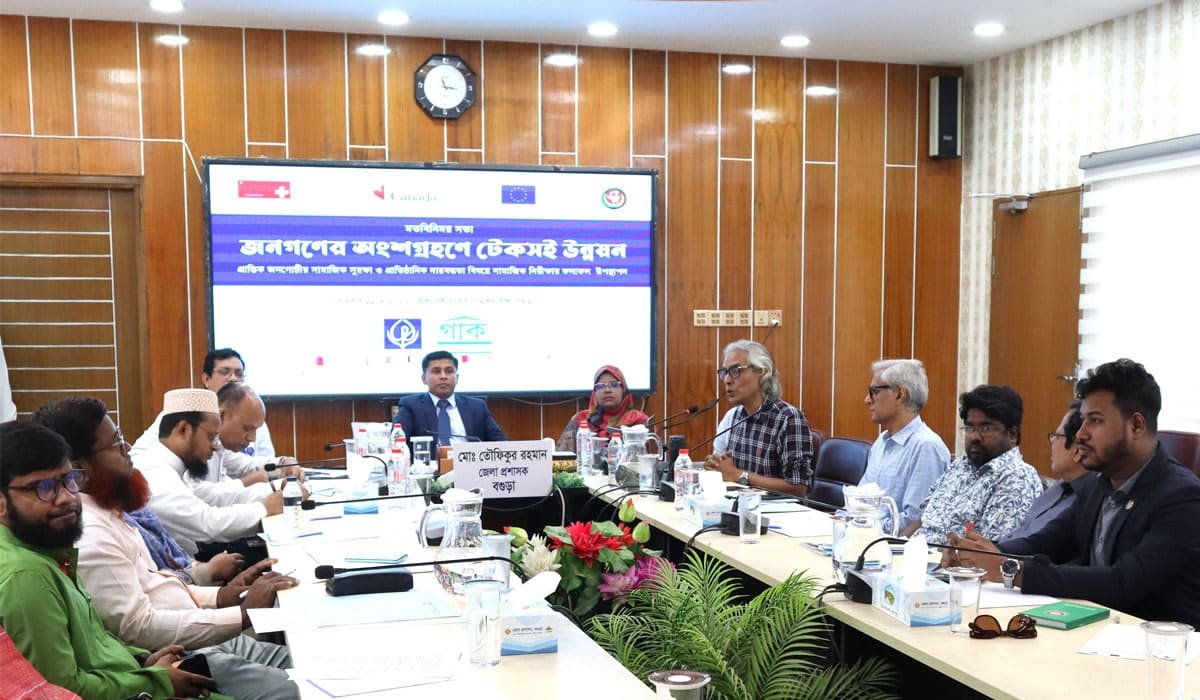
Constructive engagement between citizens and public institutions can help make local services more responsive, accountable and inclusive. This message came through strongly at a district-level consultation in Bogura, where Mr Md Toufiqur Rahman, Deputy Commissioner and District Magistrate of Bogura, encouraged collective action between the administration, families, communities and local institutions following the presentation of findings from a citizen-led social audit. The discussion created a direct space for communities and public officials to exchange views on service delivery and identify areas for joint action.
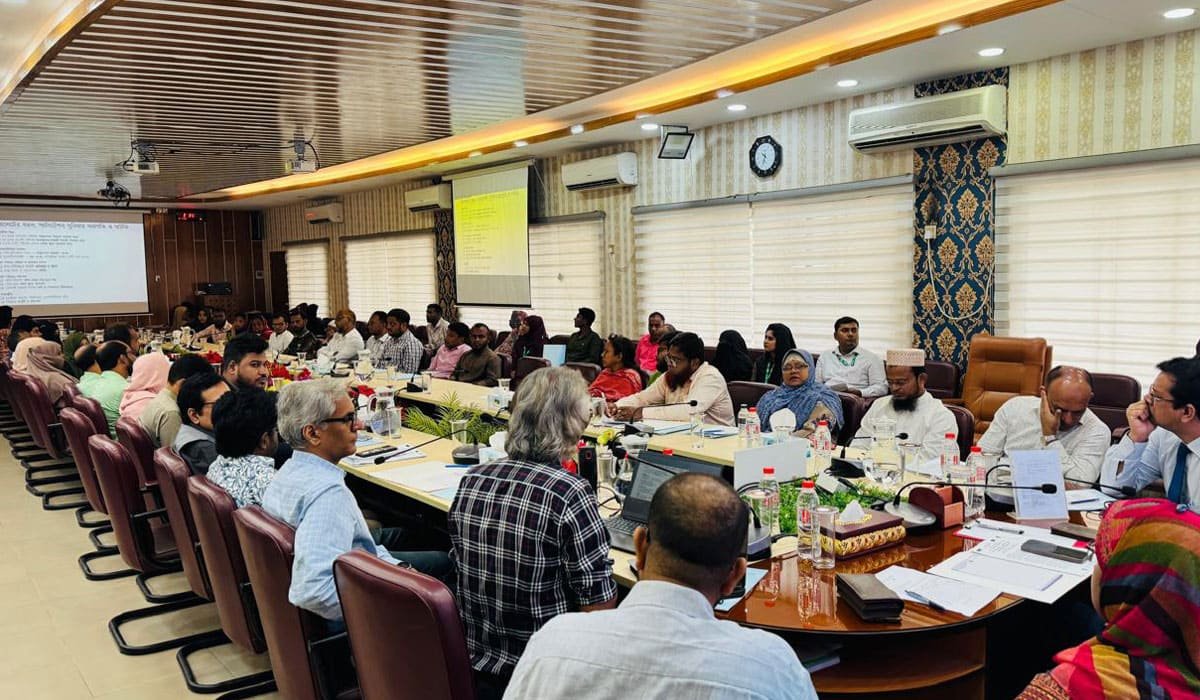
The consultation was held on 11 May 2026 at the conference room of the Deputy Commissioner’s Office in Bogura. It was jointly organised by the Centre for Policy Dialogue (CPD) and Gram Unnayan Karma (GUK) under the Nagorikata Programme, as part of the project titled ‘Equality and Equity in Bangladesh: Sustainable Development with People’s Participation’.
The Nagorikata Programme promotes citizen participation, social audits and constructive engagement with local authorities to improve public service delivery and accountability. Social audit, in this process, works as both a capacity-building tool and an accountability mechanism: it helps Citizens’ Groups identify local service-delivery challenges, gather evidence, engage with government institutions and contribute to better service outcomes. The programme is jointly supported by the Embassy of Switzerland in Bangladesh, Global Affairs Canada and the European Union in Bangladesh, facilitated by GFA Consulting Group GmbH, and implemented by CPD in collaboration with local partners.
The social audit was conducted through Citizens’ Groups formed in four upazilas—Shajahanpur, Shibganj, Sariakandi and Gabtali. Each group included 20 members representing different sections of society, including teachers, journalists, Dalit communities, persons with disabilities, marginal farmers, widows, elderly people, small entrepreneurs and young people. The audit focused on social protection, healthcare, disaster management, agriculture and livelihoods, juvenile delinquency, and institutional accountability.
A questionnaire survey was conducted with 401 respondents between 8 December 2025 and 5 January 2026. The process also included eight focus group discussions, 14 interviews with government officials and key informants, and five case studies.
Responding to the findings, Mr Md Toufiqur Rahman emphasised the importance of collaboration between the administration, families and communities. Speaking on juvenile delinquency, he noted that the responsibility for addressing the issue does not rest with the administration alone. “If juvenile delinquency begins from within the family, then it is not right to place the entire responsibility on the administration,” he observed, adding that families also have a role in providing moral guidance. He also encouraged citizens to use the weekly public hearing held every Wednesday at the Deputy Commissioner’s Office, where they can present their concerns directly.
On health service delivery, Dr Md Khurshid Alam, Civil Surgeon of Bogura, explained the pressure faced by community clinics and health facilities. A community clinic intended to serve around 6,000 people often ends up serving 12,000 to 16,000 people, he noted, which affects medicine supply and the quality of service delivery. He also reminded participants that hospitals and health facilities are public assets, and citizens have a responsibility to help keep them clean and orderly.
The need for accurate information, disaster preparedness and fair distribution of support was highlighted by Mr Md Mezbaul Karim, Additional Deputy Commissioner (General). He observed that incorrect or incomplete information can distort the real situation and create unnecessary blame for public offices. On juvenile delinquency, he called for open discussion, awareness-building and participatory initiatives.
Women’s empowerment was discussed beyond income generation. Ms Tanzima Akhter, Deputy Director, Department of Women Affairs, Bogura, observed that earning alone does not ensure empowerment. “Only earning is not the standard of empowerment; the real indicator is whether women have control over their income and decision-making power,” she said. She also highlighted family awareness and proper child upbringing as important factors in reducing juvenile delinquency.
From the agriculture sector, Mr Sohel Md Shamsuddin Firoz, Deputy Director, Department of Agricultural Extension, Bogura, advised farmers to collect the phone numbers of sub-assistant agriculture officers and communicate directly with the agriculture office when they face difficulties. He also explained the importance of knowing which agricultural support a farmer is eligible to receive and how the farmers’ card system works.
The process behind the social audit was discussed by the programme team. Mr Avra Bhattacharjee, Additional Director, Dialogue, Communication and Outreach, CPD, moderated the session and noted that the consultation aimed to make citizens feel confident in approaching public officials and raising their concerns directly.
Dr Dwijen Mallick, Senior Researcher and Project Coordinator, CPD, reflected on the purpose of the social audit, noting that the aim was to use community-level evidence to support government efforts, identify where progress had been made and where barriers remained, and bring the findings into both district- and national-level discussions.
The findings were presented by Mr Md Mojahidul Islam, Project Consultant, Nagorikata, CPD, with support from Mr Md. Jaouadul Karim, Monitoring and Evaluation Associate, CPD. Mr Islam said the project tried to create group leaders from communities and transfer skills to them so that they could understand and practise social audit tools at the local level. “When leadership qualities are developed in a person, that person can contribute to positive change in society,” he said.
From the implementing partner’s side, Mr Md Ziauddin Sardar, Assistant Director, GUK, described how Citizens’ Groups were formed and trained under the programme. He said the groups were designed to ensure representation of disadvantaged communities and included teachers, journalists, Dalit community members, persons with disabilities, marginal farmers, widows, elderly people, small entrepreneurs and youth.
While the discussion reflected progress in areas such as health service use, vaccination, girls’ education, electricity access and sanitation, the social audit also identified several remaining challenges. These included shortages in health services, limited access to social protection, disaster risks in riverine areas, gaps in youth employment, concerns over juvenile delinquency and the need for stronger institutional accountability.
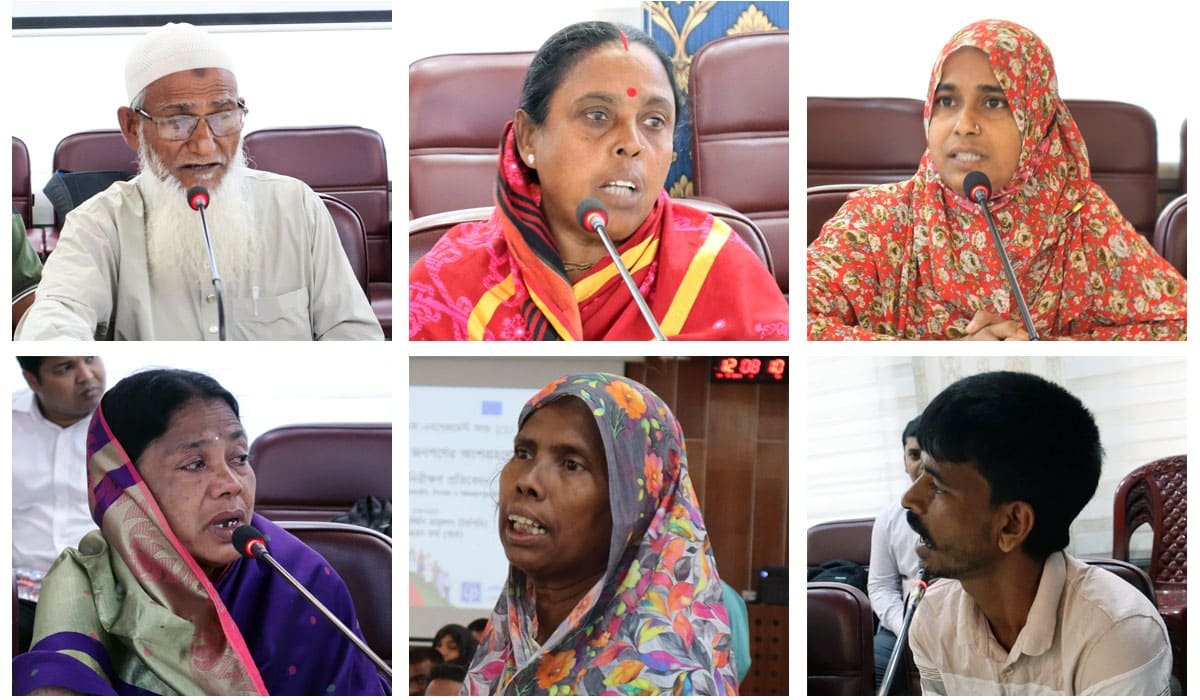
During the open discussion, Citizens’ Group members from the four upazilas shared their experiences. From Shajahanpur, Mr Md Sajedur Rahman Sabuj, Citizens’ Group member and assistant teacher, spoke about the rise of juvenile gangs and local insecurity. “People in Shajahanpur live in fear because no one knows when or where these groups may create unrest,” he said.
Youth employment was raised as a central concern from Shibganj. Ms Beauty Begum, Citizens’ Group member and assistant teacher, said, “The lack of youth employment is creating different kinds of unethical and social problems.” She also highlighted the shortage of training opportunities, playgrounds and libraries for young people.
Concerns over community clinics and disability-inclusive services came from Gabtali. Mr Md Zahid Hasan, youth Citizens’ Group member and student, said the condition of community clinics was poor and persons with disabilities were not receiving proper services. From Sariakandi, Mr Md Mamunur Rashid, youth Citizens’ Group member, spoke about irregularities in the distribution of assistance in char areas. “Different forms of support come to our area, but they are not distributed properly,” he said.
Other Citizens’ Group members and participants shared personal experiences linked to social protection, education, agriculture and local governance. Ms Kaniz Fatema of Sariakandi spoke about her involvement in agriculture and livestock rearing. Ms Parul Rani, a Dalit Citizens’ Group member from Shajahanpur, described the difficulties she faced in continuing her child’s education due to financial constraints. Drawing on his experience in local government, Mr Md Jahurul Haque, elderly Citizens’ Group member and former union parishad member from Sariakandi, said, “Development is possible when local government is strong and functional.”
Accessing social protection remained a recurring concern. Ms Reba Rani, a case study participant from Shajahanpur, shared her experience of seeking widow allowance, while Mr Tapash Chandra Biswas, Dalit Citizens’ Group member from Shibganj, described the difficulties he faced while trying to access public support. Ms Champa Bala, Dalit Citizens’ Group member from Gabtali, also spoke about social protection and support services.
The consultation reflected how social audit can strengthen trust and collaboration between citizens and public institutions. By building the capacity of Citizens’ Groups and creating a structured platform for dialogue, the Nagorikata Programme helped bring local evidence into administrative discussion and encouraged collective action for better service delivery.