

Background
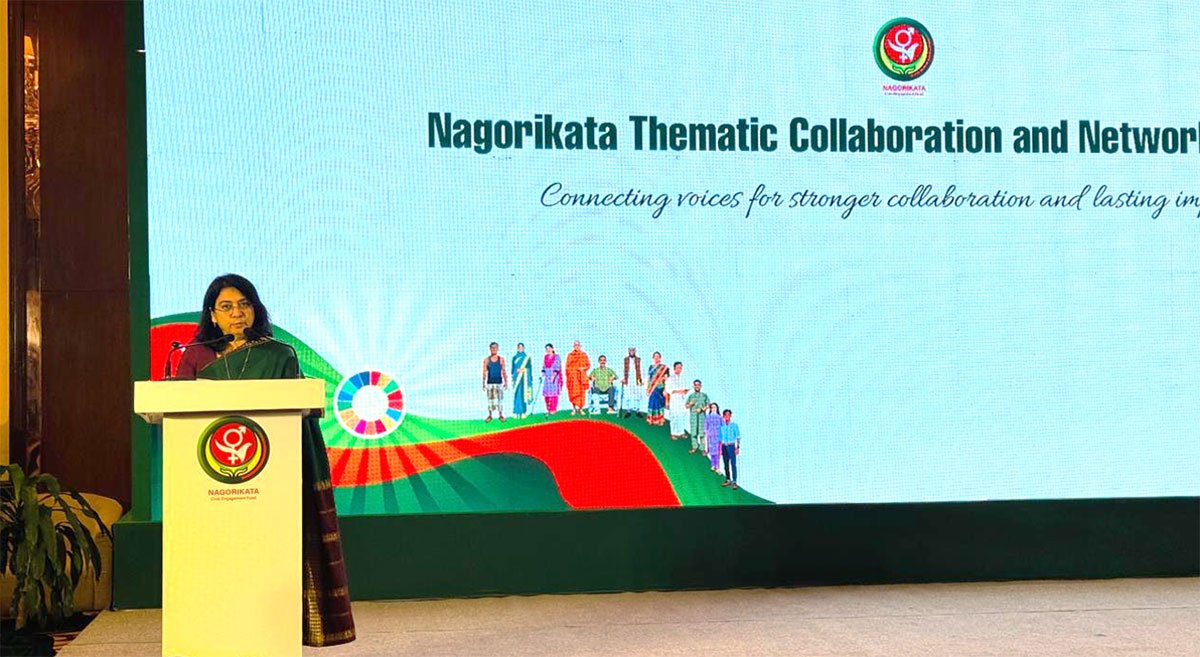
The Nagorikata Thematic Collaboration and Networking Event was jointly organised by the Fund Management Agency (FMA) and the seven Strategic Partners of the Civil Engagement Fund (CEF) on 3 May 2026 at Pan Pacific Sonargaon Hotel, Dhaka. The event brought together 255 participants from across the Nagorikata programme, including representatives of Strategic Partners, Grantees, consortium organisations, government institutions, Development Partners, media and other relevant stakeholders.
The event was designed as a collaborative platform to strengthen networking and promote thematic cooperation among organisations implementing CEF-supported initiatives. Through structured discussions and thematic breakout sessions, participants explored opportunities for collective advocacy, policy engagement and coordinated action around shared programme priorities.
Participation
The event was attended by Executive Directors, project focal persons, programme staff and representatives from Strategic Partners, Grantees and consortium organisations under the CEF programme. Representatives from FMA, the Embassy of Switzerland, Global Affairs Canada, the European Union and UNOPS also participated. Government officials, media representatives and selected external stakeholders joined both plenary and thematic discussions.
CPD participated the Nagorikata Thematic Collaboration and Networking Event together with representatives from its four implementing partners—GUK, IPDS, PRAAN, and ERA. Participating on behalf of these organisations were Ms. Fahmida Akhter (Executive Director, ERA), Mr. Ripon Banai (Programme Coordinator, IPDS), Mr. Ziauddin Sarder (Assistant Director, GUK), and Ms. Umme Salma (Programme Coordinator, PRAAN). They joined the event as key representatives of their respective organisations and actively contributed to the thematic discussions and networking sessions.
CPD-Led and facilitated Gender Equality Session
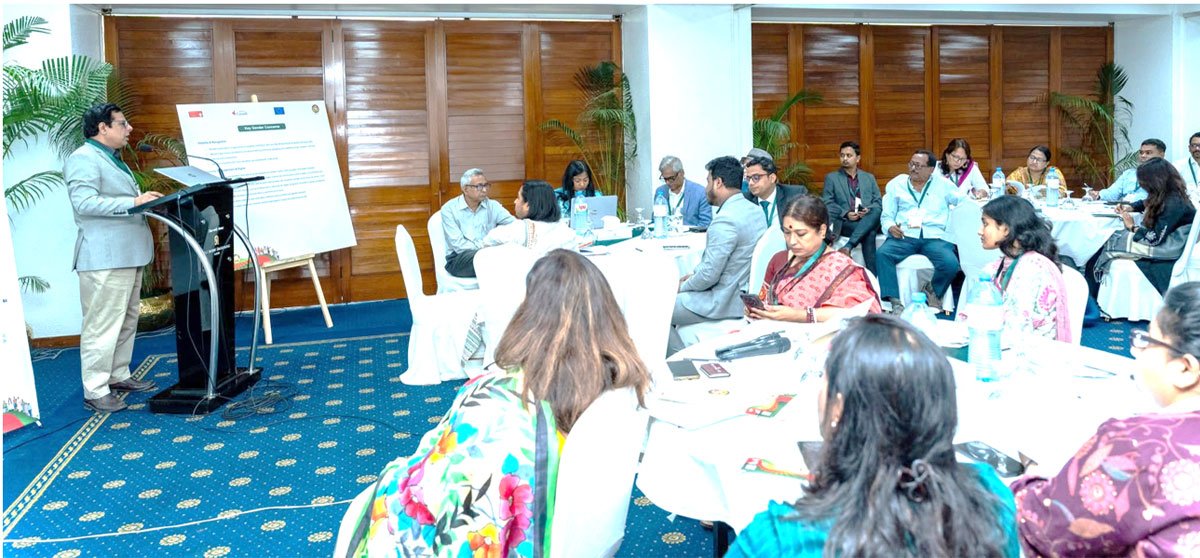
CPD led and facilitated the Gender Equality breakout session, which focused on advancing women’s recognition, rights and economic empowerment in agriculture. The discussion was grounded in CPD’s ongoing policy and research work and reflected the realities faced by rural women whose contributions to agricultural production often remain unrecognised despite their significant role in the sector.
Participants highlighted several structural challenges affecting women farmers. Discussions revealed that women continue to face limited access to Farmer Cards, agricultural subsidies, financial services, agricultural technology and capacity-building opportunities. While relevant policies and legal frameworks exist, participants noted that implementation remains weak, particularly at local levels where women’s participation in decision-making bodies such as Union Parishads and standing committees remains limited.
Special attention was given to the situation of indigenous women and women living in climate-vulnerable areas. Participants emphasized that these groups often face multiple and overlapping forms of exclusion, which are not adequately addressed through existing interventions.
Key Discussion Outcomes
Participants stressed the importance of combining national-level policy advocacy with community-level engagement and social norm transformation initiatives. Several priorities emerged from the session, including:
- Advocating for reforms to the Farmer Card system to ensure formal recognition of women as farmers.
- Simplifying agricultural loan and financial service processes for women.
- Strengthening women’s representation in local governance and decision-making structures.
- Enhancing implementation of existing gender-responsive laws and policies.
- Increasing media engagement to promote recognition of women’s contributions to agriculture.
- Engaging men and family members in gender equality initiatives to foster sustainable behavioural change.
The discussion also highlighted the value of building alliances across civil society organisations to advance common policy demands and strengthen evidence-based advocacy on gender equality and women’s economic empowerment.
Mapping of Interventions and Collaboration Opportunities
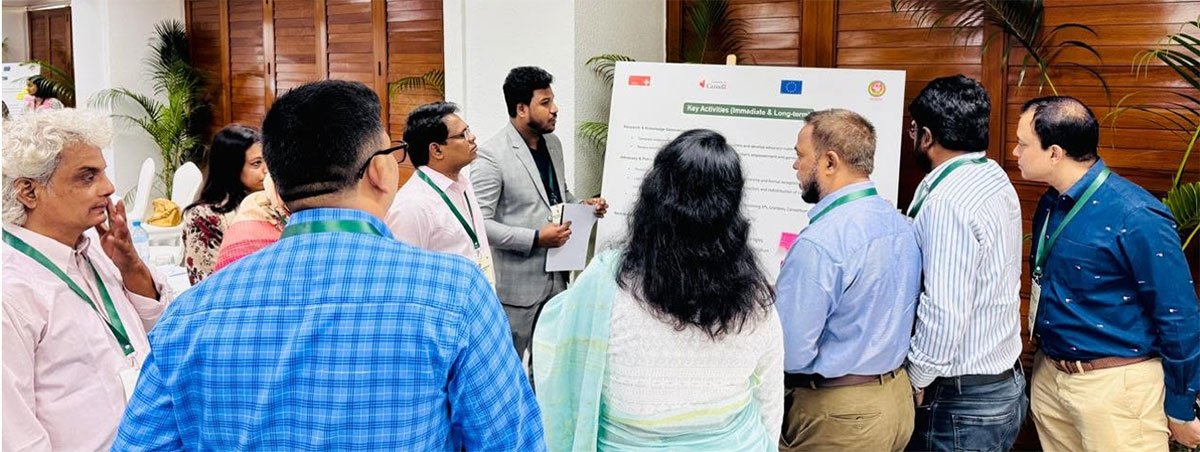
As part of the session, participating organisations mapped ongoing and planned interventions related to gender equality and women’s empowerment. These initiatives covered a broad geographic area, including Rajshahi, Naogaon, Chapai Nawabganj, Bogra, Sirajganj, Natore, Joypurhat, Sunamganj, Sylhet, Habiganj, Moulovibazar, Shariatpur, Barguna, Patuakhali, Barisal and Cox’s Bazar.
The mapping exercise demonstrated significant opportunities for collaboration, knowledge sharing and coordinated advocacy among organisations working on similar thematic issues across different regions of Bangladesh. Participants expressed interest in maintaining regular communication and exploring joint actions to amplify the impact of their individual initiatives.
Closing Session
Closing remarks were delivered by Dr. Fahmida Khatun, Executive Director of the Centre for Policy Dialogue, who called for the building of a Bangladesh free from discrimination, one that addresses fifteen years of governance deficits and ensures that every citizen can claim their rights. She underlined that the work done during the day needed to be carried forward with the same seriousness beyond the event itself.
The session was also addressed by Dr. Rashed Al Mahmud Titumir, Prime Minister’s Adviser on Finance and Planning, who noted that the government is working towards a universal social protection framework, including through the introduction of a Family Card scheme aimed particularly at supporting women and families. He acknowledged the importance of addressing regional inequalities and committed to increased allocations for health and education in the upcoming budget, situating these priorities within the broader ambitions of state reform.
A vote of thanks was delivered by Ms. Corinne Thévoz, Deputy Head of Cooperation of the Embassy of Switzerland, formally closing the event. Participants subsequently gathered for a networking session, with the outputs from the four thematic breakout sessions on display, providing an opportunity for cross-thematic exchange and further informal dialogue.
Conclusion
The Nagorikata Thematic Collaboration and Networking Event successfully fostered dialogue, relationship-building and collective reflection among key stakeholders across the CEF programme. The Gender Equality session facilitated by CPD generated valuable discussions on the systemic barriers facing women in agriculture and identified practical advocacy and programming priorities to address these challenges. The event reinforced the importance of collaborative action and provided a foundation for future thematic partnerships aimed at advancing gender equality and inclusive development outcomes across Bangladesh.