

Measles in Bangladesh has highlighted the urgent need to close immunity gaps, restore routine immunisation services and strengthen the country’s capacity to detect and manage infectious disease outbreaks. Since mid-March 2026, the country has faced its largest recorded measles outbreak. By 18 July, 116,710 suspected cases, 14,318 laboratory-confirmed cases and 784 suspected and confirmed deaths had been reported, with children under five disproportionately affected. Participants linked the crisis to missed vaccinations, uneven coverage, delayed supplementary campaigns, weak surveillance and inadequate preparedness for severe cases.
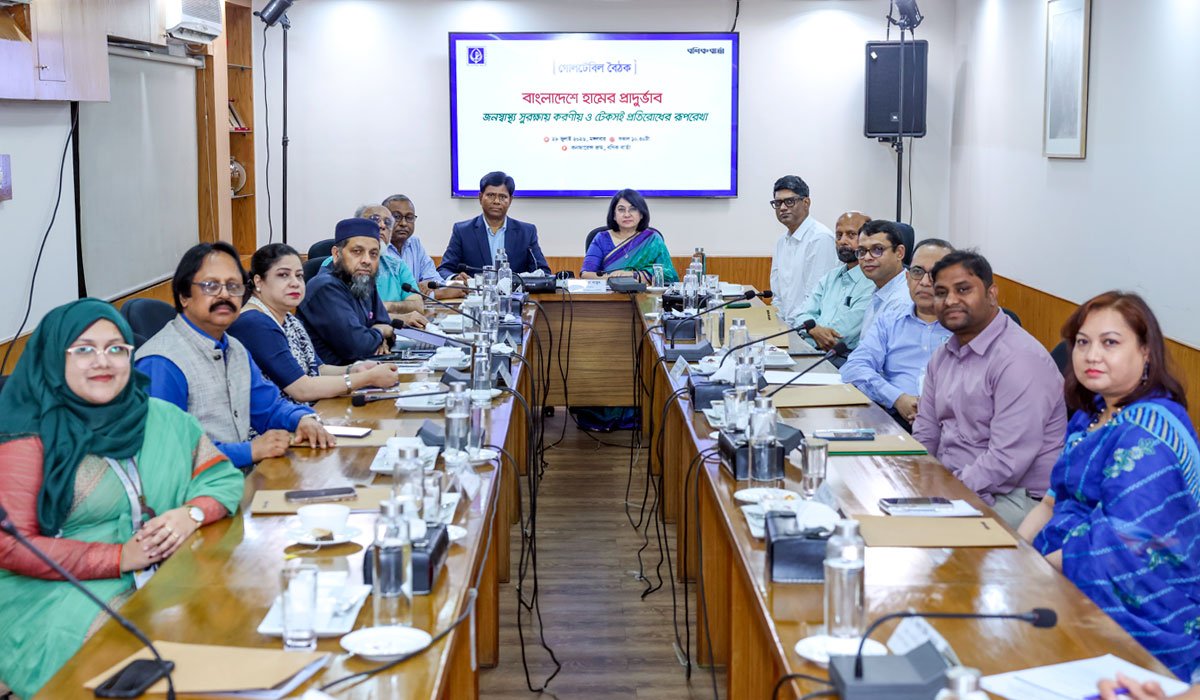
These priorities emerged at the roundtable titled “Measles Outbreak in Bangladesh: Actions to Protect Public Health and a Roadmap for Sustainable Prevention”, jointly organised by the Centre for Policy Dialogue (CPD) and Bonik Barta on Tuesday, 28 July 2026.The discussion highlighted the need to reach every missed child, strengthen the reliability of vaccination data, improve the treatment and referral of critically ill patients, and prevent administrative or procurement disruptions from weakening routine immunisation.
Joining virtually, Dr S M Ziauddin Haider, Special Assistant to the Prime Minister on Health Affairs, outlined the government’s emergency vaccination campaign. He said the response had expanded from high-burden areas to other parts of the country, but acknowledged that stronger referral services, earlier treatment and better preparedness could have prevented some deaths.
A N M Moinul Islam, Additional Secretary, Hospital Wing, Health Services Division, said intensified house-to-house searches were under way to identify missed children, particularly in urban informal settlements and hard-to-reach areas. Field-level data were also being verified, while current stocks and planned procurement were expected to provide vaccines for approximately 22 months.
Placing the outbreak within a wider development context, Dr Fahmida Khatun, Executive Director of CPD, stressed that a healthy population was fundamental to sustainable economic progress. Bangladesh’s health expenditure remained below one per cent of GDP, while even limited allocations were not always effectively utilised. Resources should go beyond physical infrastructure to preventive care, skilled health workers and stronger institutions.
Bangladesh’s earlier success in immunisation had been undermined by failures in vaccine delivery and treatment preparedness, observed Dewan Hanif Mahmud, Founder, Editor and Publisher of Bonik Barta. He called for scrutiny of procurement delays and greater investment in paediatric intensive care, specialist doctors and trained nurses.
Calling for accountability, Dr A M Zakir Hussain, Chairman of the Community Clinic Health Support Trust and former Director of Primary Health Care and Disease Control at DGHS, urged a detailed investigation into the outbreak and related deaths. He questioned the delayed supplementary campaign, highlighted inconsistencies in vaccination figures and called for stronger surveillance institutions capable of issuing early warnings.
Discrepancies between national and field-level estimates were highlighted by Professor Liaquat Ali, former Vice-Chancellor of Bangladesh University of Health Sciences. He also linked immunity to nutrition, breastfeeding, stunting and low birthweight, recommending structural reforms that would provide stronger institutional foundations for public health and primary healthcare.
The outbreak was the cumulative result of declining coverage, pandemic-related disruption and policy failures, said Dr M H Choudhury Lelin, Chairman of Health and Hope Hospital. Street-connected children, mobile populations and residents of informal settlements were frequently excluded from official records. Sustainable prevention required identifying every missed child and mother and prioritising preventive healthcare.
Highlighting opportunities for community partnerships, Dr M A Samad, Chief Executive Officer of the National Health Care Network under the Diabetic Association of Bangladesh, said government measures should be complemented by coordinated support from non-government organisations. The Association’s nationwide network could assist with awareness and outreach, while supplementary vaccination should continue beyond the immediate crisis.
Reported coverage exceeding 100 per cent should be independently assessed, argued Dr S M Moazzem Hossain, Director of the Center for Health, Population & Development at Independent University, Bangladesh. He recommended post-campaign monitoring, large-scale contact tracing, accelerated outreach and a digital system to track cases, contacts and unvaccinated children.
Clinical preparedness was a central concern for Dr Ahmed Sayeed, Senior Consultant in Paediatrics at Square Hospitals Ltd. He called for electronic registration of high-risk children, a functional referral and transport network, telemedicine support and more paediatric intensive care and high-dependency beds. Shortages of trained staff, oxygen, medicines and emergency supplies also required urgent attention.
Available vaccines must reach children in urban slums, remote areas and hill districts, said Dr May May Hla Marma, Senior Consultant in Paediatrics and Neonatology at Unico Hospitals PLC. She also recommended clearer communication on transmission, isolation and household protection, alongside nutrition support, Vitamin A supplementation and coordination among government, non-government and private organisations.
Drawing on hospital experience, Dr Ajmery Sultana Chowdhury, Paediatric Specialist and Consultant at LABAID Specialized Hospital, noted that older children and adults were also being affected, while some families had several unvaccinated children. She recommended wider catch-up vaccination, better access to confirmatory testing and appropriate vaccination for women before pregnancy and for healthcare professionals.
Weak health-sector leadership remained a major concern, according to Dr Md Jahirul Alam Azad, a faculty member at East West University. Lessons from COVID-19—including risk communication, community engagement, public briefings and isolation arrangements—had not been adequately applied. He proposed door-to-door searches, prioritised urban vaccination, finalisation of the national immunisation policy and multidisciplinary management of the Expanded Programme on Immunisation.
At the community level, Dr Lamisa Rahman, Senior Research Associate at the BRAC James P Grant School of Public Health, highlighted inadequate breastfeeding, misinformation, religious misconceptions and mistrust surrounding vaccine quality. Accessible and community-based communication was needed to rebuild confidence and address emerging vaccine hesitancy.
Explaining the operational response, Dr Md Foyzul Islam, Medical Officer at IEDCR, described the work of national, district and upazila rapid response teams. Local teams were being trained in case investigation, isolation and control measures, while evening sessions, Friday vaccination and door-to-door outreach had been introduced in some areas. He stressed that sufficient coverage must be achieved in every community and supported by integrated surveillance systems.
The discussion concluded that vaccination alone would not be enough. Bangladesh needs reliable data, sustained outreach, stronger primary healthcare, better clinical preparedness, clear accountability and continuous public communication. CPD will consolidate the recommendations and share them with the Ministry of Health and Family Welfare.