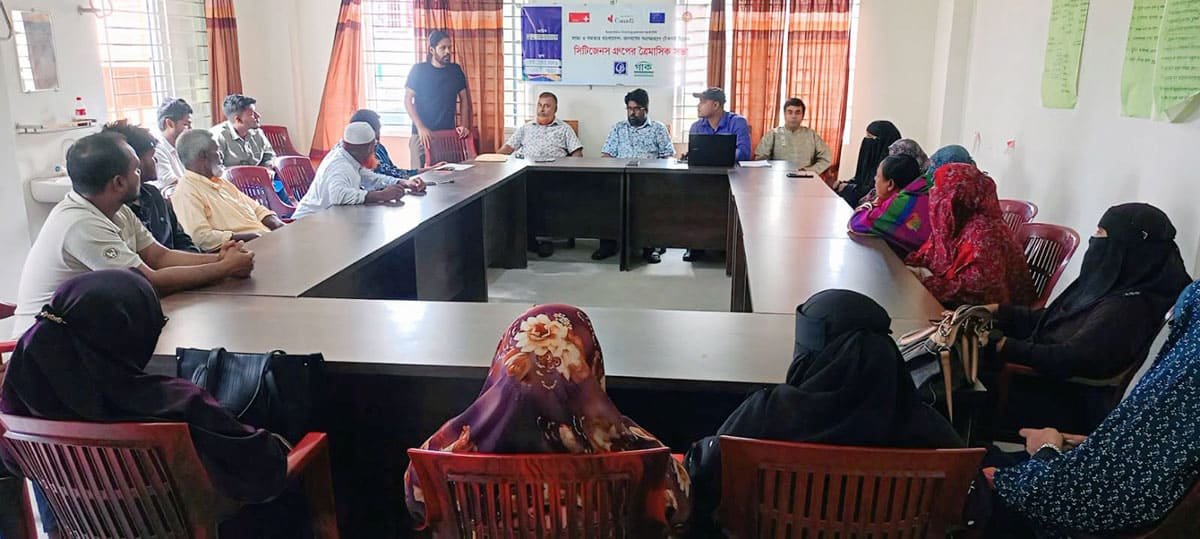
Citizen Groups (CGs) under the Nagorikata: Civic Engagement Fund (CEF) programme have continued their quarterly meetings in Bogura, reviewing citizen participation, public service delivery, social audit findings and follow-up actions.
Nagorikata’s programme titled “Achieving a Peaceful, Just and Inclusive Society through Enhanced Engagement of Civil Society and Citizens in Bangladesh” seeks to strengthen citizen participation and promote more inclusive and accountable local governance. The programme particularly engages marginalised communities and supports their interaction with public institutions and service providers.
The Nagorikata Programme is jointly supported by the Embassy of Switzerland, Global Affairs Canada (GAC), and the European Union facilitated by GFA Consulting Group, and implemented by CPD.
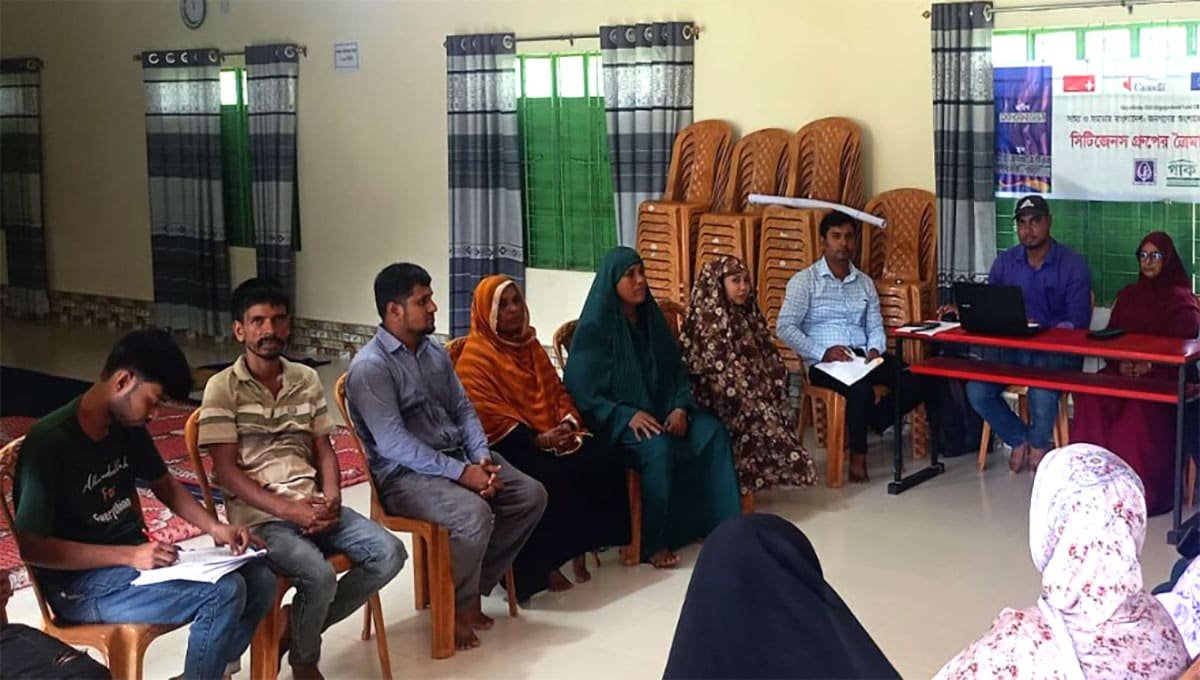
In Bogura, the quarterly meetings reviewed the current status of citizen participation, progress and challenges in accessing government services, and key messages emerging from social audit findings. Citizen Group members discussed access to allowances, healthcare, agricultural services and other public facilities, alongside continuing concerns regarding transparency, information gaps and uneven access to services.
Participants observed that Citizen Group members had become more confident in communicating with public officials and supporting community members in navigating government services. Regular courtyard meetings, awareness activities and stronger coordination with local authorities were identified as important mechanisms for sustaining citizen engagement.
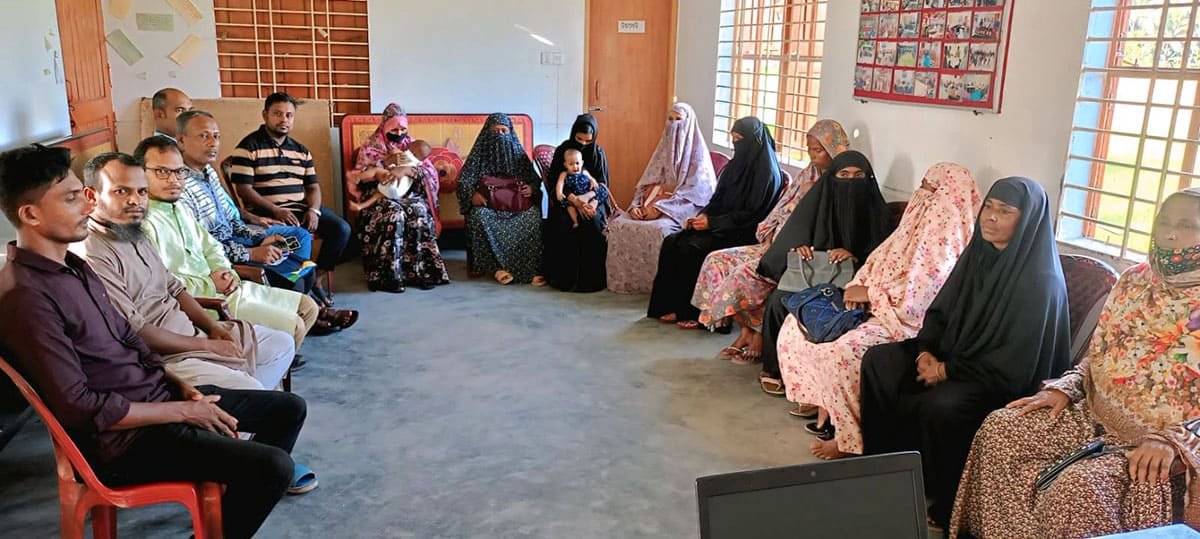
The social audit process also generated specific follow-up measures. The meetings highlighted the importance of making information on government services more accessible and strengthening mechanisms through which citizens can raise their concerns. The Deputy Commissioner called for information on public services and the contact details of responsible officials to be displayed more clearly and announced weekly open hearings on Wednesdays to hear citizens’ concerns directly.
At the same time, participants identified several continuing service-delivery and governance challenges. These included concerns relating to health services, agricultural inputs, social protection programmes, school feeding, access to information and accountability. In some areas, participants also raised concerns regarding expired medicines in community clinics, fertiliser shortages in char areas, and irregularities linked to the Family Card programme.
The quarterly discussions also addressed child marriage, drug abuse and juvenile delinquency. Citizen Groups agreed to strengthen community awareness activities and continue supporting citizens in accessing allowances, healthcare and agricultural services. Tree plantation activities were also reviewed, with emphasis on proper fencing, watering, monitoring and maintenance of distributed saplings.
Through regular quarterly engagement, Citizen Groups in Bogura are helping communities identify service delivery gaps, communicate with public institutions and pursue follow-up actions aimed at improving accountability and access to public services.