

Bangladesh’s energy transition has reached a defining moment. As the country seeks to sustain economic growth while reducing its dependence on imported fossil fuels, ensuring affordable, reliable, and climate-resilient energy has become an increasingly urgent national priority. Recent global fuel price volatility, supply chain disruptions, and growing electricity demand have underscored the need to diversify the country’s energy mix and strengthen domestic energy generation. In this context, distributed renewable energy (DRE), including rooftop solar, solar irrigation, battery energy storage, and decentralised renewable energy technologies, offers a practical pathway towards greater energy security, improved affordability, and enhanced resilience.
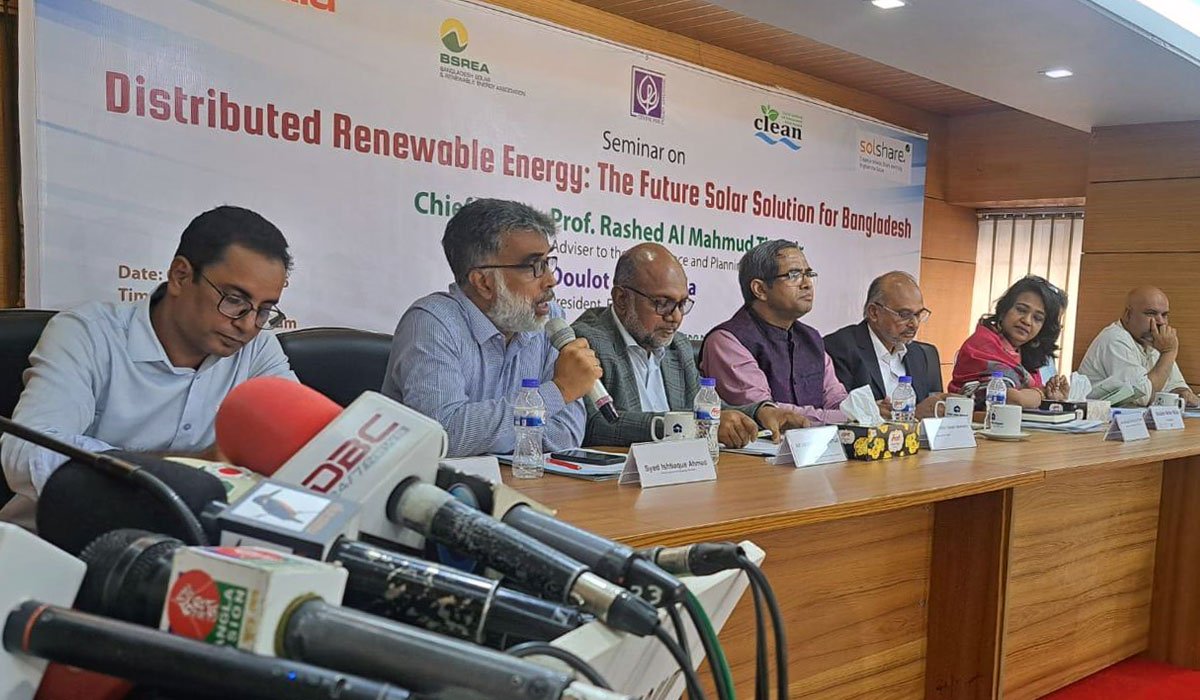
Recognising this, the Centre for Policy Dialogue (CPD), together with its partners under the Distributed Renewable Energy Platform (DREP), organised a joint press briefing titled “Distributed Renewable Energy: The Future Solar Solution for Bangladesh” on 2 August 2026 at the Economic Reporters’ Forum (ERF) Auditorium in Dhaka. The event brought together policymakers, researchers, industry representatives, civil society organisations, financial institutions, and the media to discuss practical pathways for accelerating distributed renewable energy in Bangladesh.
The briefing brought together CPD, ActionAid Bangladesh, SOLshare, the Bangladesh Sustainable and Renewable Energy Association (BSREA), and the Coastal Livelihood and Environmental Action Network (CLEAN). The session opened with welcome remarks from ERF President Ms. Doulot Akter Mala and introductory observations by DREP Coordinator Dr. Khondaker Golam Moazzem, Research Director, CPD, setting the foundation for evidence-based discussions on scaling Distributed Renewable Energy (DRE) across the nation.
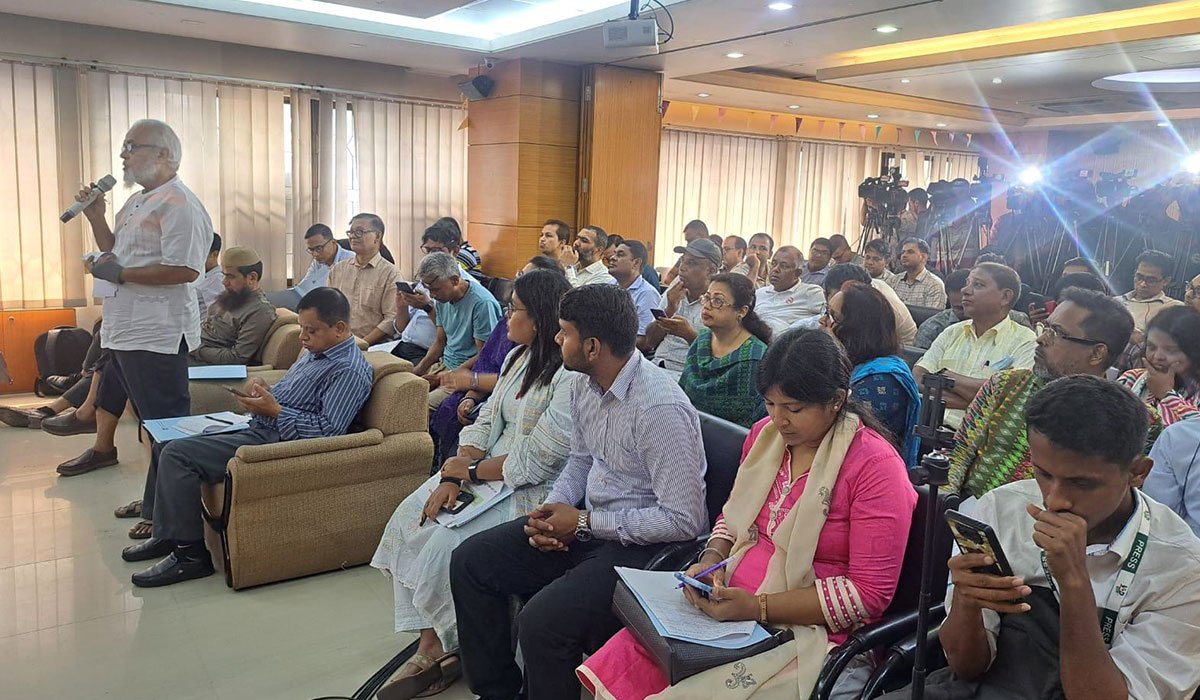
Md Mehadi Hasan Shamim, Research Associate, CPD, presented an overview of Bangladesh’s distributed renewable energy landscape. Annual Solar Home System (SHS) installations increased from 1,087 in 2003 to a peak of 853,000 in 2013, before declining sharply to 3,455 by 2018, a 99.6 percent drop within five years as the national grid expanded. However, the transition left a significant retention challenge. According to the CPD SHS Survey 2025, nearly half of the country’s approximately six million installed SHS units are now non-functional due to the absence of a structured pathway to retrofit, upgrade, or integrate them with grid electricity.
Mr. Shamim also highlighted encouraging progress in grid-connected solar. Bangladesh now has 4,551 net-metered rooftop solar installations with 213.3 MW of installed capacity, 60.4 percent of which are in Dhaka division. Annual installations reached 1,531 systems in 2025, while 98.1 percent of net-metering systems are operational and nearly two-thirds are self-financed. Industrial deployment has also expanded, with 828 rooftop systems across sectors such as ready-made garments, textiles, pharmaceuticals, and cold storage, generating 77.5 MWp. Meanwhile, only 309 of the country’s 3,523 solar irrigation pumps are currently connected to the grid.
CPD recommended reforming net metering regulations, expanding dedicated financing windows, rationalising duties and taxes, strengthening coordination among SREDA, utilities and BERC, and developing a collateral framework for Renewable Energy Service Companies.
Addressing the financing dimension, Abul Azad, Manager – Just Energy Transition, ActionAid Bangladesh, noted that achieving the Renewable Energy Policy 2025 target will require up to USD 980 million annually until 2030, increasing to USD 1.46 billion annually between 2031 and 2040, excluding additional investments required for battery storage and grid modernisation.
Mr. Azad highlighted the high investment risk, limited access to affordable credit, fragmented financing arrangements, and the small scale of DRE projects as key constraints, particularly for households, SMEs, and marginalised groups. Recommendations focused on gender-responsive financing, credit guarantees, first-loss capital, aggregation of small-scale projects into bankable portfolios, and strengthening the capacity of financial institutions to assess DRE investments.
Highlighting the growing importance of storage, Ishtiaque Ahmed, Director of Engineering & Innovation, SOLshare, observed that Bangladesh’s electricity demand peaks after sunset, when solar generation falls to zero. The evening peak reached 17.2 GW in May 2026, while around 400 MW still had to be load-shed. With 2.4 GW of inflexible nuclear baseload expected from the Rooppur Nuclear Power Plant, the country’s power system is likely to experience an increasingly pronounced “duck curve”.
Drawing lessons from Pakistan, where approximately 55 GW of solar panels were installed without corresponding storage investment, SOLshare proposed combining utility-scale battery storage with a distributed Virtual Power Plant model that aggregates the approximately six million batteries used in electric three-wheelers, creating an estimated 6 GW of flexible storage capacity.
Representing industry stakeholders, Mr. A. S. M. Munir, Company Secretary, BSREA, emphasised that distributed renewable energy depends on a well-functioning ecosystem linking manufacturers, importers, importers, EPC companies, investors, financial institutions, regulators, service providers, and consumers.
Mr. Mostafa Al Mahmud, President, BSREA, highlighted regulatory bottlenecks, inconsistent implementation of tax incentives, customs barriers, foreign exchange risks, declining consumer confidence, and shortages of certified technical professionals as major constraints. BSREA recommended extending fiscal incentives across the entire DRE value chain, issuing a joint clarification on SRO implementation, standardising net-metering approval procedures, and launching a national rehabilitation programme for underperforming rooftop systems.
Focusing on the residential sector, Mr. Hasan Mehedi, Chief Executive Officer, CLEAN, noted that households consume 57.2 percent of national electricity, equivalent to 51.94 TWh in 2024–25. With 40.3 million households nationwide, even if 10 percent adopted 1–5 kWp rooftop solar systems, Bangladesh could install 8,600 MWp of capacity by 2030, meeting approximately 15 percent of current national electricity demand.
Mr. Mehedi also reported mobilising 11,231 community members across ten districts, engaging 217 local government representatives through orientation sessions and 276 through direct institutional dialogues. A December 2025 policy brief estimated that every megawatt of rooftop solar could save BDT 3.1 crore annually in avoided furnace oil imports while reducing 8,100 tonnes of carbon dioxide emissions. However, survey findings revealed that although 87 percent of respondents were aware of solar power systems, only 21 percent considered rooftop solar economically beneficial, highlighting a persistent information gap.
The event also featured the launch of the Renewables in Bangladesh website by Ms. Marioum Akter Mou, Programme Associate, CPD. Developed as a concluding output of DREP, the platform will serve as a central repository of research, data, policy analysis, and practical resources for policymakers, researchers, journalists, industry stakeholders, and the wider public, ensuring continued access to evidence beyond the project period.
Delivering the keynote address, Dr Rashed Al Mahmud Titumir, Adviser for Finance and Planning to the Prime Minister, stressed that Bangladesh’s renewable energy transition must evolve into a nationwide movement supported by government, industry, financial institutions, civil society, and citizens.
Dr Rashed highlighted the importance of expanding domestic manufacturing of photovoltaic panels, batteries, inverters, and other renewable energy technologies to reduce import dependence, create employment, and strengthen energy security. Dr Rashed also described renewable energy as a fundamental right that can support inclusive development and called on civil society organisations, microfinance institutions, and local communities to play a greater role in accelerating public awareness and adoption.
The discussions concluded with a shared recognition that Bangladesh’s renewable energy transition must move beyond isolated projects towards a coordinated, long-term strategy. Participants underscored the need for stronger policy coordination, improved access to finance, greater investment in battery storage, enhanced technical capacity, and sustained public engagement.