

A national budget needs to be understood not only through allocation figures, but also through the assumptions, priorities, implementation capacity and policy choices behind them. The Centre for Policy Dialogue (CPD) conducts its budget analysis under the Independent Review of Bangladesh’s Development (IRBD), its flagship programme. The analysis combines macroeconomic review, sectoral assessment, budget document scrutiny and evidence-based judgment to examine whether the proposed budget reflects the country’s development needs and economic realities.
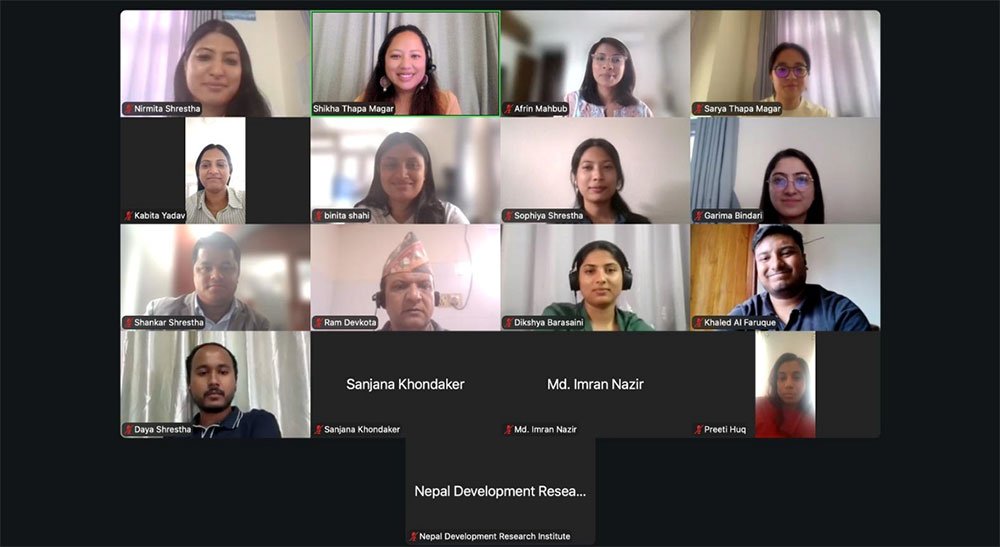
To better understand this approach, the Nepal Development Research Institute (NDRI) organised a knowledge-sharing webinar on Friday, 22 May 2026. The session, titled ‘Bangladesh’s National Budget Analysis’, was conducted by Ms Afrin Mahbub, Research Associate, CPD.
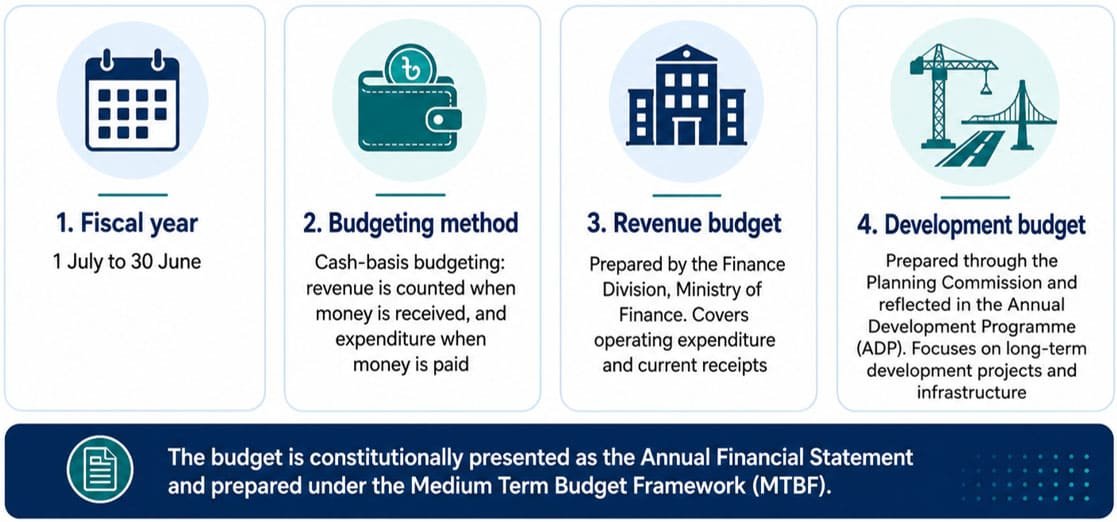
Ms Mahbub began by explaining the basic structure of Bangladesh’s national budget, including its July-to-June fiscal year, cash-basis accounting system and two broad components: the Revenue Budget, prepared by the Finance Division of the Ministry of Finance, and the Development Budget, prepared through the Planning Commission and reflected in the Annual Development Programme (ADP).
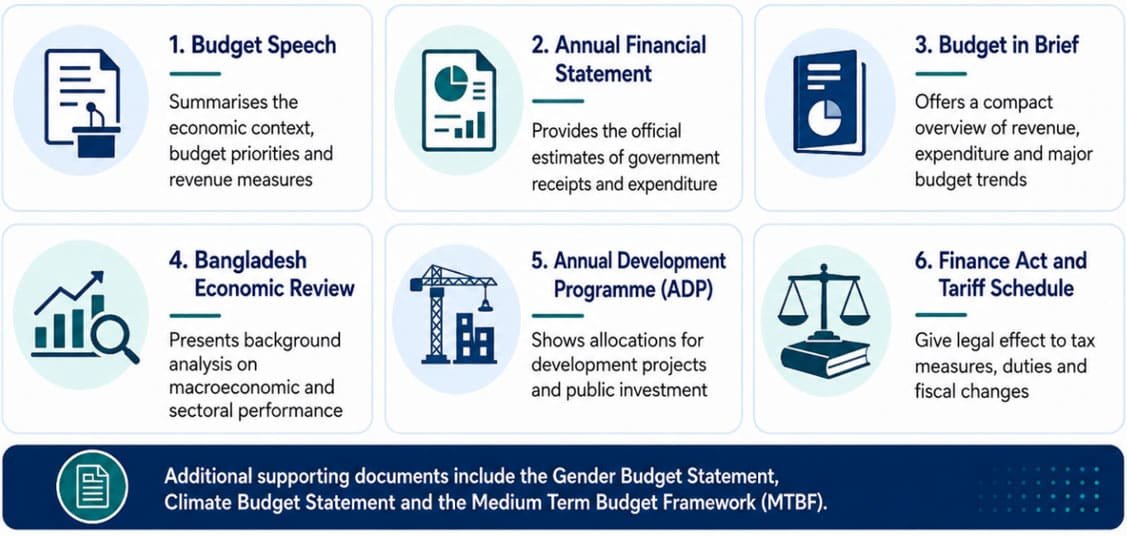
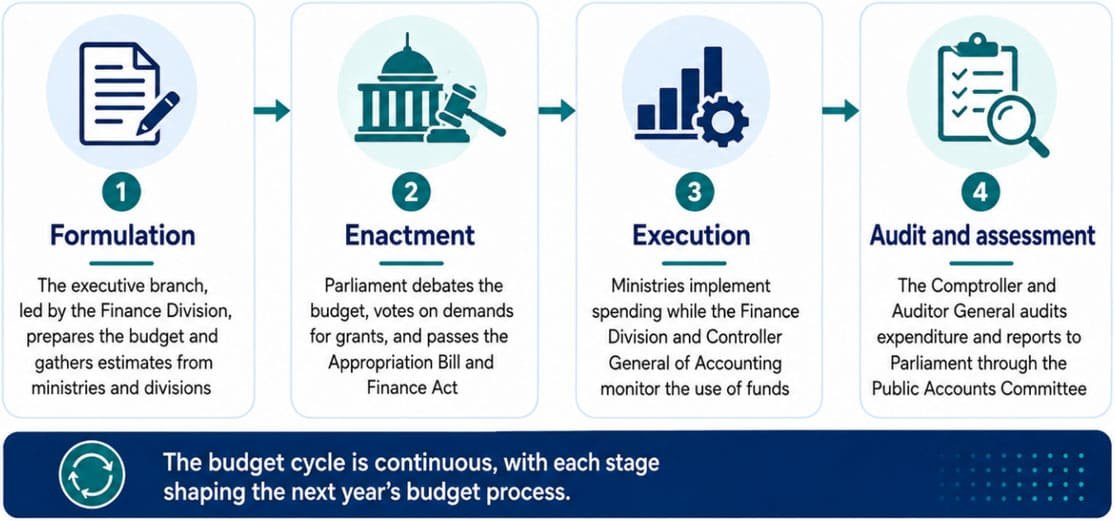
The session also discussed the key stages of the budget cycle, namely formulation, enactment, execution, and audit and assessment. Ms Mahbub introduced participants to major budget documents, including the Budget Speech, Annual Financial Statement, Budget in Brief, Bangladesh Economic Review, Gender Budget Statement, Climate Budget Statement, Finance Act and the Tariff Schedule published by the National Board of Revenue (NBR).
A major focus of the session was CPD’s budget analysis process under IRBD. Launched in 1995, IRBD includes periodic assessments of the state of the economy as well as CPD’s National Budget Analysis. The budget analysis is prepared within 24 hours of the budget announcement and examines expenditure, allocations, fiscal measures and sectoral priorities from the perspective of efficient and transparent use of public resources.
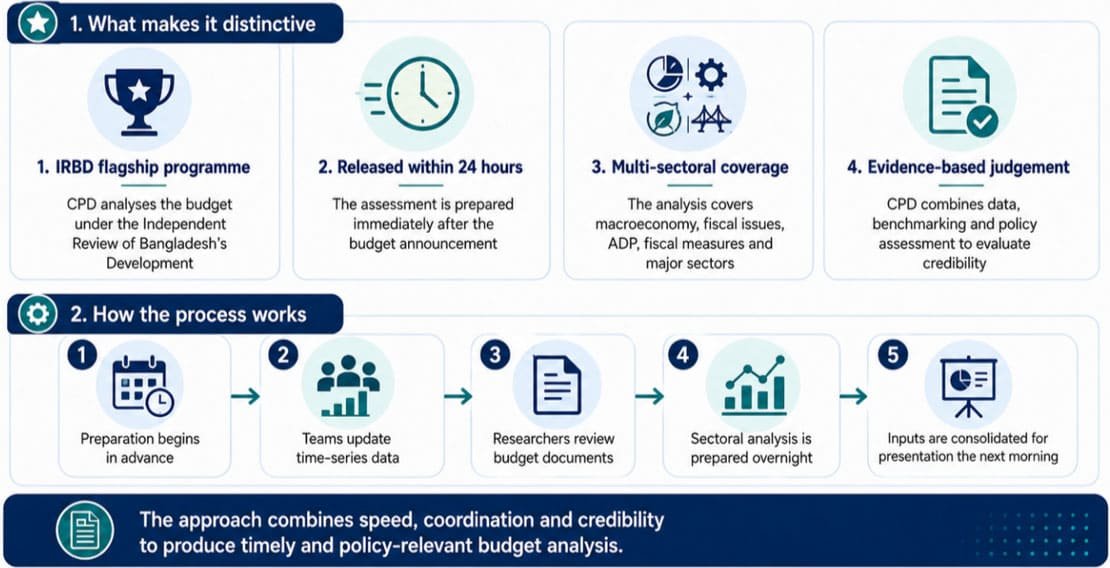
Ms Mahbub explained that preparation for CPD’s budget analysis begins before the budget is placed. Research teams review time-series data, update sectoral databases and assign responsibilities in advance. Once the budget documents are released, sectoral teams begin immediate analysis, and their inputs are consolidated overnight into a comprehensive presentation for the following morning.
The session highlighted that CPD’s analysis is distinctive for its rapid delivery, multi-sectoral coverage, evidence-based approach and clear analytical judgement. Using the education sector as a case example, Ms Mahbub showed how CPD examines allocation trends, revised and actual expenditure, budget utilisation, benchmarking and policy implications to arrive at evidence-based conclusions.
A question-and-answer session followed the presentation, where participants discussed the practical steps, data sources and analytical choices behind CPD’s budget review process. The exchange helped clarify how CPD’s approach combines speed, coordination and credibility to produce timely and policy-relevant budget analysis.