

13 July 2026 | Centre for Policy Dialogue (CPD), in collaboration with LIRNEasia under the FutureWORKS Asia initiative, supported by the International Development Research Centre (IDRC)
Key points
- Automation could affect up to 22 million jobs in Bangladesh’s ready-made garment (RMG) sector, with women expected to bear a disproportionate share of the impact.
- A CPD foresight study identifies deep gaps in skills, social protection and labour market institutions as Bangladesh navigates rapid technological and economic change.
- Policymakers, businesses, trade unions and researchers agree on a set of “no-regret” priorities: modernise skills development, expand portable social protection and build a long-term national strategy for workforce preparedness.
Bangladesh’s economic transformation has been driven by a labour-intensive manufacturing model. That model is entering a period of profound transition. Artificial intelligence (AI), automation, demographic shifts and changes in global trade patterns are reshaping how economies create jobs—just as Bangladesh prepares to graduate from least developed country (LDC) status and adapt to a more competitive global trading environment.
The challenge extends beyond the number of jobs the economy can generate. It is increasingly about whether future of work will be productive, resilient and inclusive.
Recent labour force estimates suggest that around 1.3 million jobs were lost in 2024, with women accounting for nearly 90% of those affected. While the government’s commitment to create 10 million new jobs reflects the scale of ambition, sustaining employment in the years ahead will require preparing workers for a labour market that is already evolving.
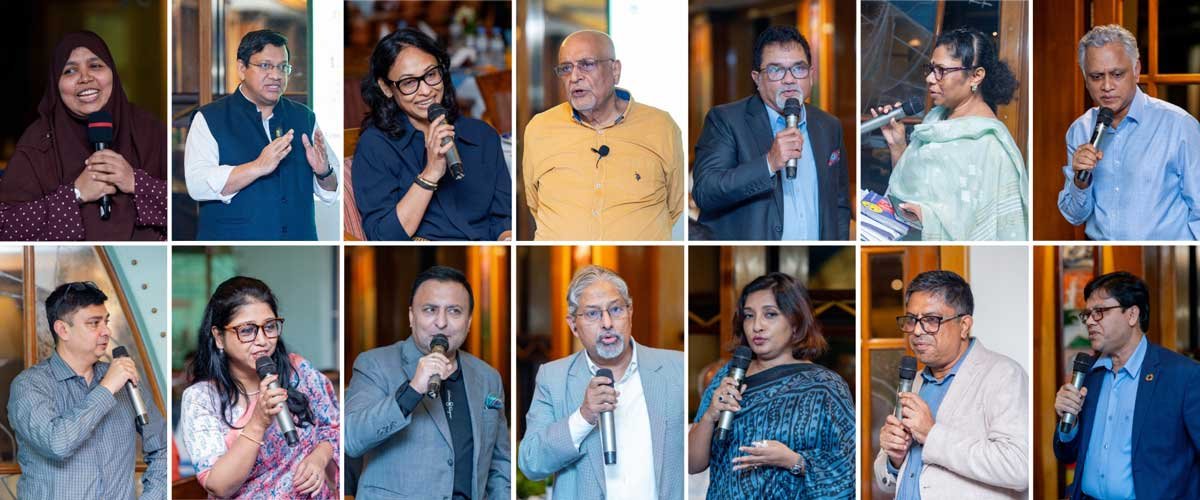
These questions were at the centre of a multistakeholder meeting with policy actors convened by the Centre for Policy Dialogue (CPD), bringing together Members of Parliament, government officials, international development partners, private-sector representatives, trade union representatives and researchers. The discussion drew on a foresight study undertaken with LIRNEasia under the FutureWORKS Asia initiative, supported by International Development Research Centre (IDRC).
Looking beyond forecasts
Rather than predicting a single future, the study adopted a foresight approach, combining horizon scanning, stakeholder consultations and Delphi-based scenario building, to explore four plausible labour market futures for Bangladesh by 2035.
The scenarios were shaped by two critical uncertainties: the pace of expansion of the global digital economy and changing social aspirations.
Despite their differences, all four futures point to the same structural trends.
- Digital transformation is irreversible. Employment will continue shifting towards services.
- Education and skills systems are struggling to keep pace with changing demand.
- External economic shocks will remain a constant feature of the global economy and
- the quality of institutions will determine whether technological change leads to broader opportunity or greater inequality.
Participants also highlighted that disruption is already unfolding. Several industry representatives argued that many firms are responding not only to automation but also to shifting consumption behaviour, rising production costs and increasing pressure from international markets. Technology is one driver of change, but it is not the only one.
A widening skills gap
One of the strongest messages emerging from the consultation was that Bangladesh’s education and training systems are not adequately preparing workers for the future economy.
While the services sector has become Bangladesh’s largest employer, with around 25 million workers, much of its employment remains informal and offers limited productivity gains. Employers continue to report shortages of critical workplace skills, including problem-solving, communication, adaptability and teamwork.
Technical and vocational education and training (TVET) remain underutilised, with enrolment below 20% at the secondary level. Weak links between training institutions and industry, combined with longstanding social stigma surrounding vocational education, continue to limit its effectiveness. Public investment has also remained low, with education and skills spending standing at around 1.3% of GDP.
Participants argued that workforce preparation must begin well before university. Strengthening secondary education, modernising TVET and creating lifelong learning opportunities will be essential if workers are to adapt to repeated technological change throughout their careers.
Building social protection for a changing labour market
Bangladesh’s labour market has evolved more rapidly than its policy framework.
Around 80% of workers remain in informal employment, while digital platform and gig work continue to expand. Yet labour regulations and social protection systems remain largely designed for formal employment relationships.
Participants emphasised the need for a portable social protection system that follows workers across different forms of employment, providing access to healthcare, injury compensation, pensions and income protection regardless of where or how people work. They also called for a governance framework that clearly defines the rights and responsibilities of workers and digital platforms.
The discussion also highlighted persistent barriers to inclusion. Limited access to institutional childcare contributes to women’s withdrawal from the labour force after childbirth. Most employed persons with disabilities continue to work in informal, low-productivity occupations. At the same time, many educated young people spend years preparing for public-sector recruitment instead of pursuing opportunities in the private sector.
From resisting automation to managing transition
The consultation also reflected a notable shift in perspectives among labour representatives.
Rather than opposing automation itself, trade unions increasingly emphasised the importance of a just transition, ensuring that workers participate in decisions surrounding technological adaptation and that productivity gains are accompanied by decent work, freedom of association and effective worker representation.
Private-sector representatives similarly stressed that firms require incentives to invest in workforce development. Suggestions included tax incentives and targeted support for employers that provide structured training and reskilling programmes, although participants acknowledged that such proposals have historically received limited policy support.
Priorities that remain relevant under any future
While the future cannot be predicted with certainty, the study identifies several policy priorities that remain valuable across all plausible scenarios. These include:
- Modernising education and skills systems by making national TVET programmes more responsive to industry needs and fully implementing the Bangladesh National Qualifications Framework.
- Embedding lifelong learning through structured pathways for initial training, mid-career upskilling and worker transition.
- Aligning industrial incentives with employment generation and workforce upgrading, particularly for women, youth and persons with disabilities.
- Increasing public investment in education and skills towards the national commitment of 5% of GDP, alongside stronger governance and accountability.
- Developing an integrated Labour Market Information System to improve occupational forecasting and skills planning.
- Extending portable social protection across all forms of employment while incorporating the ethical governance of AI into labour policy.
- Strengthening coordination across ministries responsible for industry, education, employment, exports and social protection.
The need for sustained political commitment
Ultimately, preparing for the future of work is not solely a technological challenge—it is a governance challenge.
Bangladesh’s development history demonstrates that transformative progress is possible when national priorities are pursued consistently over time. Near-universal primary school enrolment and nationwide immunisation became national success stories because they remained enduring national commitments, irrespective of changes in government.
Preparing the workforce for a rapidly changing labour market will require the same long-term commitment. As technological change accelerates, the central policy question is no longer whether the future of work is arriving, but whether Bangladesh can ensure that future growth delivers decent, productive and inclusive employment for all.
This article draws on the CPD policy brief “Is Bangladesh Ready for the Future of Work?” by Debapriya Bhattacharya, Towfiqul Islam Khan, Mamtajul Jannat and Maliha Rahman. The policy brief is based on the study Life after Life: Exploring the Future of Work in Bangladesh, conducted by CPD in collaboration with LIRNEasia under the FutureWORKS Asia initiative, supported by the International Development Research Centre (IDRC), as well as discussions from the accompanying multistakeholder consultation