

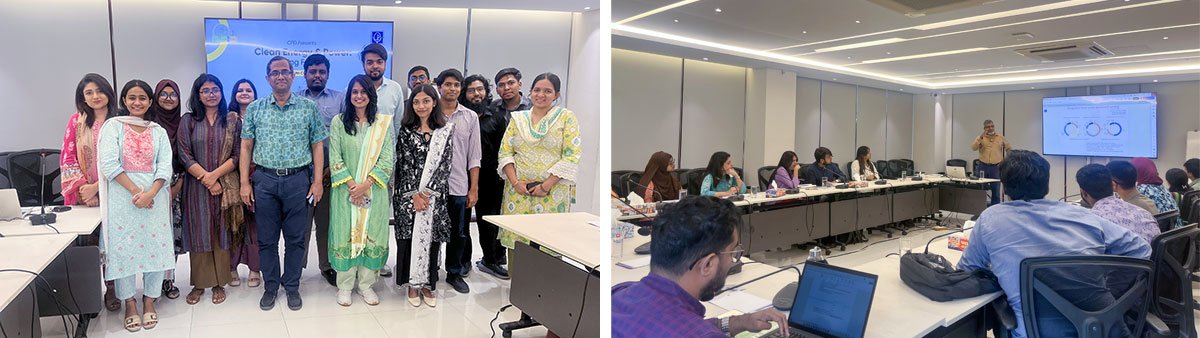
Bangladesh’s energy transition is entering a more demanding phase. Decisions about electricity generation and energy investment are no longer confined to engineering or economics alone. They now include environmental sustainability, financial innovation, institutional governance, technological advancement, and long-term development planning. Navigating this evolving landscape requires professionals who are comfortable working across disciplines, engaging critically with evidence, and appreciating the complex trade-offs that underpin contemporary energy policymaking.
It is against this backdrop that the Centre for Policy Dialogue (CPD) Power and Energy Study concluded the sixth cohort of the Power and Energy Lecture Series: Moving Forward on 27 June 2026. Over eight weeks, the series brought together students and young professionals from diverse academic and professional backgrounds for a structured learning experience designed to strengthen interdisciplinary understanding of Bangladesh’s power and energy sector.
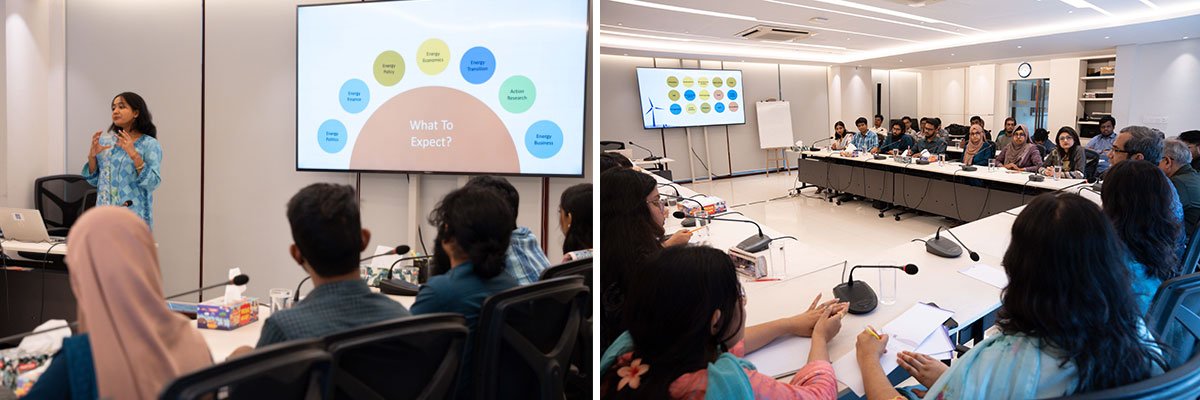
Throughout the sixth cohort, participants explored theoretical foundations with practical policy perspectives. Structured lecture sessions examined Bangladesh’s evolving energy landscape through discussions on energy transition pathways, renewable energy deployment, electricity market dynamics, sectoral governance, financing mechanisms, and implementation challenges.
A defining characteristic of the lecture series continues to be its emphasis on dialogue rather than one-way instruction. Participants were encouraged to interrogate assumptions, engage constructively with competing viewpoints, and learn from the diverse experiences represented within the cohort. By bringing together individuals from different academic disciplines and professional backgrounds, the series created an environment where perspectives could be challenged, refined, and strengthened through informed discussion.
This commitment reflects the longstanding effort to counter déformation professionnelle, the tendency to interpret complex sectoral issues solely through the perspective of one’s own professional training. Economists, engineers, environmental scientists, finance professionals, and development practitioners each contribute distinct insights, but it is through dialogue among these perspectives that more comprehensive and durable policy solutions emerge.
The 3-Minute Thesis (3MT) presentations reflected the cohort’s commitment to developing future contributors to evidence-based policy discourse. Participants translated emerging research ideas into concise and accessible presentations on contemporary power and energy issues, strengthening both their analytical and communication skills.
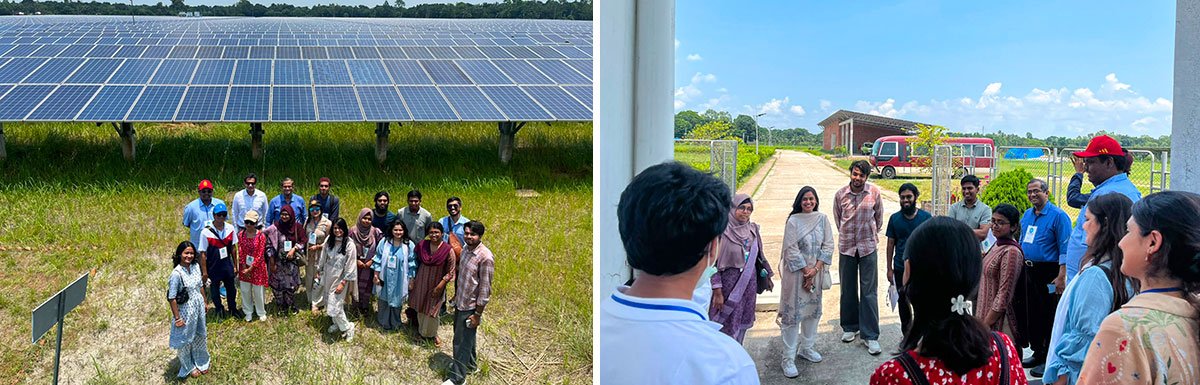
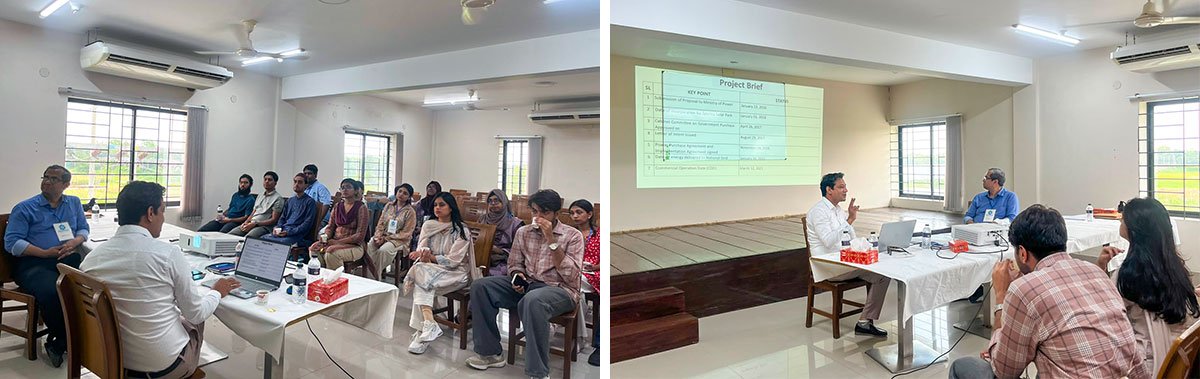
The cohort concluded with a field visit to the Manikganj 35 MW (Spectra) Solar Power Plant, providing participants with an opportunity to observe firsthand the infrastructure that underpins Bangladesh’s growing renewable energy sector. While classroom discussions offered conceptual and policy frameworks, the visit connected those discussions to the operational realities of utility-scale renewable energy generation.
The Power and Energy Lecture Series seeks to cultivate analytical judgement, interdisciplinary communication, critical inquiry, and an appreciation for the institutional complexity that characterises real-world policymaking. These capabilities are becoming increasingly valuable as Bangladesh navigates an energy transition that will shape its broader economic, environmental, and developmental trajectory.
The sixth cohort also reflects a wider transformation in the country’s energy discourse. Conversations that once centred primarily on generation capacity and fuel supply now increasingly encompass climate resilience, fiscal sustainability, investment frameworks, technological innovation, environmental management, and the equitable distribution of energy services.
Building a secure, sustainable, and resilient energy future will require continued investment in infrastructure, institutions, innovation, and human capital. Equally important will be sustained spaces for dialogue that bring together diverse expertise, encourage critical thinking, and connect policy with practice. In that regard, the conclusion of the sixth cohort marks another step in cultivating the professional community that will help shape Bangladesh’s energy future for years to come.