


Task Force on Climate, Development and International Financial Architecture (IFA)
ABOUT
The Task Force on Climate, Development and the International Financial Architecture (IFA), previously known as the Task Force on Climate, Development and the International Monetary Fund (IMF), is a consortium of experts from around the world utilising rigorous, empirical research to advance a development-centred approach to climate change across the international financial architecture (IFA). The Task Force believes it is imperative that the global community support climate resilience and transitions to a low-carbon economy in a just manner. The mission of the Task Force is to advance a development-oriented climate policy in the international financial architecture through rigorous empirical research, policy engagement and strategic communications.
The Boston University Global Development Policy Centre has invited the Centre for Policy Dialogue to join the Task Force on Climate, Development and the IFA.
OBJECTIVES
The Task Force’s objective is to continue advancing a development-centred approach to climate change across the IFA. The core outputs, common across all Task Force institutes, involve research and analytical work, policy engagement and dialogue, and advancing a shared narrative on the need to place development at the core of the IFA’s approach to climate change.
MEMBER INSTITUTIONS
- Intergovernmental Group of Twenty-Four (G24)
- Vulnerable Group of Twenty (V20) Ministers of Finance
- African Center for Economic Transformation (Ghana)
- African Economic Research Consortium (Kenya)
- Boston University Global Development Policy Center (USA)
- Centre for Policy Dialogue (Bangladesh)
- Centre for Social and Economic Progress (India)
- Financial Futures Center (Philippines)
- Macro & Green Finance Lab, National School of Development, Peking University (China)
- Wirtschaftsuniversität Wien (Austria)
EVENTS
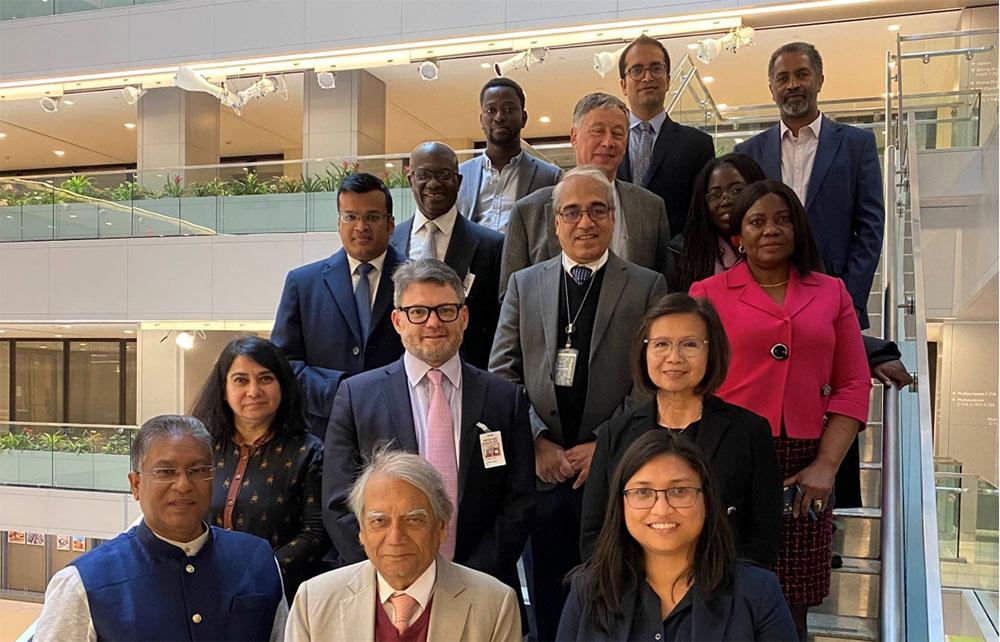
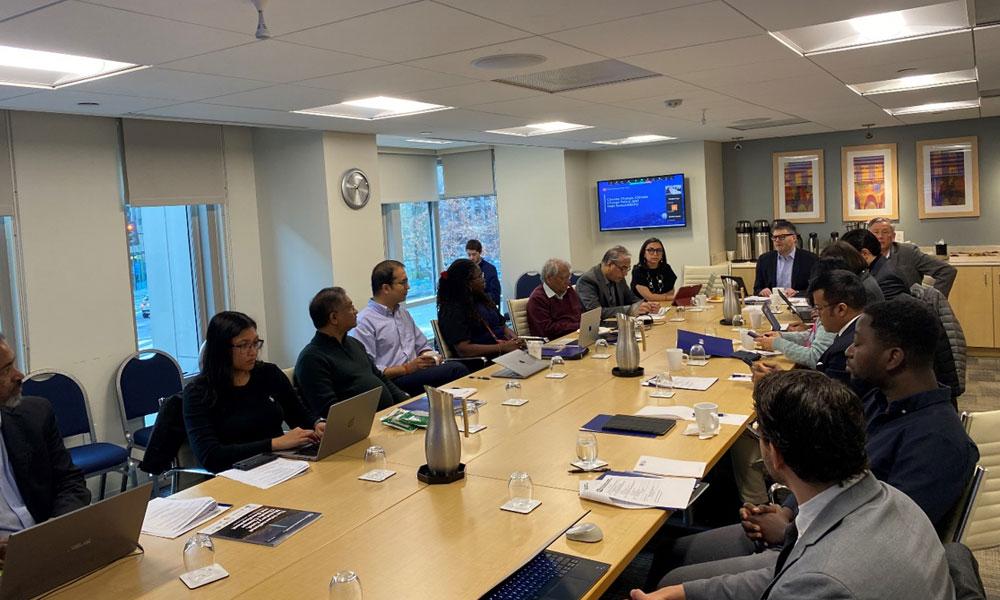 In-person Convening of The Task Force on Climate, Development and the International Monetary Fund. 28 January 2024. The Concordia, Washington D.C.
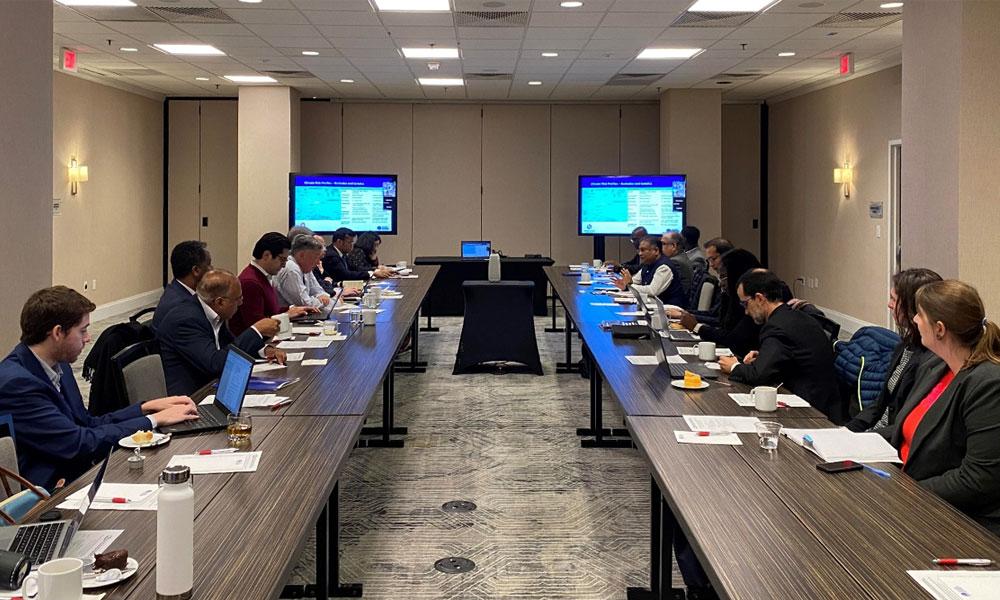 Debt Sustainability Analysis Workshop. 28 January 2024. Park Hyatt Washington, Washington D.C.
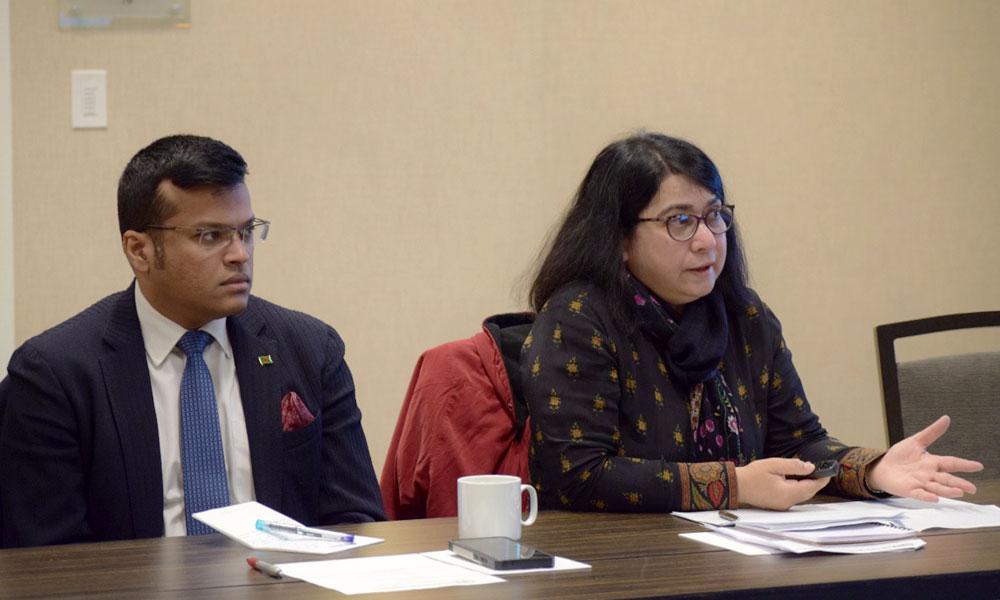 Debt Sustainability Analysis Workshop. 28 January 2024. Park Hyatt Washington, Washington D.C.
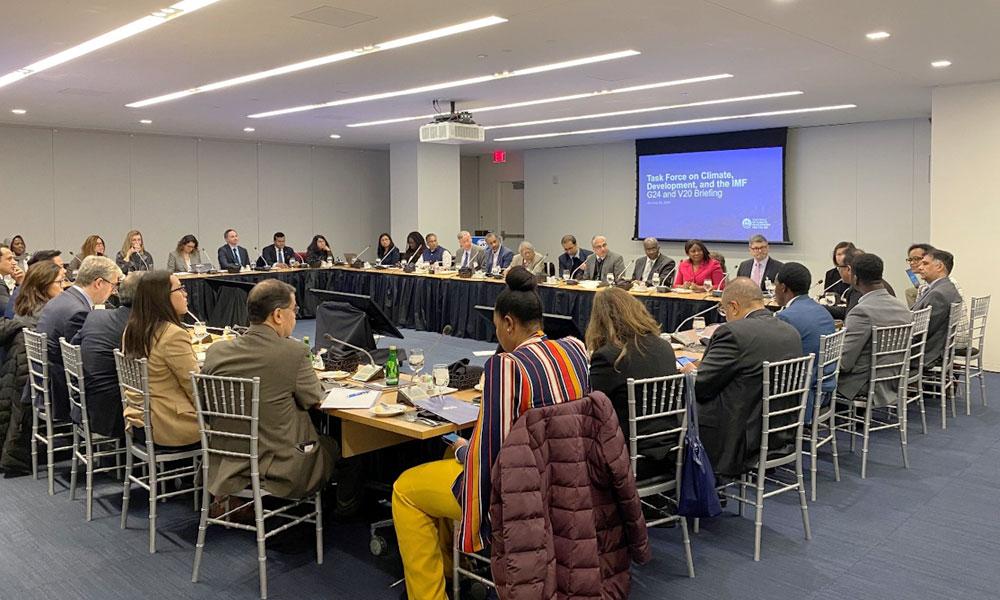 IMF Executive Board Briefing by the Members of the Task Force. 30 January 2024. IMF Headquarters, Washington D.C.
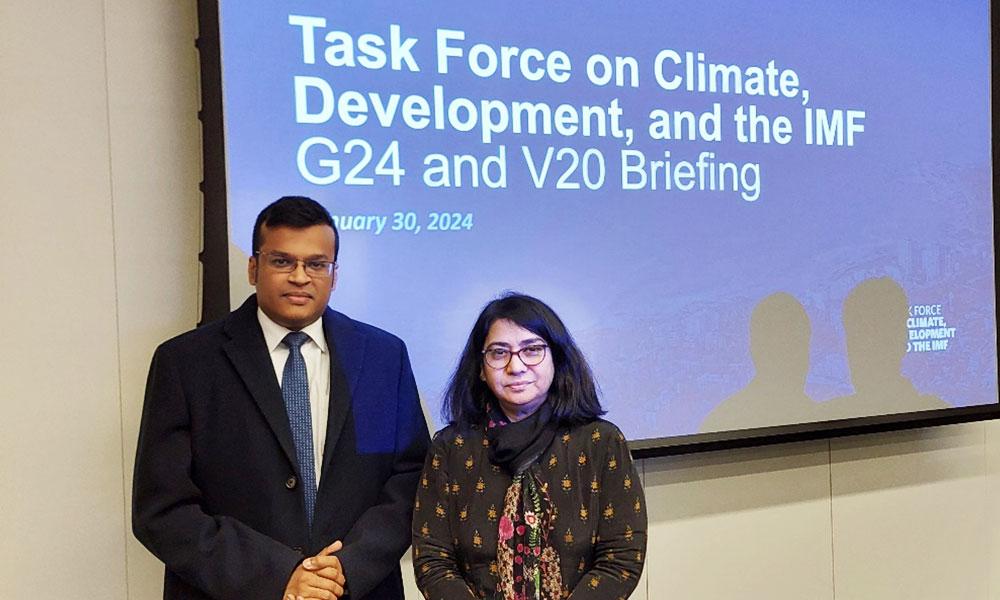 IMF Executive Board Briefing by the Members of the Task Force. 30 January 2024. IMF Headquarters, Washington D.C.
SPECIAL REPORT
Navigating Debt, Development and Disasters: Making Debt Sustainability Analyses Work for Bangladesh
IMF 2030: A Transformative Action Agenda for Achieving Climate and Development Goals
Room to Grow – Integrating Climate Change in Debt Sustainability Analyses for Low-Income Countries
Mobilizing Innovative Sources of Finance: Lessons from the Resilience and Sustainability Trust (RST)
Achieving Catalytic Impact with the Resilience and Sustainability Trust
BLOG

Bangladesh’s Climate Risks and External Debt Tightrope: Safeguarding Sustainability Amid Transition

It’s the IMF’s Turn: An Evolution for Development and Climate Change Goals

How the IMF Can Strengthen the Resilience and Sustainability Trust to Promote a Just,...
RESEARCH TEAM
Dr Fahmida Khatun
Distinguished FellowDr Fahmida Khatun is currently the Distinguished Fellow of the Centre for Policy Dialogue (CPD), a leading think tank in South Asia. She has completed a BSc and MSc in Economics from Jahangirnagar University, Bangladesh, an MSc in Environmental and Natural Resource Economics and a PhD in Economics from the University College London (UCL), UK. She did her post-doctoral research at the Earth Institute, Columbia University, USA, as a Fulbright Scholar in 2015. She also participated in a Leadership Decision Making course at Harvard University, USA, in 2019. Before joining CPD, she worked as a Research Fellow at the Bangladesh Institute of Development Studies (BIDS), as an Environmental Specialist for the United Nations Development Programme (UNDP), and as an Economist for the United States Agency for International Development (USAID). Dr Khatun has taught Economics at the University of Greenwich, UK and Environmental Economics at North South University, Bangladesh. Fahmida is proactively involved in developing and implementing research in collaboration with international research organisations on issues of mutual interest. She has published widely in professional journals at home and abroad and has authored books, book chapters, monographs and policy briefs in areas of her interest and expertise. She is invited regularly to write for the East Asia Forum based in the Crawford School of Public Policy at the Australian National University and Trade for Development News by Enhanced Integrated Framework (EIF) of the World Trade Organisation (WTO). Dr Khatun was a member of the Panel of Economists for the Eighth Five-Year Plan (2021-25) formed by the Bangladesh Planning Commission. She served as a member of the Advisory Committee for the National Human Development Report prepared by the Economic Relations Division, Government of Bangladesh. She was a Director of Janata Bank Limited, Bangladesh's second-largest state-owned bank (2008-2011) and a Director of the SME Foundation of Bangladesh (2011-2013). Dr Khatun is also a Non-resident Senior Fellow at the Atlantic Council, a think tank based in the USA. She is a member of the High-level Advisory Board on the Productive Capacities Index (PCI) of the United Nations Conference on Trade and Development (UNCTAD). Dr Khatun’s research interests and expertise include macroeconomic policy, climate change, environment, energy economics, green economy, aid effectiveness, international trade and WTO issues, digital economy, youth employment, health issues, interests of Least Developed Countries (LDCs), Sustainable Development Goals (SDGs), and women’s contribution to the economy.
Afrin Mahbub
Research AssociateMs Afrin Mahbub has more than four years of experience in economic research, data analysis, and facilitation of research-focused initiatives. Ms Mahbub has a track record of producing high-impact, policy-relevant research across a wide range of themes, including environmental economics, climate change, inflation, debt sustainability, trade, investment, value chain analysis, education, and youth employment. Her core strengths lie in her ability to design, manage, and deliver complex research projects with precision and depth. She possesses a comprehensive command of quantitative and qualitative research methods, including advanced data management, statistical analysis, survey design, and field research coordination. Ms Mahbub has undertaken multiple research projects for the Embassy of Japan in Bangladesh, the Embassy of Denmark, the Embassy of the Netherlands in Bangladesh, Friedrich-Ebert-Stiftung (FES), Deutsche Gesellschaft für Internationale Zusammenarbeit (GIZ), Southern Voice Initiative (SVI), Foreign, Commonwealth & Development Office (FCDO), and the International Growth Centre (IGC). Ms Mahbub has strong expertise in designing and managing large-scale primary surveys, with proven capabilities in developing robust instruments and sampling strategies and overseeing end-to-end field operations. Ms Afrin has completed her Bachelor of Social Science in Economics from American International University-Bangladesh (AIUB) with the highest distinction and has completed her Master of Science in Economics from North South University (NSU).
Anindita Islam
Programme AssociateMs Anindita Islam completed her undergraduate degree in Economics with a minor in Social Entrepreneurship at McGill University in Canada. At CPD, Ms Islam has contributed to research on universal social protection, macroeconomic performance, and climate and trade policy. As part of the Friedrich-Ebert-Stiftung (FES)-funded project on universal social protection, she contributed to the assessment of the feasibility and financing requirements of a universal social protection system in Bangladesh. Her work included developing research frameworks, conducting stakeholder interviews, coordinating policy dialogues, and contributing to research reports and policy briefs. She has also contributed to CPD’s Independent Review of Bangladesh’s Development (IRBD), particularly its analysis of social protection budgets and broader macroeconomic developments. Before joining CPD, Ms Islam worked as a Research Assistant at the Centre for Agribusiness at North South University. She also interned at the International Department of Grameen Bank, conducting field surveys and focus group discussions and preparing case studies. Her research interests include international trade, development economics, climate change, monetary policy, and social protection.
In collaboration with