

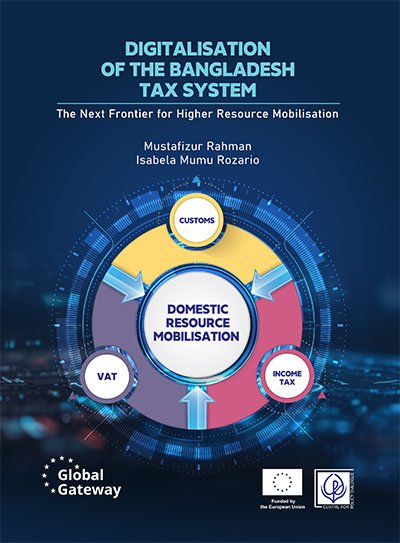
 One of the key reasons behind Bangladesh’s exceptionally low domestic revenue mobilisation is the lack of comprehensive and all embracing digitalization of the country’s taxation system. This is not to undermine the importance of fiscal-institutional reforms, but to emphasise that digitalisation must be seen as a critically important component of Bangladesh’s taxation system. While there have been many initiatives at digitalising the three pillars of the taxation system in Bangladesh—VAT, Customs and Income Tax—, the fact remains that Bangladesh’s revenue-GDP ratio has indeed come down from about 11.0 percent about a decade back to about 8.0 percent in recent times. Against this backdrop, the present monograph undertakes an attempt to identify factors that inform the dismal track record as regards revenue mobilisation and low tax efficiency, and offers a set of policy recommendations to stimulate Bangladesh’s tax efforts and strengthen its revenue mobilisation capacity. The paper draws attention to the findings from global literature that shows returns on investment in digitalisation of the taxation system is reckoned to be one of the highest in the particular case of Bangladesh. Taking into cognisance the lessons from Bangladesh’s past experience, and drawing on global best practices, the monograph argues in favour of developing a strategic digital transformation roadmap for Bangladesh that should include putting in place broad-based automation with embedded interoperability of various systems, ensuring reconciliation of expenditure information with income data, deploying data sciences and artificial intelligence-based frontier analytical tools, and undertaking measures to provide smart taxpayer services. The study also underscores the need for implementing comprehensive fiscal-institutional reforms in parallel with measures at digitalisation of the taxation system, with the objective of moving towards a system where ‘tax just happens’.
Authors: Mustafizur Rahman, Isabela Mumu Rozario
Publication Period: February 2026