

Publications
CPD’s current publication list contains more than 500 titles including Books, Monographs, Working Papers, Dialogue Briefs and Policy Briefs. If you want to collect the hard copies of the publications, please contact with CPD. You can find the soft copies of the book in the CPD website.
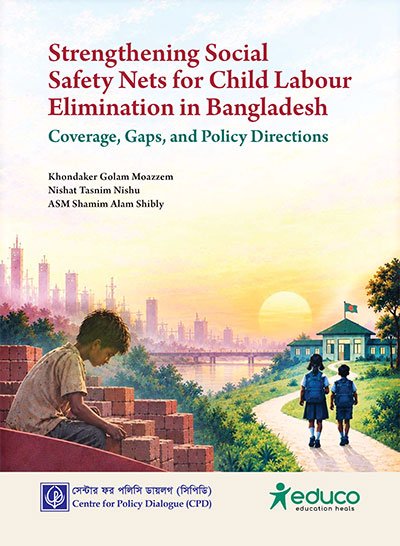
September 15, 2026
The social safety net programmes of Bangladesh were not designed considering the factors along which child labour actually varies. Based on national survey data, key informant interviews, and regional comparisons Read more
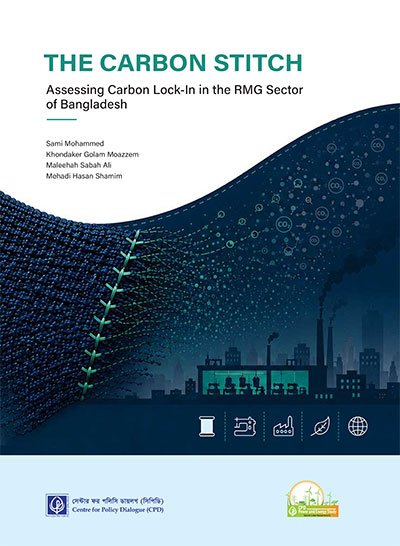
September 14, 2026
This study examines the structural determinants of carbon lock-in in Bangladesh’s RMG sector from a demand-side perspective. Despite rising decarbonisation pressures, the sector remains dependent on carbon-intensive production. Read more
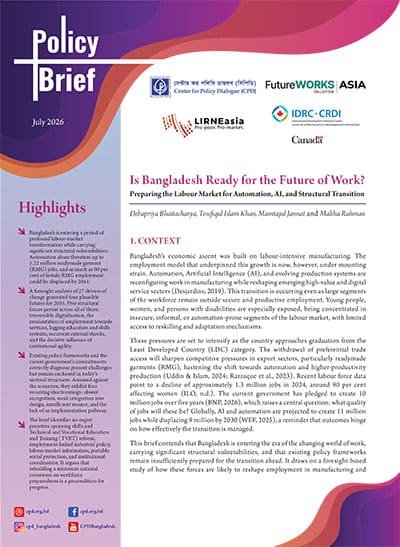
September 6, 2026
Automation alone threatens up to 1.22 million readymade garment (RMG) jobs, and as much as 60 per cent of female RMG employment could be displaced by 2041. Read more
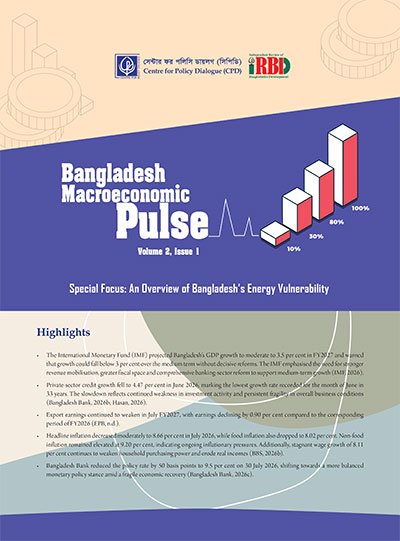
September 2, 2026
The International Monetary Fund (IMF) projected Bangladesh’s GDP growth to moderate to 3.5 per cent in FY2027 and warned that growth could fall below 3 per cent over the medium term without decisive reforms. Read more
August 20, 2026
The papers in this compendium represent the very best of the research presented at CPD Climate Week 2025. The conference drew an overwhelming response from young researchers, with 315 paper abstracts submitted from across the country and beyond. Read more
August 20, 2026
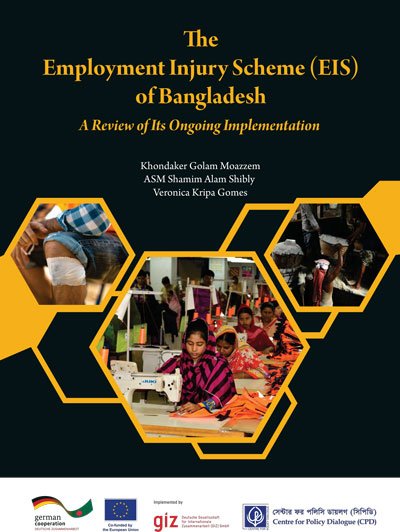
The Employment Injury Scheme (EIS) Pilot in Bangladesh marks a transformative step towards comprehensive social protection for workers, particularly in the export-oriented Ready-Made Garment (RMG) sector. Read more
August 20, 2026
The Centre for Asian Philanthropy and Society (CAPS), released the 2026 edition of its flagship study, the Doing Good Index. Read more
August 11, 2026
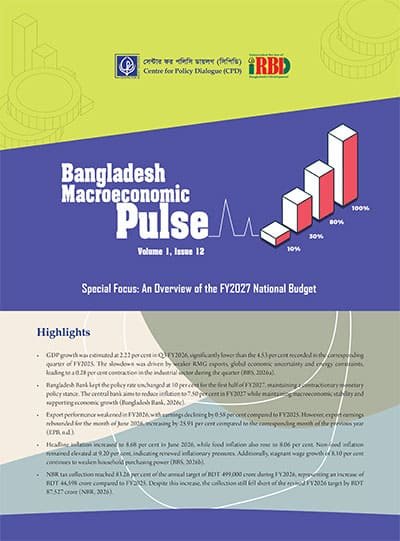
GDP growth was estimated at 2.22 per cent in Q3 FY2026, significantly lower than the 4.53 per cent recorded in the corresponding quarter of FY2025. Read more
August 2, 2026
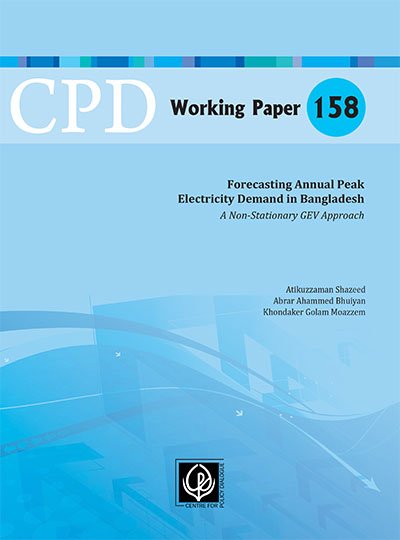
Forecast annual peak electricity demand in Bangladesh using a non-stationary GEV model, improving power planning, reducing blackout risks, and avoiding costly overcapacity. Read more
July 28, 2026
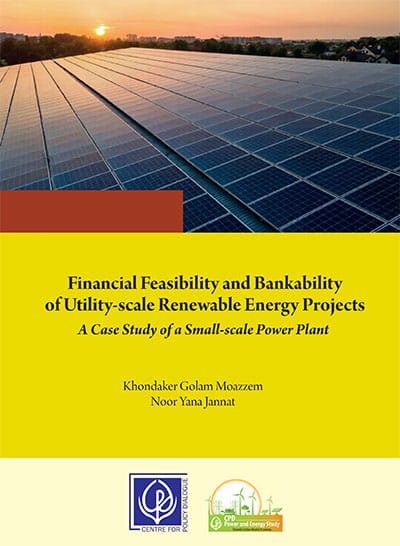
This study examines the financial feasibility and bankability of a 3 MW utility-scale solar power plant through a detailed case study, combining techno-economic simulation using the System Advisor Model (SAM) with discounted cash flow (DCF) analysis. Read more
July 23, 2026
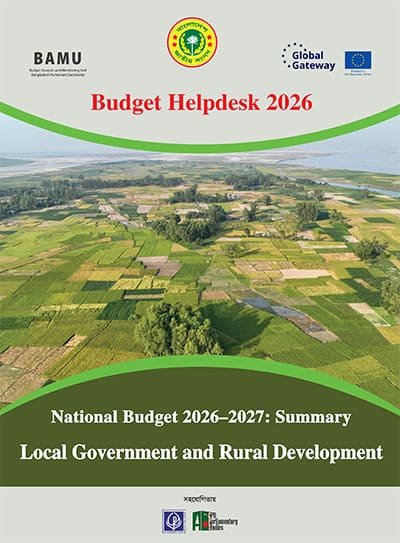
The local government, rural development, and cooperative sectors are considered among the main foundations for inclusive development, reducing regional inequality, and achieving sustainable development goals in Bangladesh. Read more
July 23, 2026
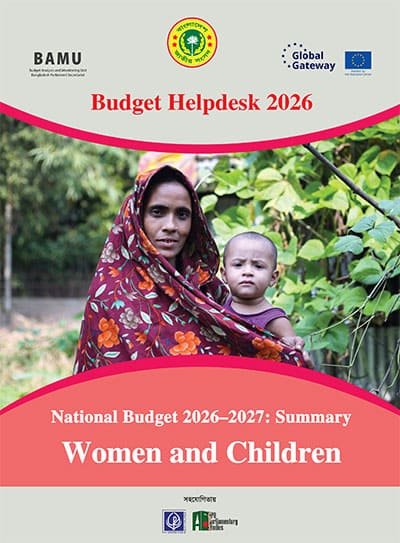
Following the thirteenth national parliamentary election held in February 2026, the government has pledged to develop women and children under the theme of ‘Bangladesh First.’ Read more